Occasional cheese freezers
If you want to keep cheese for a get-together or save leftovers, first check whether your existing freezer compartment is suitable and has enough room.


For grated cheese for a one-off get-together, your existing freezer compartment should be enough, provided it is suitable for freezing fresh food and has enough room. The German Federal Centre for Nutrition recommends a four-star compartment, while the consumer advice centre suggests choosing an additional appliance based on your actual storage needs. Divide the cheese into suitable portions before freezing, and only consider a separate appliance if you regularly store other foods too.
If you want to keep cheese for a get-together or save leftovers, first check whether your existing freezer compartment is suitable and has enough room.
If you regularly freeze cheese and other ingredients in portions, you’ll need well-organised storage and a suitable spot for an appliance.
If you regularly freeze larger quantities as well as cheese, compare the space you need with the stated annual energy consumption of different appliances.
For a one-off cheese night, the first thing to check is whether your existing compartment can freeze fresh food and has enough room. A separate appliance is more worth considering if you regularly add other food to your frozen stocks.
| Consideration | What to check when buying | Who it matters to |
|---|---|---|
| Whether your existing compartment is suitable for freezing | Check for a four-star rating and make sure there is enough room. | If I only freeze fresh cheese occasionally, I don’t want to buy another appliance if my existing compartment is suitable. Around 36% of consumers are likely to be looking to answer this question above all. |
| Keeping portions to hand | Allow enough room for freezer-safe containers or packaging. | If I prepare several portions for future meals, I want to be able to take them out individually and identify them easily. Around 29% of consumers prioritise keeping individual portions well organised. |
| Energy consumption of an additional appliance | Compare the annual consumption in kWh and the usable capacity you need for specific models. | If I’m considering an additional appliance, its running costs should suit the amount of food I store. Around 21% of consumers pay particular attention to this. |
| Space for other frozen food | Consider the quantities you regularly freeze, floor space, clearance for opening the door and the interior layout. | If I regularly freeze larger quantities as well as cheese, I need enough storage space without losing sight of the floor space available. Around 14% of consumers put the extra storage space first. |
The consumer advice centre recommends choosing an appliance size to suit your actual needs. An oversized freezer can use electricity unnecessarily.
First check whether your existing four-star compartment is suitable for freezing and has enough free space. Only consider a separate appliance if you regularly need extra storage.
An additional appliance takes up floor space and uses electricity continuously.
The star ratings indicate different temperature ranges and uses. The German Federal Centre for Nutrition says a three-star compartment is for storing food that is already frozen, not for freezing fresh food in the first place.
If you want to freeze fresh cheese yourself, check that the compartment or appliance has a four-star rating.
The design or a single feature doesn’t tell you how much electricity a particular appliance will use over a year. The German Environment Agency recommends comparing the consumption in kilowatt-hours shown on the energy label.
For suitable models, compare annual consumption alongside the usable capacity you actually need.
A freezer needs a suitable place to stand and uses electricity continuously while running.
Freezing doesn’t replace good food hygiene or using food that is in suitable condition to begin with. Taste and texture can change depending on the type of cheese; the Lower Saxony consumer advice centre notes that hard cheese can become crumbly.
Only freeze cheese that is in good condition. Divide it into portions and label the packs with the contents and date. If you can see mould, don’t assume freezing will make the food safe to eat again.
The models mentioned range from a compact under-counter freezer to a larger No-Frost appliance and a chest freezer.
The Fe 1414 Pure is an under-counter freezer for households looking for an under-counter model rather than a tall upright appliance.
The German range includes upright freezers in various capacities, including No-Frost models.
The Joybuy appliances below include compact upright freezers, a small chest freezer and a larger upright freezer. If you only need to freeze individual portions of cheese, first check whether a suitable existing compartment will do the job.
 No image available
For smaller extra supplies that you want to store neatly in an upright freezer.
 No image available
For small amounts of extra frozen food, if a compact appliance suits your needs.
 No image available
For extra freezer space if you regularly store other supplies as well as cheese.
Allow space for the appliance and to open the lid.
 No image available
For small amounts of extra frozen food, if a mini freezer fits the space you have available.
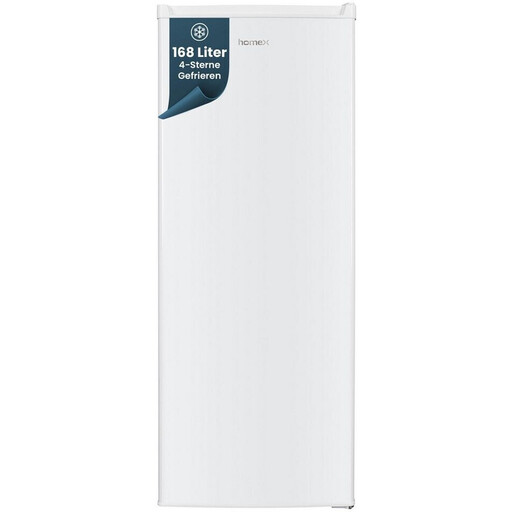 No image available
For larger extra supplies, if the multiple compartments suit your storage needs.
This capacity may be more than you need for cheese alone; choose an appliance size to suit all your frozen supplies.
No. The German Federal Centre for Nutrition recommends a four-star compartment for freezing fresh food. A three-star compartment is for storing food that is already frozen, while one- and two-star compartments are intended for short-term storage.
Divide the cheese into portions suited to future meals, use freezer-safe packaging and label it with the contents and date. The Lower Saxony consumer advice centre notes that hard cheese can lose some flavour and become crumbly, depending on the type, but is still suitable for cooking or topping dishes.
You don’t automatically need an additional appliance for the odd bit of leftover cheese. First check whether your existing four-star compartment is suitable and has enough room. If you regularly freeze other foods too, compare the usable capacity you need, the space available and the annual energy consumption of specific appliances.
Compare the annual consumption in kWh shown on the EU energy label for appliances with a usable capacity that suits your needs. The German Environment Agency identifies the label figure as the annual energy consumption; when choosing, you should also consider how much freezer space you’ll actually use.
There isn’t one storage period that applies to every type of cheese and packaging. Label portions with the date they were frozen, and bear in mind that taste and texture can change depending on the type of cheese.