Hosts preparing lots of cheese
If you’re preparing hard cheese for several portions, consider how the grated cheese is collected and whether you’ll need to stop frequently during the process.


For larger quantities of hard cheese, it’s essential to choose a grating disc that is specifically designed for the job. A continuous-feed slicer can grate straight into a container, while a standalone food processor can handle other food-preparation tasks too. A hand grater may be all you need for smaller quantities, while a suitable attachment could be an option if you already own a stand mixer. Before buying, check exact model compatibility, what’s included and how the parts are cleaned.
If you’re preparing hard cheese for several portions, consider how the grated cheese is collected and whether you’ll need to stop frequently during the process.
If a fine texture matters more than a large range of accessories, check carefully whether the specific disc is explicitly designed for hard cheese.
If you want to make use of a machine you already own, check that the drive, attachment and grating disc are compatible by comparing their full model numbers.
When preparing hard cheese for several guests, your priorities will depend mainly on workflow, the fineness of the grate you want, appliance compatibility, storage space and cleaning.
| What matters | What to check before buying | Who it matters most to |
|---|---|---|
| Quantity and workflow | Check how the grated cheese is collected and whether the included disc is suitable for hard cheese. Don’t assume the bowl capacity in litres tells you how much cheese it can grate. | If you’re grating for several portions and want to minimise interruptions, pay particular attention to capacity and workflow. Around 36% of consumers would put this first. |
| Fine grating | Look for hard cheese, Parmesan and the specific included grating disc in the manual or model description. | If finely grated Parmesan matters more than extra features, the disc’s suitability is key. Around 29% of consumers would prioritise the fineness of the grate. |
| Compatibility | Check the appliance, attachment and disc model numbers individually. | If you want to add to a stand mixer you already own, make sure the attachment and disc are an exact match for your appliance. Around 21% of consumers would make compatibility their top priority. |
| Space and cleaning | Check which accessories are included and the cleaning instructions for the specific model. Also consider storage space and where the appliance will sit. | If space is limited and you want to keep washing up to a minimum, assembly and cleaning could be deciding factors. Around 14% of consumers would weigh these points first. |
Manufacturers distinguish between slicing and grating discs, as well as discs specifically described as suitable for hard cheese. So a general grating claim doesn’t automatically mean a disc is suitable for Parmesan.
Check the description of the specific disc and whether it’s included with the model you’ve chosen.
Attachments and discs may be designed for specific appliances or drives. Bosch lists the MUZ9VL1 set for the OptiMUM, while the MUZ8KS1 Parmesan disc is specified for the MUZ8DS1 continuous-feed slicer.
Check the appliance, attachment and disc against their full model numbers.
A capacity stated in litres describes the nominal bowl size, not a tested quantity of hard cheese per cycle or a specific number of portions.
Choose how the cheese is collected to suit your workflow, and allow for several batches if you’re using a bowl-based appliance.
Worth considering if you already own a compatible OptiMUM machine and are looking at a continuous-feed slicer attachment.
An option if you’re considering a standalone food processor for a range of food-preparation tasks.
The 5KFP1319 food processor could suit you if you want to grate hard cheese and use a range of slicing and grating functions for other ingredients.
The PurEase range may appeal if you have limited worktop space and several everyday chopping tasks to tackle.
This selection includes hand graters and food processors for preparing cheese. For each electric model, check whether the specific grating disc is suitable for hard cheese and what restrictions the manual gives for very hard ingredients.
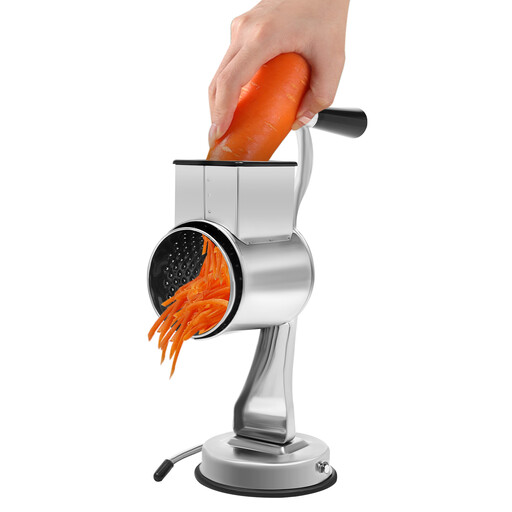 No image available
A manual grater for food preparation. Before buying, check that it’s suitable for the type of hard cheese and the texture you want.
Five 430 stainless steel blades; base with TPR suction foot. The title mentions an ergonomic handle and dishwasher suitability.
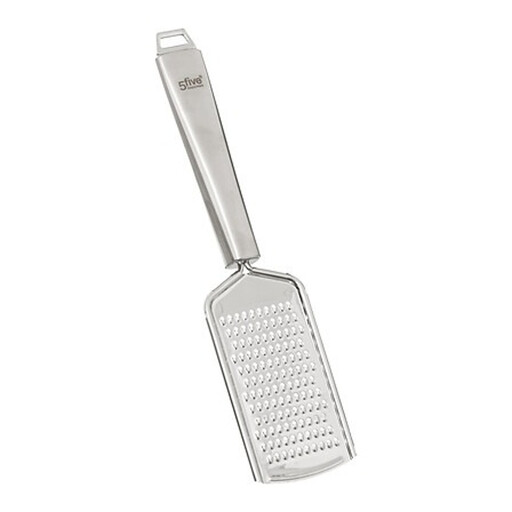 No image available
A manual option for hard cheese if you’d rather grate without an electric appliance.
The product description says it’s made from INOX 430 stainless steel. Dimensions: 5.8 × 2 × 25.2 cm; weight: 0.100 kg.
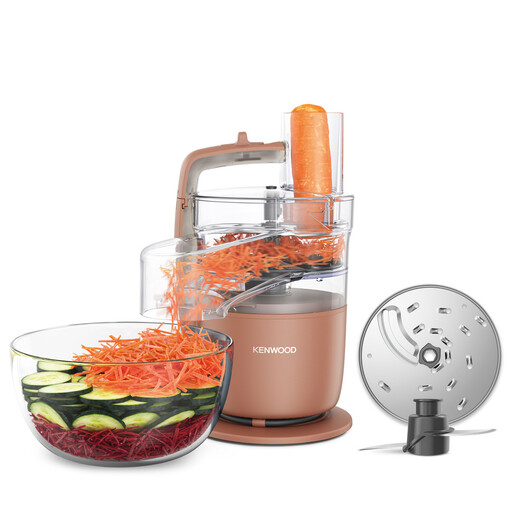 No image available
A standalone food processor with direct dispensing. Before use, check that the grating disc is suitable for your hard cheese.
The product description lists a 1.3-l bowl, a reversible 4-mm slicing and grating disc, and Express Serve for direct dispensing. Parts are described as dishwasher-safe.
The product description advises caution with very hard ingredients to avoid overloading the appliance.
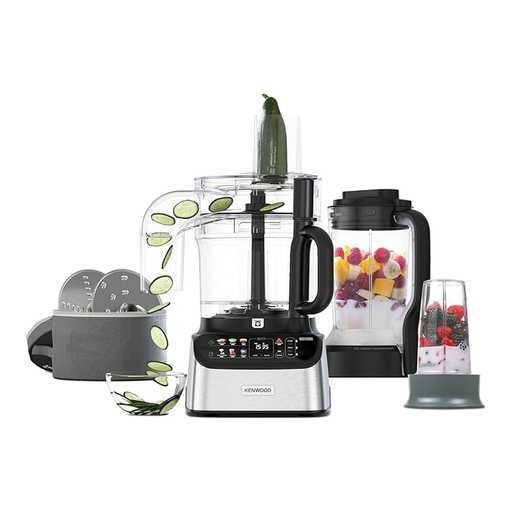 No image available
A standalone food processor with a grating function and direct dispensing. Before buying, check that the included grating disc is suitable for the type of hard cheese you want to grate.
The product description lists a 3-l bowl, Express Serve and dishwasher-safe parts. Unplug the appliance before assembling, disassembling or cleaning it, and keep your hands away from moving blades.
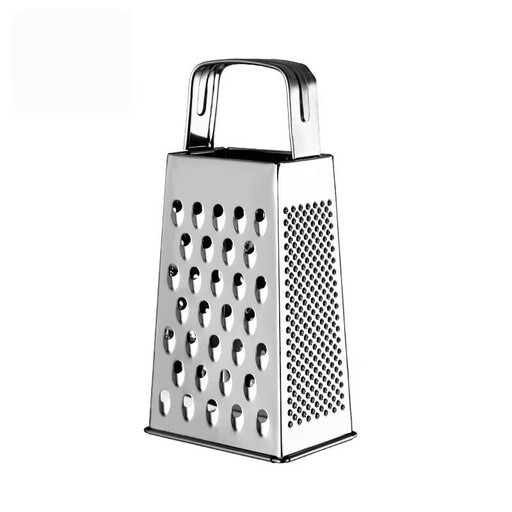 No image available
A manual option if you want to grate hard Parmesan finely and choose between several grating and slicing surfaces.
The product description lists four stainless steel grating and slicing surfaces, including a fine grating surface for hard Parmesan.
Not necessarily. Check the exact disc and which models it’s designed for. Bosch specifically describes the MUZ8KS1 as suitable for Parmesan and other hard cheeses. That doesn’t mean the same applies to other models just because their descriptions mention grating.
It depends on the specific appliance and attachment combination. Bosch lists the MUZ9VL1 set for OptiMUM and specifies the MUZ8KS1 Parmesan disc for the MUZ8DS1 continuous-feed slicer. Compare all the model numbers before buying.
No. The capacity in litres describes the nominal bowl size, not a tested quantity of cheese or number of portions. Kenwood lists 3.0 l for the FDM72.990SS and KitchenAid lists 3.1 l for the 5KFP1319. Choose how the cheese is collected to suit your workflow.
Clean the parts according to the instructions for the specific model, and don’t assume dishwasher suitability applies to every accessory. Braun describes the FP3131WH as having removable blades, while Kenwood lists dishwasher-safe parts for the FDM72.990SS.
Keep perishable food sufficiently chilled until you prepare or eat it, and follow the cheese’s storage instructions. The German Federal Institute for Risk Assessment recommends storing perishable foods in a fridge at 2°C to a maximum of 7°C, and using separate utensils for raw and ready-to-eat foods. This isn’t a guaranteed shelf life for freshly grated cheese.