What to look for when buying
Start by considering the ingredients you juice most often, then check the appliance’s size, cleaning requirements and capacity. In the ETM TESTMAGAZIN comparison, centrifugal juicers were quicker for larger quantities, but noisier. For green juice, check that the specific model is suitable for leafy greens.
Slow juicer
A good fit if: You regularly juice leafy greens or fibrous ingredients, and the model’s size and cleaning requirements suit your holiday cottage kitchen.
The trade-off: It takes longer to prepare juice, and dimensions and cleaning requirements vary between models.
Centrifugal juicer
A good fit if: You mainly want to prepare larger quantities of fruit and firm vegetables quickly.
The trade-off: In the ETM TESTMAGAZIN comparison, centrifugal juicers were quicker for larger quantities, but also noisier. Check that the specific model is suitable for leafy greens.
Use your existing blender and strain
A good fit if: You only want to make green juice occasionally and your holiday cottage already has a suitable blender and a fine sieve. The German Federal Centre for Nutrition describes blending ingredients with water and then straining them.
The trade-off: Straining adds an extra step.
| Priority |
What to check before buying |
Who it matters most to |
| Leafy greens and fibrous ingredients |
Information on leafy greens and fibrous ingredients; where possible, tests using similar ingredients. |
If I mainly juice leafy greens and fibrous ingredients, the appliance needs to be suitable for them. Around 36 % of consumers are likely to have this as their main priority. |
| Less cleaning |
Whether it can be dismantled, how accessible the filter is, and whether each component is dishwasher-safe according to the instructions. |
After juicing, I want to clean the filter and individual parts thoroughly without spending ages washing up. Around 29 % of consumers are likely to prioritise easy cleaning above all else. |
| Easy to transport and takes up little space |
Appliance dimensions, weight and filling space; also allow room for the juice and pulp containers. |
In a small holiday cottage kitchen, I need an appliance that fits on the worktop and can be taken with me if needed. Around 21 % of consumers are likely to prioritise space and portability. |
| Preparing several glasses quickly |
How it handles your ingredients, the feed chute, container capacities and noise level. |
When making several glasses for breakfast, I want to prepare them quickly without overlooking the noise it might make for other guests. Around 14 % of consumers are likely to prioritise speed and quantity. |
Joybuy products for juicing
This selection mainly features slow juicers for fruit and vegetables. If you mostly want to juice leafy greens, check that the specific model is suitable for these ingredients, as well as its dimensions and cleaning requirements, before buying.
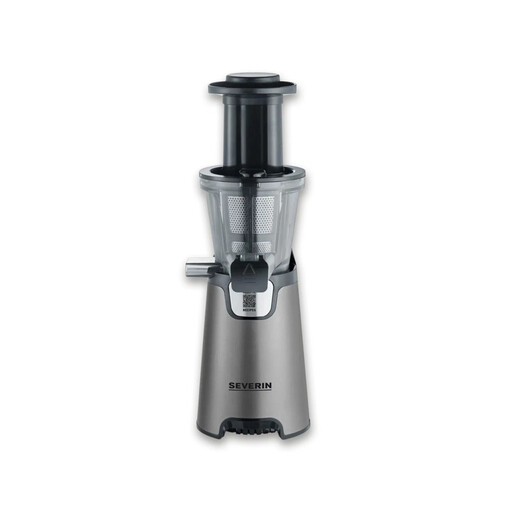 No image available
SEVERIN ES 3571 slow juicer
Described as a slow juicer for processing fruit and vegetables; the product information mentions an Easy-Clean design.
1-l juice container; 150 W; 3,9 kg; 42 × 26 × 22 cm. According to the product description, it can be cleaned with a brush or in the dishwasher. Check the instructions for each individual part.
View at Joybuy
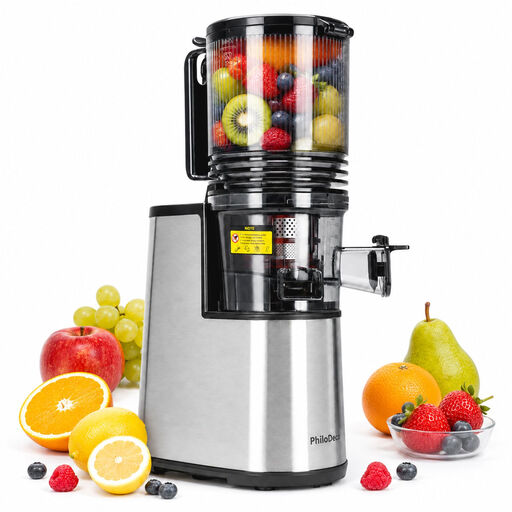 No image available
PhiloDeco JE-06 cold-press slow juicer
The product information describes a slow juicer for fruit and vegetables, and gives celery as an example of a fibrous ingredient.
250 W; 1.000-ml pulp container; reverse function. The food-contact parts can be removed for hand-washing, according to the product description. It is described as intended for domestic use.
View at Joybuy
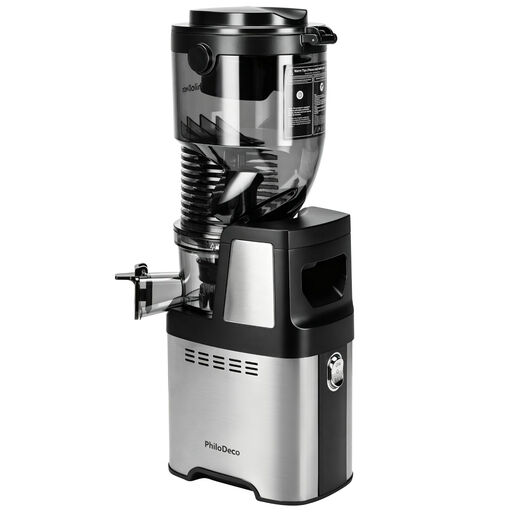 No image available
Slow-press juicer with a 9,5-cm feed chute
Described as suitable for fruit and vegetables, with carrots and celery given as examples of fibrous ingredients.
250 W; 9,5-cm feed chute; reverse function. The removable food-contact parts must be hand-washed, according to the product description.
View at Joybuy
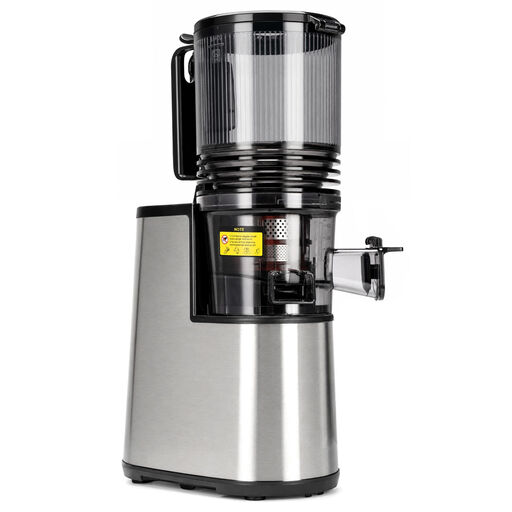 No image available
JE-06 slow juicer, 250 W
Described as suitable for juicing fruit and vegetables; separate juice and pulp containers can be placed under the two outlets.
145-mm feed chute; 38–45 rpm; 700-ml juice container and 1.000-ml pulp container according to the product information.
View at Joybuy
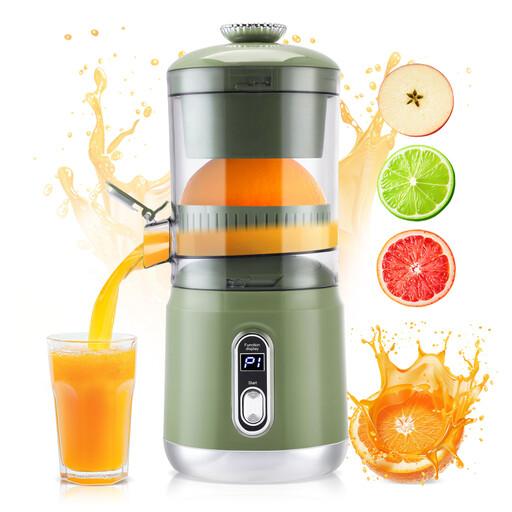 No image available
Green electric juicer
Described as suitable for making juice at home. Before buying, check how each part can be cleaned.
View at Joybuy
Frequently asked questions
Do I have to use a slow juicer for spinach or other leafy greens?
No. ETM TESTMAGAZIN recommends a slow juicer for leafy greens, and Philips specifically lists them as suitable ingredients for the HR1889/70. If you already have a blender, you can blend ingredients with water and then strain them, according to the German Federal Centre for Nutrition.
How should I clean a juicer in a shared holiday cottage kitchen?
Thoroughly clean all parts that come into contact with food, and take care to avoid contamination from other foods. Before putting anything in the dishwasher, check the instructions for your exact model and each component: Unold’s approval for the Sam applies to its non-electrical parts, while COMPUTER BILD’s hands-on test found that the Bosch MESM731M lid wasn’t dishwasher-safe.
What do warranty, statutory rights and returns mean when buying in Germany?
If a product is faulty, your statutory rights are against the seller. A manufacturer’s warranty is an additional voluntary commitment with its own terms and conditions. Online purchases generally come with a 14-day right to cancel. The German consumer advice centre recommends checking the specific warranty terms and cancellation information.
Is the CE marking an independent safety test for a juicer?
No. According to information from the European Union, the CE marking is the manufacturer’s declaration that a product meets the relevant EU requirements. No central EU body issues a blanket certificate for this. Check the marking on the specific appliance being offered and consider which requirements apply to that product.
What should I check when it comes to dishwasher safety?
Check the instructions for each individual component rather than assuming approval applies to the whole appliance. Manufacturers’ statements may only cover removable or non-electrical parts. COMPUTER BILD’s hands-on test found that the Bosch MESM731M lid wasn’t dishwasher-safe.


