For leafy greens
If you want to make juice with leafy greens or celery regularly, compare how well each model handles these ingredients and how much juice it yields.


If you often juice leafy greens or celery, compare compact slow juicers and check whether the specific model is suitable for your ingredients. A centrifugal juicer may suit you if you want to make mixed fruit and vegetable juices quickly; according to ETM TESTMAGAZIN, these appliances can be faster with larger quantities, but they can also be noisier. Whichever type you choose, measure its footprint and height, and allow enough room to add ingredients and clean it.
If you want to make juice with leafy greens or celery regularly, compare how well each model handles these ingredients and how much juice it yields.
If worktop space or the clearance beneath your wall cupboards is limited, check the appliance’s footprint and height, and make sure you can access the feed chute before you buy.
If you juice frequently, cleaning the parts should fit easily into your regular routine.
A good fit if: leafy greens or fibrous vegetables are a regular part of your diet, and suitability for these ingredients matters more to you than speed.
The trade-off: Juicing and cleaning take time. A narrow body does not necessarily mean there is enough clearance above the appliance for adding ingredients.
A good fit if: you mainly want to make mixed juices quickly and leafy greens are not your main ingredient.
The trade-off: According to ETM TESTMAGAZIN, centrifugal juicers can be faster with larger quantities, but they can also be noisier. Check how the specific model performs with your ingredients.
| What to consider | What to check before buying | Who will find this especially important? |
|---|---|---|
| Leafy greens and fibrous vegetables | Check whether the specific model is suitable for your ingredients and, where possible, compare results using similar produce. | If I mainly juice leafy greens or fibrous vegetables, I want to be able to assess how suitable the juicer is for them. Around 31% of consumers say leafy greens are their top priority when buying. |
| Space and clearance for filling | Compare the height, width and depth with the space available, and allow room above the feed chute and for containers. | With limited worktop space and low wall cupboards, I want to be able to position and fill the appliance without having to move everything first. Around 25% of consumers say space is their main priority. |
| Cleaning | Check how easily the appliance comes apart, access to the sieve and whether the specific parts are dishwasher-safe. | If I juice regularly, I want to be able to reach and clean the sieve and other parts easily after each use. Around 25% of consumers say cleaning is their top priority when buying. |
| Preparation and speed | Compare the feed chute, how much chopping is needed, noise levels and cleaning. Consider time claims only in the context of the stated conditions. | If I want to make mixed juice quickly in the morning, I look at preparation and juicing time without assuming that an appliance type is automatically suitable for my ingredients. Around 19% of consumers put speed first. |
An appliance may have a small footprint but still be too tall to fit beneath a wall cupboard. You will also need extra clearance to add ingredients and remove parts.
Measure the width, depth and available height, and allow room to access the feed chute, spout and pulp container.
A wide opening does not tell you how many parts need cleaning. COMPUTER BILD notes that cleaning the auger on the Unold Sam 78275 can be time-consuming.
Check preparation and cleaning separately, including whether the supplied parts are dishwasher-safe.
Manufacturers’ claims about vitamin retention do not, on their own, prove that a juice or any slow juicer offers general health benefits.
Choose based on your ingredients, ease of use and verifiable results for the specific model, rather than broad health claims.
The VitaExtract MESM731M is worth considering if you want to compare both footprint and appliance height.
The Sam 78275 slow juicer combines manufacturer-listed dimensions and feed-chute details with removable parts.
The H70ST is a slow juicer to consider if you want to make green juice regularly.
The HR1889/70 and HR1832/00 are different types of juicer, so consider each separately based on how you plan to use it.
The MultiJuice SJ7000GY centrifugal juicer may suit buyers who prioritise making mixed juices quickly.
This selection includes slow juicers for preparing fruit and vegetables. For each model, check whether it is suitable for your ingredients, as well as its dimensions and the space you have for adding ingredients in your kitchen.
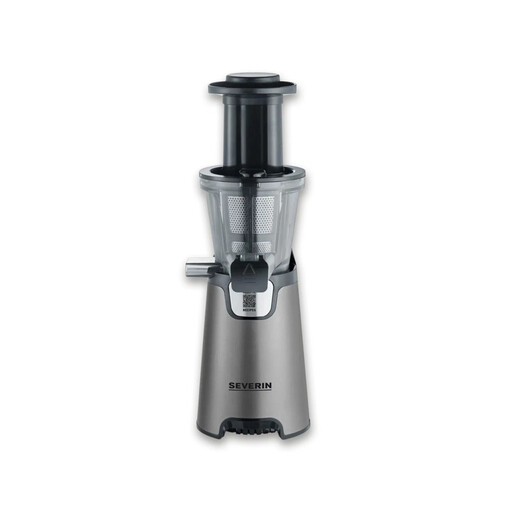 No image available
As a slow juicer, this model may be worth considering for green juice. Check whether it is suitable for your ingredients and compare its dimensions with the space available in your kitchen.
Listed in the product name: 1-litre juice container, 150 W and stainless steel.
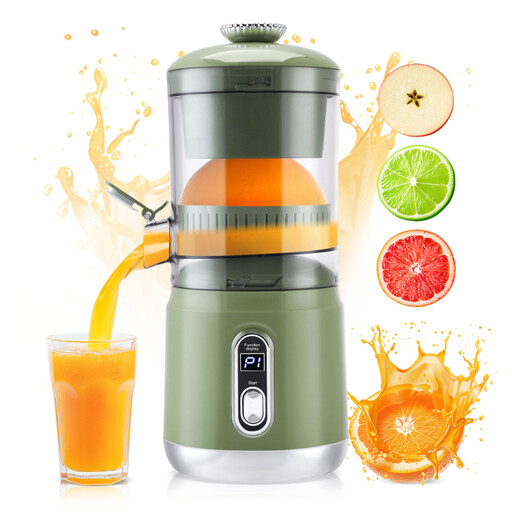 No image available
If you’re looking for a slow juicer for green juice, check whether it’s suitable for your ingredients and will fit on your chosen worktop.
The product name lists multiple speed settings and says the juicer is suitable for travel and camping.
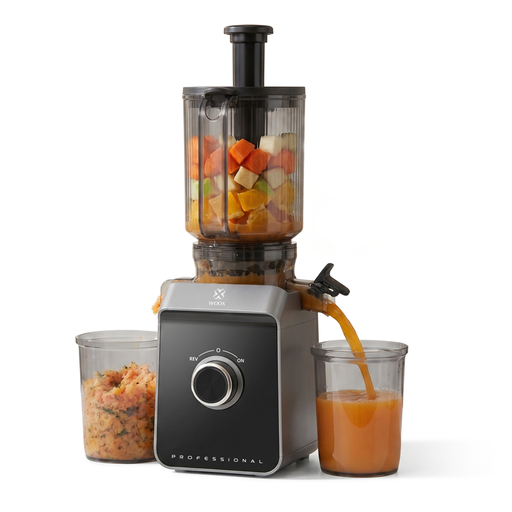 No image available
This model may be worth considering for green juice. Check whether it’s suitable for your ingredients and compare its stated dimensions with your available worktop space.
Listed in the product name: 150 W, a 130-mm feed chute and an easy-clean claim. According to the product information, cut fibrous vegetables such as celery or parsley into 3–4 cm pieces; do not use frozen ingredients or ice cubes.
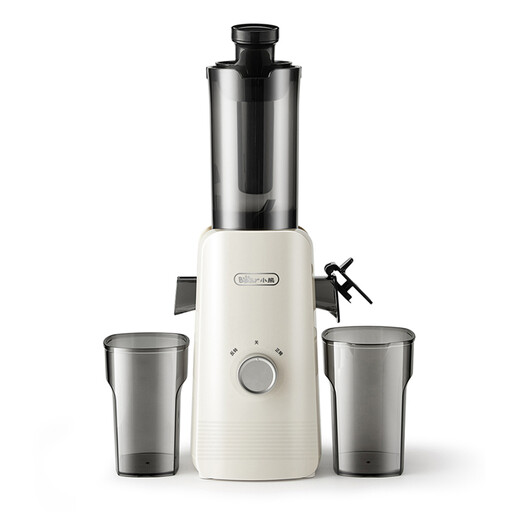 No image available
If you’re looking for a slow juicer for vegetables, check whether this model suits your ingredients and the space you have available.
Listed in the product name: 1 l and an 80 mm feed chute.
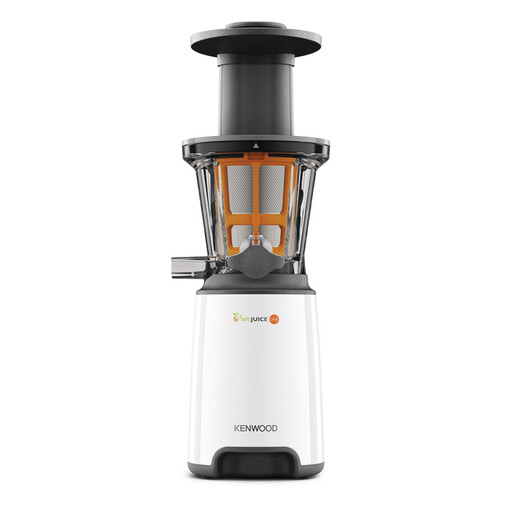 No image available
As a slow juicer, this model may be suitable for green juice. Compare its dimensions with the space available and check whether it is suitable for your ingredients.
No. Check whether the juicer is suitable for your leafy greens and, where possible, compare results using the same produce. The type of juicer and its speed alone do not determine how well a specific model performs.
Measure the available worktop space and clearance, then compare them with the dimensions of the fully assembled appliance. Allow extra room to add ingredients and remove parts; there is no one-size-fits-all clearance measurement.
Wash raw vegetables and salad thoroughly, and prepare them fresh. Clean the appliance parts that come into contact with food according to the manufacturer’s instructions. The German Federal Institute for Risk Assessment highlights the potential presence of germs, particularly in pre-cut salad, fresh herbs and sprouts.
When you buy from a trader as a consumer, the EU information site Your Europe says you have a legal right to a minimum two-year guarantee from the date you receive the goods. An additional manufacturer’s warranty does not replace your claim against the seller; the EU rule described here does not apply to purchases from private individuals.
Relevant EU product rules may require electrical appliances to carry a CE marking. According to Your Europe, this means the manufacturer declares that the product meets the applicable requirements; it is not an individual approval by a public authority. Check the information and safety details for the specific appliance. This does not mean that non-electric juicers must carry a CE marking.