Regular leafy-green juicers
If you often want to make green juice with leafy greens, consider the stated suitability for your ingredients alongside the cleaning involved. Hurom specifically lists leafy greens as suitable for the H70ST.


If leafy greens are a regular part of your juice, a slow juicer specifically stated as suitable for them is a sensible place to start. If you mainly use firm ingredients and want to prepare juice quickly, a centrifugal juicer may also be a good fit. In a shared office, you’ll also need to consider the cleaning instructions for each part, noise levels and how much space the appliance takes up. A wide feed chute can make preparation easier, but it doesn’t prove that a juicer will process leafy greens well or be quick to clean.
If you often want to make green juice with leafy greens, consider the stated suitability for your ingredients alongside the cleaning involved. Hurom specifically lists leafy greens as suitable for the H70ST.
In a shared kitchen, it matters how the sieve, outlet and other parts can be cleaned after juicing. The German Federal Institute for Risk Assessment warns that pre-cut fruit and vegetables can allow germs to multiply and spoil quickly.
If you’ll be juicing within earshot of others, consider the noise and the space available. An independent comparison describes the Panasonic MJ-L700 as quiet, but that doesn’t tell you how noisy every juicer model is.
In a shared office, consider your main ingredients, cleaning after each use, the impact on nearby workspaces and the time you have available as separate factors.
| Consideration | What to check before buying | Who is it most relevant to? |
|---|---|---|
| Processing leafy greens | Check that the juicer is stated as suitable for the specific ingredients you use, and look for the right sieves; a wide opening alone is no proof. | If I mainly want to juice leafy greens, stated suitability for those ingredients matters more to me than the size of the opening. Around 36% of consumers are likely to prioritise this. |
| Cleaning after use | Check each part individually to see whether it should be washed by hand or in a dishwasher, and consider what washing facilities are available at work. | If you share the appliance with colleagues, you’ll want to remove residue thoroughly and leave it clean. Around 29% of consumers are likely to put cleaning first. |
| Noise and space | Look for comparable noise-level information and measure the available space, including room for the containers. | If other people work within earshot, I want to avoid unnecessary disruption and check that the appliance will fit where it’s meant to go. Around 21% of consumers are likely to prioritise noise and space. |
| A short break to prepare juice | Consider the feed chute, suitability for your ingredients and preparation time separately; remember to allow time for cleaning afterwards, too. | If you only have a short break, you’ll want to prepare individual portions without unnecessary preparation. Around 14% of consumers are likely to focus mainly on the time involved. |
Instructions vary by model and by individual part. Hurom says the H70ST must not be cleaned in a dishwasher.
Before buying, check the cleaning instructions for the sieve, auger, lid and outlet individually.
Hand-washing can take extra time in a shared kitchen.
The size of the opening tells you about feeding ingredients into the juicer; it doesn’t, by itself, tell you how well the appliance processes leafy greens.
Compare your main ingredients with the stated suitability and the recommended attachments or sieves.
Depending on the model, fibrous ingredients may take extra effort to feed through or clean up afterwards.
According to ETM TESTMAGAZIN, centrifugal juicers typically work faster than slow juicers. You’ll still need to check how well each model handles leafy greens and how easy it is to clean.
First decide which ingredients you’ll use most and how much time you have for preparation and cleaning.
The German Federal Centre for Nutrition notes that vegetable juice may contain very little fibre compared with fresh vegetables, because the solid parts are left behind during juicing.
Think of a juicer as a way to prepare drinks, not as a proven replacement for whole vegetables.
Hurom specifically states that the H70ST slow juicer is suitable for leafy greens and green juice.
The Sam slow juicer may suit people who want to consider a wide feed chute and cleaning instructions.
For the VitaExtract MESM731M, Bosch lists adjustable pulp levels and filters for different preparations.
With the MJ-L700 slow juicer, the feed chute, noise and dimensions are all worth checking for an office workspace.
The HR1856/70 centrifugal juicer could be a fast alternative if leafy greens aren’t your main ingredient.
The REVO830 is another slow-juicer option, with different feed chutes for long vegetables and fruit.
The Joybuy options below are slow juicers for fruit and vegetables. If you regularly use leafy greens, check each model’s suitability for your ingredients and its cleaning instructions.
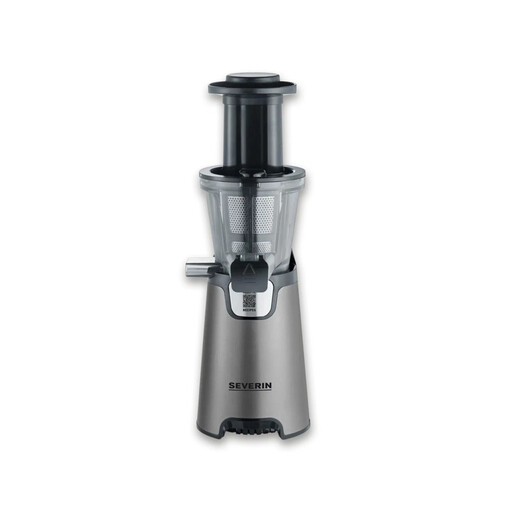 No image available
Described as a slow juicer for fruit and vegetables; check whether it’s suitable for the leafy greens you use.
1 l juice container; 150 W. The description says it can be cleaned with a brush or in the dishwasher. Check the instructions for each part.
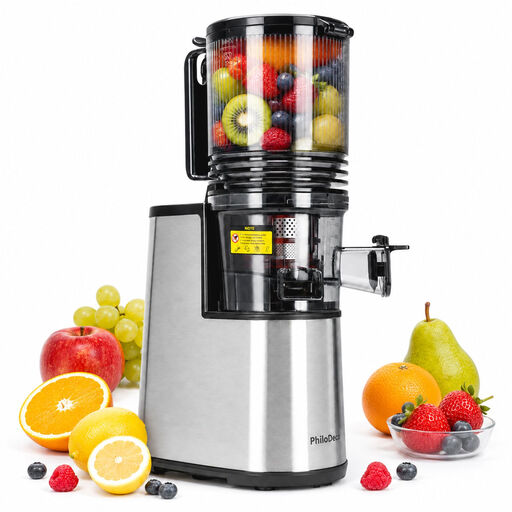 No image available
A slow juicer for fruit and vegetables; check that it’s suitable for leafy greens and review the cleaning instructions before choosing.
145 mm feed chute for whole fruit; 250 W motor; reverse function; 1000 ml pulp container. The description says the removable food-contact parts should be washed by hand.
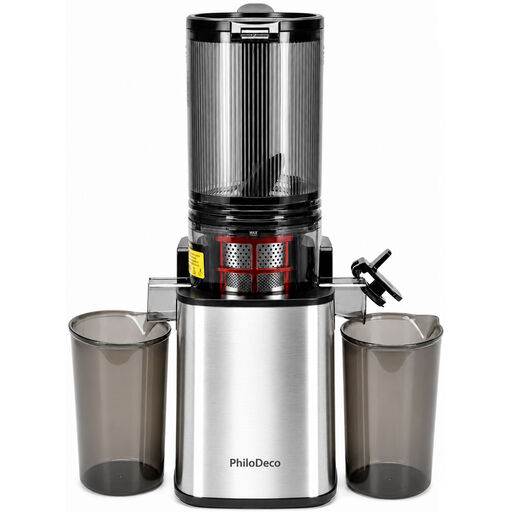 No image available
Described as a slow juicer for fruit and vegetables; a wide opening alone doesn’t prove it’s particularly suitable for leafy greens.
110 mm feed chute; double filter; reverse function; 40 Nm. The description says the removable food-contact parts should be washed by hand.
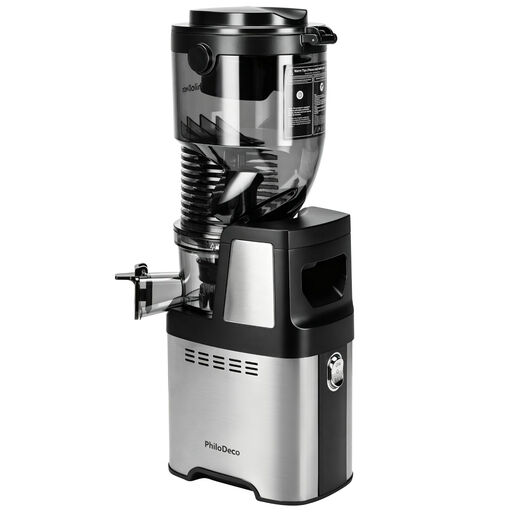 No image available
Described as a slow juicer for fruit and vegetables. Check whether it’s suitable for leafy greens and how much effort is involved in hand-washing the removable parts.
9.5 cm feed chute; 250 W motor; separate juice and pulp outlets.
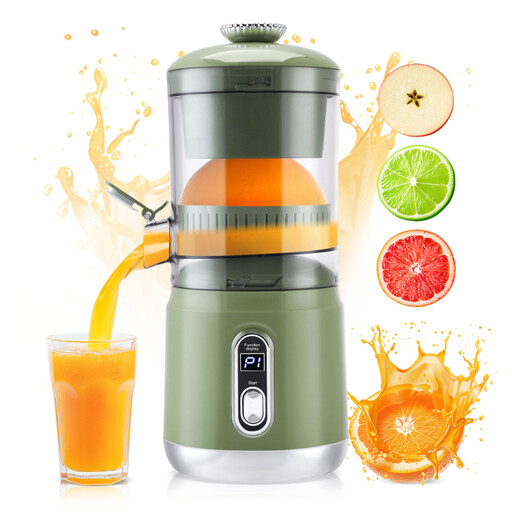 No image available
This model is described as a slow juicer for a range of ingredients; check whether it’s suitable for the leafy greens you plan to use.
Three speed settings; removable parts that, according to the description, can be rinsed under running water.
No. The size of the opening alone isn’t enough to help you choose. Check whether the juicer is stated as suitable for your ingredients, and consider the right sieves and cleaning requirements separately. Hurom specifically lists leafy greens as suitable for the H70ST; Unold specifies a 110 mm opening for the Sam.
It depends on the model and the individual part. Unold says the non-electrical parts of the Sam are dishwasher-safe; Hurom says the H70ST must not be put in the dishwasher. Check the instructions for each part individually.
Keep things clean, store pre-cut raw fruit and vegetables in a cool place, and use them promptly. The German Federal Institute for Risk Assessment warns that germs can multiply more easily and the food can spoil more quickly. This doesn’t establish a general shelf life for freshly made juice.
Relevant EU product rules may require electrical and electronic equipment to carry a CE marking. The European Union describes this as the manufacturer’s declaration that the product meets applicable requirements, not as an independent endorsement of its juice quality. Check the marking on the product itself and in the accompanying documents.
According to the European Commission, EU hygiene requirements apply to food businesses. Whether a particular office practice falls within those rules depends on how it is organised and how the juice is provided. Occasional private preparation can’t automatically be treated in the same way as running a canteen or selling food.