
Lieferung heute & morgen

Qualitätsgarantie

Willkommens-Angebote freischalten: KOSTENLOSE Lieferung | Bis zu 80 % RABATT | Kostenlose 30-Tage-JoyPlus-Testphase
App herunterladen
Green markers are used for highlighting, writing, labelling and creative work. Pupils and students often need a green highlighter for study materials, while teachers and office workers write on flipchart paper or film. Metallic markers are ideal for craft projects, whereas warehouses, workshops and industrial settings often require a waterproof green marker.
However, the colour alone does not determine which option is right. The ink, nib and surface must suit the intended use. If you focus only on a vivid colour description or a particularly cheap pack, you may end up buying a marker that smudges, produces illegible writing or can no longer be removed later.
A green permanent marker adheres to many smooth materials, such as plastic, glass and metal. This is useful for permanent labelling, but it can leave stains on clothing, furniture or work surfaces that are difficult to remove.
A green non-permanent marker is designed for temporary notes on film and other non-absorbent surfaces. The ink can often be wiped away with a damp cloth. On paper, however, it may soak in depending on the type and may not be completely removable.
A broad chisel tip is suitable for highlighting and creating highly visible headings. It is less precise for small labels. A fine-tip marker, on the other hand, produces clear lines but covers larger areas more slowly.
That is why you should look for specific details such as 0.4 mm, 0.6 mm, 1.0 mm or 2–5 mm. With a chisel-tip marker, it is also important to check whether it offers one or several line widths.
A refillable marker can reduce the need to replace individual pens if used regularly. However, this depends on the appropriate refill station being available. A DRY-SAFE specification also does not mean that the marker can be left uncapped indefinitely. The cap should be replaced firmly after use.
For paper, water-based fibre-tip markers and highlighters are generally sufficient. A green felt-tip pen such as the STAEDTLER Triplus Color rPP Olive Green uses water-based ink that can be washed out of most textiles. Even so, it is advisable to test it on an inconspicuous area before using it on delicate fabrics.
Special Lumocolor versions are suitable for film, glass and plastic. On many non-porous surfaces, non-permanent ink can be removed with a damp cloth. Permanent ink, by contrast, is intended for labels that need to stay in place for longer. “Waterproof” should always be understood in relation to the specific surface, rather than as a guarantee for every material and cleaning situation.
A green flipchart marker should not bleed through paper unnecessarily and should dry as quickly as possible. For double-sided documents, a classic highlighter with water-based ink is usually more suitable than a permanent marker.
An ergonomic barrel can make long writing or colouring sessions more comfortable. The triangular shape of STAEDTLER Triplus models supports a well-defined grip position. For frequent use, a durable fibre tip, a securely closing cap and a refillable design are also important considerations.
Store markers according to the manufacturer’s instructions. For many fibre-tip markers, horizontal storage is advisable. Metallic markers should also be stored horizontally wherever possible, so that the pigments do not collect permanently at one end. Before the first large-scale application on glass, plastic or painted surfaces, it is advisable to test the marker on a small area.
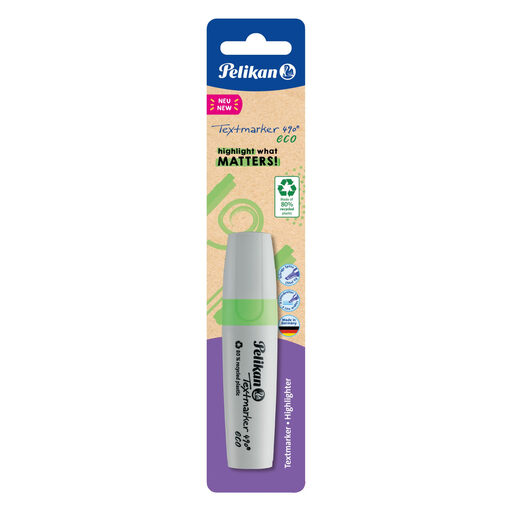
Why this product suits this profile: The highlighter offers three possible line widths of approximately 1, 2 and 5 mm, making it suitable for schoolwork, worksheets and general highlighting.
The variable tip reduces the risk of having to buy several different markers for fine and broad highlighting.
According to the product details, the barrel and cap are made from 80% recycled materials. The water-based neon ink is intended for paper.
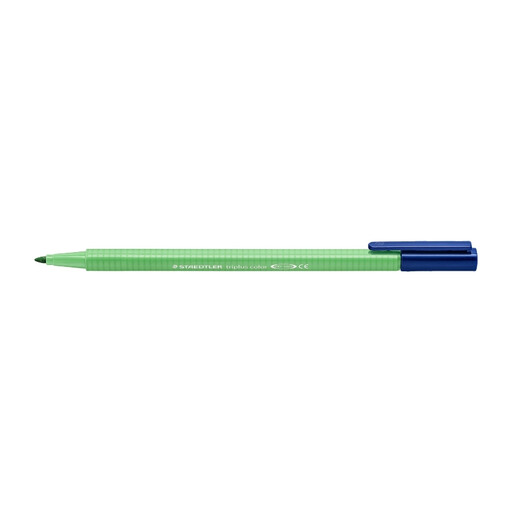
Why this product suits this profile: The triangular barrel and approximately 1.0 mm fibre tip are designed for longer writing and drawing sessions.
The defined line width means you do not need to use a classic highlighter for detailed notes.
According to the product details, the barrel and cap are made from recycled polypropylene. The ink is water-based and can be washed out of most textiles.
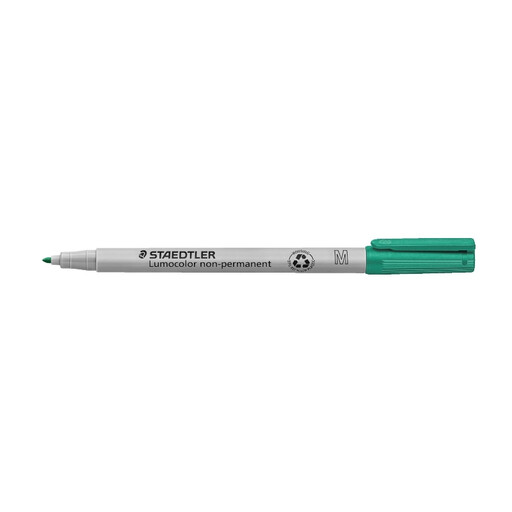
Why this product suits this profile: The medium tip, measuring approximately 1.0 mm, is designed for temporary labelling on glass, plastic and film.
The non-permanent ink prevents temporary markings from remaining unnecessarily long-lasting on smooth surfaces.
According to the product details, the ink can be removed with a damp cloth and the marker is compatible with the STAEDTLER 487 17 refill station.
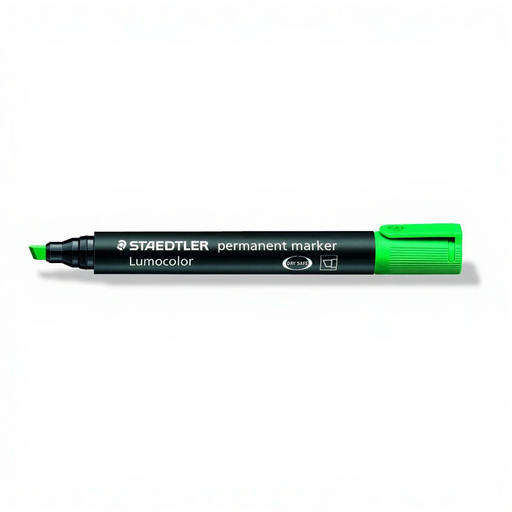
Why this product suits this profile: The 2–5 mm chisel tip supports variable labelling on paper and many smooth surfaces when permanent marking is required.
The permanent design makes its intended use clear and reduces the risk of confusing temporary and permanent labelling.
According to the product details, the marker writes permanently and waterproof on the specified surfaces. The chisel tip creates lines of approximately 2 to 5 mm.
We have put together a complete, regularly updated list of products that fully meet these strict selection criteria and the safety regulations applicable in the EU.
For creative projects on dark paper, a green metallic marker with water-based pigment ink may be suitable. According to the product details, the STAEDTLER Metallic Marker Bullet Green has a bullet tip with a line width of approximately 1–2 mm and is ready to use without shaking or pumping first. Its removability should be checked before use on glass or mirrors.
A green film pen with a fine tip is useful when small labels are required on overhead film. For flipcharts, models with a 2–5 mm chisel tip are more suitable. According to the product details, the Lumocolor Flipchart Marker Green uses water-based, quick-drying ink and a variable chisel tip.
For books, worksheets and notes, a green highlighter or a green felt-tip pen with water-based ink is usually suitable. The required line width is the deciding factor: a chisel tip highlights areas of text, while a 1.0 mm tip is more suitable for writing and outlines.
Its lifespan depends on how it is used, how it is stored, the amount of ink and whether it is properly capped. Close the cap firmly after every use and protect the marker from heat and direct sunlight. With regular use, a refillable marker may last longer, provided the appropriate refill station is available.
That depends on the type of ink. A green non-permanent marker can be wiped from many smooth surfaces with a damp cloth. A permanent marker, on the other hand, will adhere to the surface; depending on the material, suitable cleaning products may be required for removal. Always test each product on an inconspicuous area first.