
Lieferung heute & morgen

Qualitätsgarantie

Willkommens-Angebote freischalten: KOSTENLOSE Lieferung | Bis zu 80 % RABATT | Kostenlose 30-Tage-JoyPlus-Testphase
App herunterladen
A green pan can be a stylish statement in any kitchen. But behind the appealing exterior, functional shortcomings are often lurking that complicate daily cooking. Many buyers focus on the colour and overlook crucial technical details, leading to disappointment and unnecessary expense. This guide will help you navigate the most common pitfalls and find a pan that delivers on both aesthetics and performance.
Before you decide on a model, you should be aware of the typical weaknesses that often only become apparent after a few weeks of use.
green frying pan should be versatile, which includes a certain degree of oven-safety for the handle.To avoid a bad purchase, focus on three core technical features that determine your pan's performance and longevity.
The coating is the heart of any non-stick pan. There are two common types:
green ceramic pan uses a mineral-based coating that is free of PTFE and PFOA. It is very hard and heat-resistant, allowing for high-heat searing. However, its non-stick properties can degrade more quickly if overheated or if metal utensils are used.The choice depends on your cooking habits. For high-heat searing, ceramic is often the better choice; for gentle cooking at low temperatures, PTFE is very suitable.
The quality of the pan's base determines the evenness of your cooking results. A base made of forged aluminum or a multi-layer sandwich base ensures fast and homogeneous heat distribution.
For a green induction pan, a ferromagnetic base is essential. Look for the induction symbol (a stylized coil) or terms like "Radiant Induction." A solid, flat base not only prevents hotspots but also saves energy.
The shape of the pan should match its primary purpose:
green sauté pan is distinguished by its high sides (often 6 cm or more). It is perfect for dishes with a lot of liquid, such as goulash, curries, or one-pan meals.green wok, with its characteristic high, sloped sides, is designed for quick stir-frying at high heat. It allows you to cook vegetables and meat with constant movement.Here are some recommendations tailored to specific user profiles and the quality criteria mentioned above.
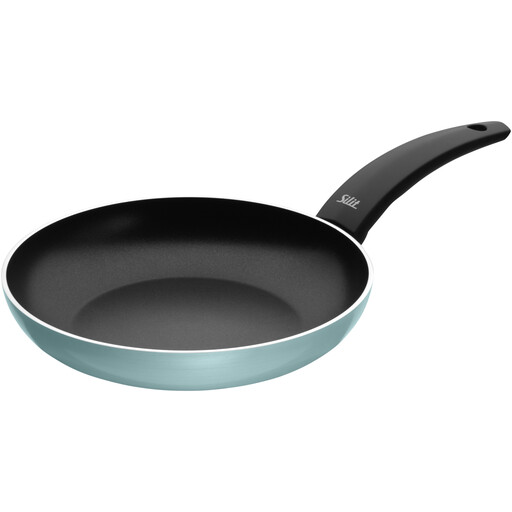
Why This Fits Their Persona: Ideal for daily use. The 24 cm size is versatile, the pan is suitable for all hob types including induction, and the proven brand quality promises easy handling and cleaning.
The pan relies on a durable Silitan PTFE non-stick coating and a base designed for optimal heat distribution, rather than focusing solely on aesthetics. This prevents the problem of hotspots.
Even heat distribution for gently cooking delicate foods. According to the manufacturer, it comes with a 5-year warranty covering material, workmanship, and non-stick performance.
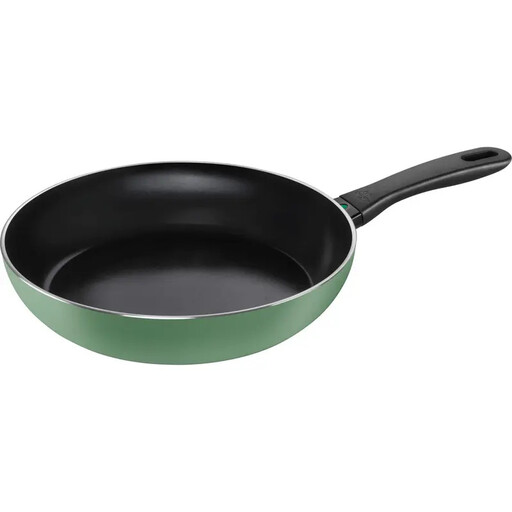
Why This Fits Their Persona: Perfect for sophisticated dishes. The high 8 cm rim makes it an ideal sauté pan. The ceramic coating allows for high temperatures, and the temperature indicator aids in precise cooking.
The Radiant induction technology ensures fast, even heat distribution, solving the hotspot problem. The THERMOPOINT indicator is a functional tool, not a gimmick.
The high rim is ideal for braises, ragouts, and stews. The KERA GLOSS ceramic coating is designed for high temperatures and enables low-fat frying.

Why This Fits Their Persona: This `green pan set` provides a complete starter kit (20, 24, 28 cm) in a cohesive, modern design. It combines aesthetics with broad functionality for various cooking tasks.
According to the manufacturer, the pans are oven-safe up to approx. 450°C (840°F), thus avoiding the pitfall of limited functionality due to heat-sensitive handles. The forged aluminum ensures good heat conduction.
Very high oven-safe temperature expands its range of uses (e.g., for gratins). As a complete set, it covers the most common sizes for a variety of dishes.
We have compiled a complete, up-to-date list of products that fully meet these strict selection criteria and German safety regulations.
To preserve the non-stick properties, you should clean the pan by hand with a soft sponge and mild dish soap. Avoid the dishwasher, as harsh detergents can damage the coating. Use only wooden or silicone utensils and allow the pan to cool completely before washing to prevent thermal shock.
No. A pan is only induction-compatible if its base is made of a ferromagnetic material. Look explicitly for the "suitable for all hob types" label or the induction symbol in the product description. A simple test: if a magnet sticks to the base of the pan, it is generally suitable for induction.
PTFE (Polytetrafluoroethylene) is a plastic that creates extremely slick surfaces and is excellent for cooking at low to medium heat. Ceramic coatings are mineral-based, harder, and can withstand higher temperatures, making them ideal for high-heat searing. However, their non-stick properties can be more sensitive to improper handling than those of PTFE.