
Lieferung heute & morgen

Qualitätsgarantie

Willkommens-Angebote freischalten: KOSTENLOSE Lieferung | Bis zu 80 % RABATT | Kostenlose 30-Tage-JoyPlus-Testphase
App herunterladen
A green permanent marker might seem like a simple product, but choosing the wrong one often leads to frustration: the ink smudges on smooth surfaces, the tip dries out after a short time, or the colour fades unexpectedly fast. Before you toss another useless pen in a drawer, it helps to know the crucial differences that separate a reliable marker from an unsuitable one.
Many users find that pens advertised as "waterproof" still smear when exposed to moisture, or that the ink simply won't adhere to plastic packaging. Another common problem is a tip that dries out quickly, even when the cap has only been off for a moment. These annoyances can be avoided by paying attention to a few essential features before you buy.
To find the right green marker for your needs—whether for the office, warehouse, university, or creative projects—you should evaluate three key characteristics.
The most important distinction lies in the ink's composition. The choice depends entirely on the intended application.
The shape and size of the tip determine how precisely or broadly you can work.
Some manufacturers, like STAEDTLER, offer thoughtful features that significantly increase a marker's lifespan and utility.
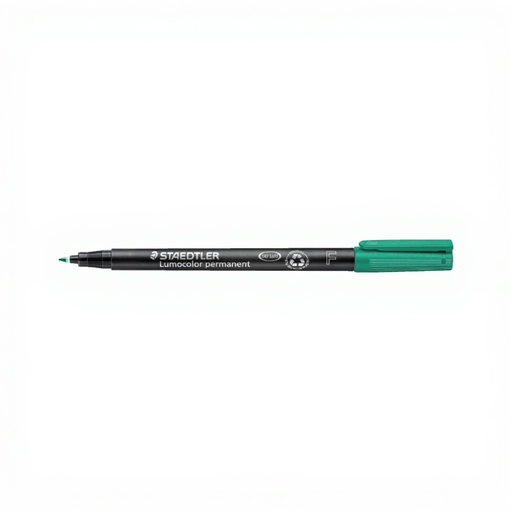
Why This Fits Their Persona: Ideal for office workers and students who need to label folders, tags, or transparencies permanently and legibly. The fine tip allows for clean, exact lettering in the smallest of spaces.
According to the manufacturer, the DRY SAFE technology counteracts rapid drying. The ink is smudge-proof and waterproof on most surfaces and adheres reliably, solving the problem of unreliable "permanent" markers.
Fine 0.6 mm tip for high precision. Refillable and made from 97% recycled plastic.
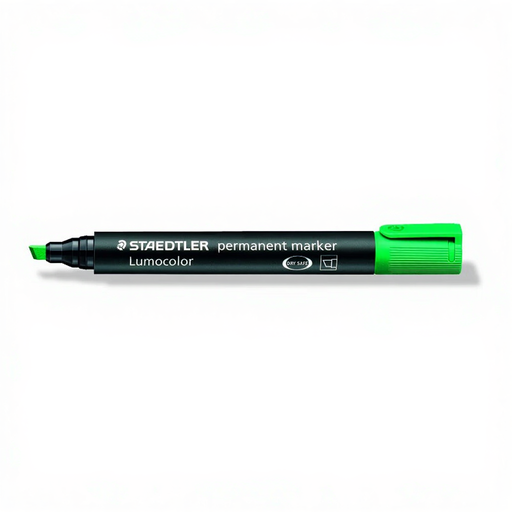
Why This Fits Their Persona: Perfect for logistics staff, tradespeople, or for use in the garden where robust markings are needed on cardboard, wood, metal, or plastic. The chisel tip is highly versatile.
The sturdy chisel tip resists fraying even under heavy pressure. The ink is designed for a wide variety of surfaces and provides the adhesion that is often lacking in cheaper markers.
Variable line width from 2 to 5 mm thanks to the chisel tip. Quick-drying, waterproof ink for universal use.
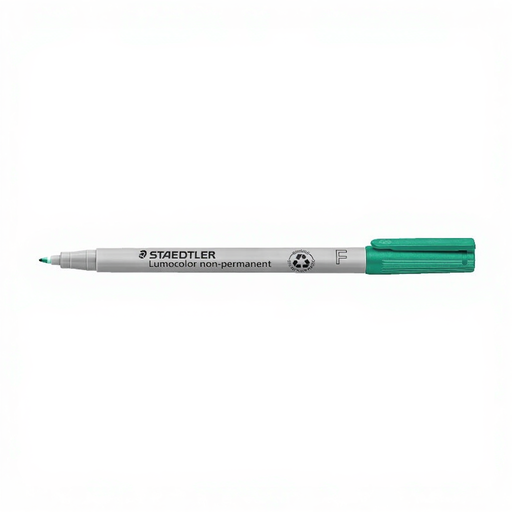
Why This Fits Their Persona: Indispensable for teachers, lecturers, and anyone who works with overhead transparencies or uses rewritable surfaces like laminated maps or whiteboards during presentations.
This pen is explicitly labelled "non-permanent," solving the problem for users who need flexibility. It prevents the frustration of accidentally making a permanent mark that can no longer be removed.
Water-soluble ink that can be wiped off smooth surfaces with a damp cloth. Refillable with the 487 15 refill station.
We have compiled a complete, up-to-date list of products that fully meet these strict selection criteria and applicable regulations.
1. What is the difference between a permanent marker and a transparency pen? A permanent marker is a general term for pens with durable ink. A transparency pen (or OHP pen) is a specialised version optimised for smooth, non-porous surfaces like overhead transparencies. However, non-permanent transparency pens also exist, with ink that can be wiped off with a damp cloth. Therefore, always check the product description for "permanent" or "non-permanent."
2. How can I remove permanent marker ink from plastic? Although the ink is considered permanent, it can often be removed from many smooth, non-porous plastic surfaces. Carefully try using a cloth soaked in isopropyl alcohol (rubbing alcohol) or an alcohol-based disinfectant. Test this on an inconspicuous area first to ensure the alcohol does not damage the plastic surface.
3. Are refillable markers really more cost-effective? In the long run, yes. The initial cost of a refillable marker and a bottle of refill ink is higher than a disposable pen. However, since the refill ink is sufficient for multiple refills, the cost per use drops significantly. Additionally, less plastic waste is produced, which is an environmental benefit.