
Lieferung heute & morgen

Qualitätsgarantie

Willkommens-Angebote freischalten: KOSTENLOSE Lieferung | Bis zu 80 % RABATT | Kostenlose 30-Tage-JoyPlus-Testphase
App herunterladen
Choosing the right filament is crucial for the success of any 3D print. The search for the perfect material can quickly become overwhelming, especially when looking for a specific colour like green. Many users invest in a spool of Green PLA Filament only to find that the result doesn't meet their expectations. This guide highlights the most common pitfalls and reveals which parameters truly matter to avoid failed prints and wasted material.
Before making a purchase, you should be aware of the common issues that often only become apparent after unboxing the spool.
To avoid these problems, it's wise to focus on objective technical specifications rather than relying solely on marketing promises.
Your decision should be based on the intended application.
The standard for most consumer FDM 3D printers is a 1.75mm green PLA filament. The crucial factor here is the diameter tolerance specified by the manufacturer. A value of ±0.02 mm or ±0.03 mm signals high manufacturing precision. This minimal deviation ensures a consistent material flow and is a fundamental prerequisite for reliable, high-quality print results.
As high-speed printers become more common, the demands on the material also increase. Standard PLA often cannot melt fast enough at very high speeds (over 250 mm/s), leading to underextrusion. High-speed green PLA is specially formulated to have a higher flow rate and ensure clean extrusion even during fast prints. If you own a high-speed printer, investing in a corresponding filament is a sensible way to unlock its full potential.
To make the selection easier, we have matched several products to different user profiles.
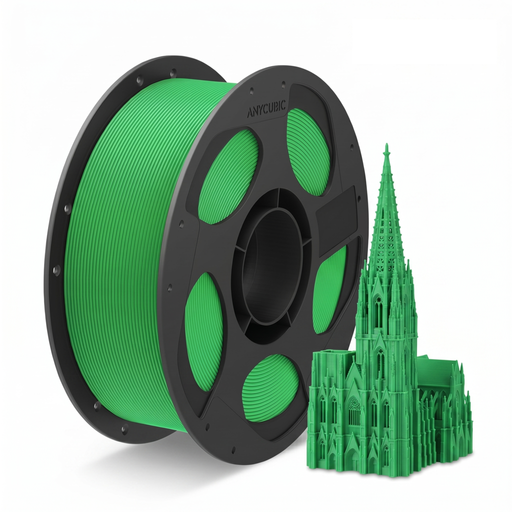
Why This Fits Their Persona: Ideal for beginners and makers who need a straightforward and reliable green 3D printer filament for everyday projects, prototypes, and learning purposes.
The formulation is designed for low warping and good layer adhesion, which minimises common problems for beginners. The neat winding prevents tangling.
Uniform extrusion and broad compatibility with most FDM printers. A good price-to-performance ratio for daily use.
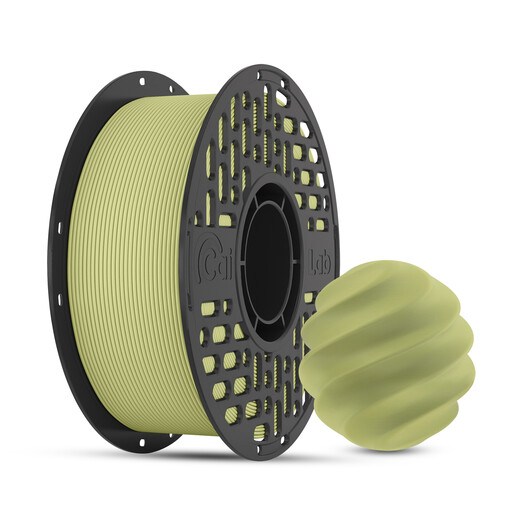
Why This Fits Their Persona: Perfect for designers and artists who want a professional, non-glossy surface to maximise the visual quality of their models and hide layer lines.
This filament delivers a true matte finish, avoiding the pitfall of misleading product descriptions. The result is a soft, non-reflective texture.
The special formula ensures smooth, clog-free extrusion and excellent bed adhesion, resulting in a flawless surface finish.
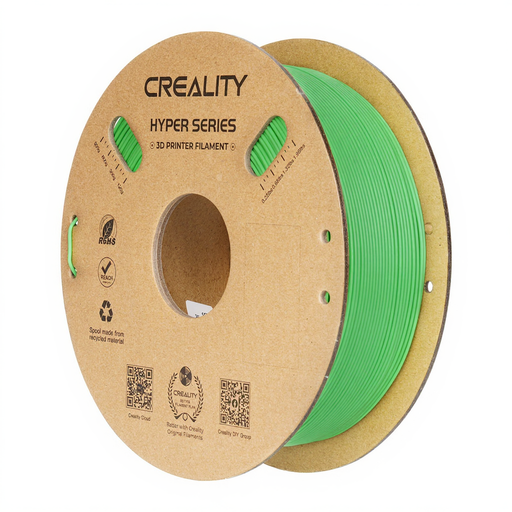
Why This Fits Their Persona: Designed for users with modern high-speed printers who need rapid prototyping and a high production rate without compromising on print quality.
This high-speed green PLA is optimised for high flow rates. It prevents underextrusion, a common problem when using standard PLA at high speeds.
According to the manufacturer, it is suitable for speeds of up to 600 mm/s. The precise diameter tolerance of ±0.02mm ensures consistent quality even at high speeds.
We have compiled a complete, up-to-date list of products that fully meet these strict selection criteria and UK safety regulations.
PLA is hygroscopic, meaning it absorbs moisture from the air. Moist filament becomes brittle and leads to poor print quality (e.g., bubbling, poor layer adhesion). Therefore, always store your filament spools in a cool, dry place. It's best to keep the spool in the resealable bag it came in, along with the included desiccant (silica gel).
PLA+ Filament is an enhanced version of standard PLA. By adding special additives, the material is generally made more impact-resistant, flexible, and durable. This makes green PLA+ filament a good choice for mechanical parts, enclosures, or other functional objects that are subjected to more stress than purely decorative prints.
Although some standard PLA filaments can still produce good results at slightly increased speeds, a dedicated High-Speed PLA is highly recommended for printers that consistently operate above 200 mm/s. These filaments are designed to melt faster and more evenly. Using them ensures more reliable extrusion and effectively prevents quality loss during fast print jobs.