
Lieferung heute & morgen

Qualitätsgarantie

Willkommens-Angebote freischalten: KOSTENLOSE Lieferung | Bis zu 80 % RABATT | Kostenlose 30-Tage-JoyPlus-Testphase
App herunterladen
Green tea drinks come as ready-to-drink iced tea, fruit beverages, multi-packs or loose tea for brewing at home. The selection ranges from iced green tea with mango, lemon or honey to organic green tea and Japanese green tea in tea bags. However, differences in sugar, sweeteners, caffeine, portion size and storage aren't always immediately obvious from the front of the packaging.
If you're shopping for the office, on the go or at home, you shouldn't decide based on flavour or brand name alone. Three typical buying mistakes often lead to the wrong choice.
A drink can contain green tea and still deliver several grams of sugar per 100 ml. Over a litre, that amount adds up accordingly. Terms like "with honey" or "with fruit" describe the flavour first and foremost, not necessarily a low-sugar recipe.
So check the nutritional information per 100 ml and, for multi-serving or large bottles, calculate it against the actual amount you'll drink. A drink with 4.3 g of sugar per 100 ml, for example, contains around 43 g of sugar in a litre.
"Mango", "lemon", "peach" or "berry" on the label can refer to juice, concentrate or natural flavourings. The actual fruit content is listed in the ingredients. With Fuze Tea Green Tea Mango & Chamomile 6x1.25L, the stated mango content is 1 per cent; it also contains chamomile extract, sugar and steviol glycosides.
For shoppers who prefer a clear tea character, the ingredients list and tea content are therefore more informative than the picture on the front.
A green tea multi-pack can simplify stocking up for the office, a family home or events. At the same time, 6 x 1.5 litres or 6 x 2 litres take up significantly more storage space. Once opened, many drinks need to be refrigerated and consumed within a few days.
Small 250 ml or 500 ml bottles are better suited for single portions. With cans, it's also worth noting that once opened, the drink usually can't be resealed.
For a fair comparison, make sure your shopping list includes at least the following details:
A low-calorie iced tea can contain sugar and also be sweetened with steviol glycosides. Other products avoid sugar altogether, using a combination of different sweeteners instead. If you want to avoid sugar, you should look at both the "of which sugars" figure and the full ingredients list together.
Ready-to-drink green tea is often combined with fruit, herbs or flowers. Options include:
Green tea and jasmine tea can contain caffeine. The exact amount isn't stated on many ready-to-drink products. For children and during pregnancy and breastfeeding, you should follow the relevant guidance on the label. Uni-President Jasmine Tea, for example, explicitly highlights its caffeine content.
For everyday use, the packaging matters just as much as the flavour. PET bottles are resealable and practical for on the go. Cans offer single portions but need to be drunk straight away. Tea bags require hot or cold water at home and are compact to store.
Also pay attention to the storage instructions. Unopened drinks should generally be kept cool, dry and away from direct sunlight. Opened bottles belong in the fridge and should be consumed within the timeframe stated on the packaging.
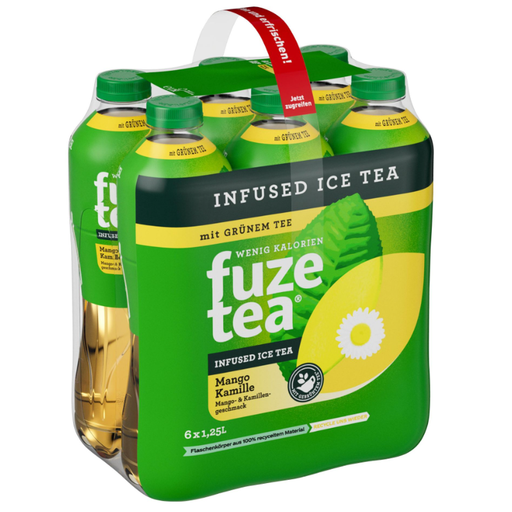
Why this product suits the profile: The multi-pack provides 7.5 litres of ready-to-drink green tea for the household, office or group occasions. The combination of mango and chamomile appeals to shoppers who prefer a fruitier flavour.
The nutritional values are clearly stated: 19 kcal and 4.3 g of sugar per 100 ml. This makes it easy to realistically assess the recipe before buying.
1.25-litre bottles, ready-to-drink convenience and tea from Rainforest Alliance certified farms according to the product information.
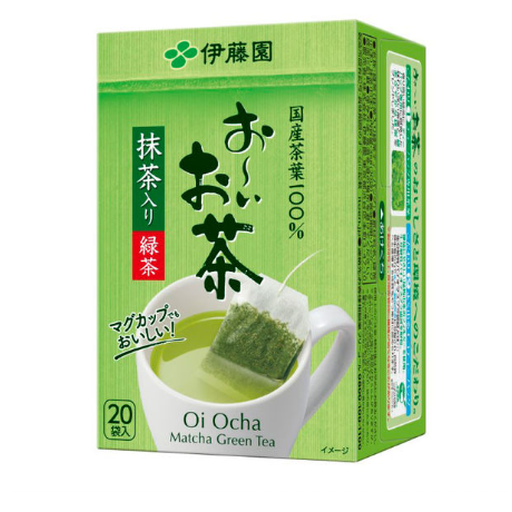
Why this product suits the profile: The blend of 95 per cent green tea and 5 per cent matcha can be brewed as either hot or cold tea. 20 individually wrapped bags are ideal for controlled portioning.
With no added sugar, fruit juice or flavouring, the tea character can be adjusted directly through steeping time and water quantity.
Japanese green tea with matcha; plant-based, biodegradable tea bag mesh according to the product information.
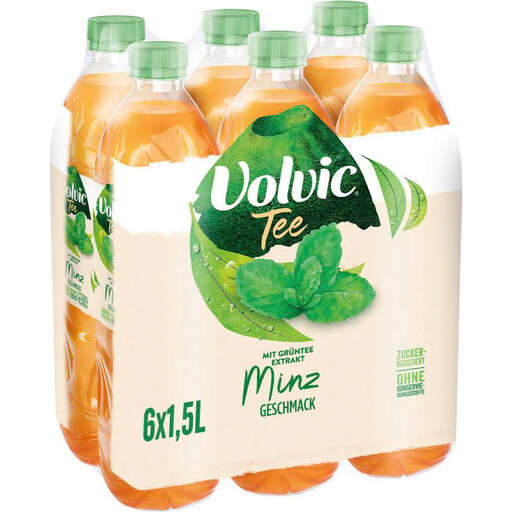
Why this product suits the profile: The 1.5-litre bottles are ideal for the fridge, the workplace or a household with regular drink requirements. Mint flavouring complements the green tea base.
The pack size is clear before purchase: six bottles make 9 litres. With 21 kcal and 4.9 g of sugar per 100 ml, the nutritional values are transparent and easy to plan for.
Ready-to-drink, resealable large bottles and a combination of mineral water, green tea extract and mint flavouring.
We've put together a complete, regularly updated list of products that fully meet these strict selection criteria and the safety regulations in force in the EU.
That depends on the recipe and portion size. Among the selection, some ready-to-drink products come in at around 19 to 30 kcal per 100 ml. A product labelled "no sugar" can still taste sweet thanks to sweeteners. What matters is the nutritional information table, not just the product name.
Many bottles should be refrigerated after opening and consumed within two to four days. The exact timeframe depends on the product. For cans, immediate consumption is recommended. Always follow the storage instructions on the packaging.
Tea bags require water and preparation time, but they often offer flexible portion control and less packaging volume. Ready-to-drink iced tea is instantly available on the go and in the office. To compare the cost per portion, you should look at the pack price, number of bags or bottle volume, as well as the use of water and refrigeration.