
Lieferung heute & morgen

Qualitätsgarantie

Willkommens-Angebote freischalten: KOSTENLOSE Lieferung | Bis zu 80 % RABATT | Kostenlose 30-Tage-JoyPlus-Testphase
App herunterladen
A grey shelf is more than just a storage unit; it's a statement piece for modern, uncluttered living. Its neutral colour blends seamlessly into almost any interior design scheme, creating a calm, organised atmosphere. However, the selection process is fraught with pitfalls that can quickly turn a supposed bargain into a costly mistake. Many shelves turn out to be unstable, their materials wear out quickly, or their dimensions don't suit the intended purpose. This guide will help you identify the crucial criteria and make an informed choice.
Before you make a decision, you should be aware of the typical flaws that often only become apparent after purchase.
To prevent these issues, focus on three objective criteria. These will help you assess a shelf's quality and suitability, independent of marketing promises.
The material determines not only the look but, more importantly, the durability and stability.
Always check the manufacturer's specified maximum load capacity per shelf. A value below 5 kg is often insufficient for storing books or heavier items.
Precisely measure the available space (width, height, depth) before you start your search. Also, consider the clearance needed for opening doors or for walkways.
A good shelving system is characterised by clear instructions and precisely fitting parts. For tall or narrow shelves, an included anti-tip kit (wall anchor) is an important safety feature, especially in households with children. For a grey bathroom shelf, there are also models with suction cup mounting that allow for installation without drilling. Check beforehand if these are suitable for your tile surface.
Here are some recommendations tailored to specific needs and room situations.
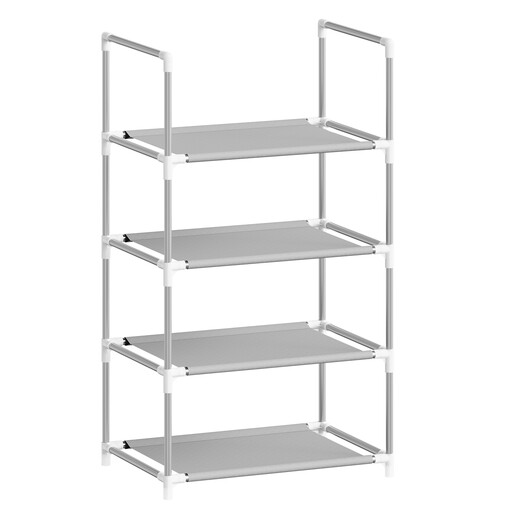
Why This Fits Their Persona: Ideal for a first apartment or small hallways where a simple, cost-effective, and space-saving shoe storage solution is needed. It fulfils a basic function without unnecessary extras.
The metal tube frame offers more stability than all-plastic designs. The clear dimensions (41x28x72 cm) ensure it fits into narrow niches without any unpleasant surprises regarding its size.
Very compact design that utilises vertical space. Assembly is tool-free via a simple push-fit system.
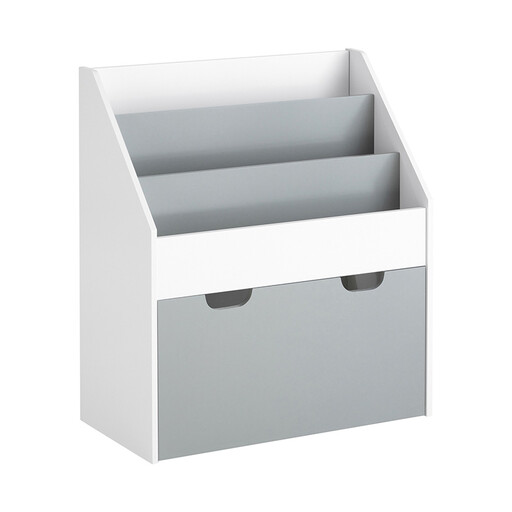
Why This Fits Their Persona: Solves the daily problem of books and toys scattered around the children's room. The child-friendly height encourages independence, and the neutral colour scheme fits many room designs.
It addresses the safety risk of unstable furniture in a child's room with an included anti-tip kit and rounded corners. The material (E1-grade MDF) is specified for children's furniture.
A combination of book compartments and a large, removable toy box on castors. The 70 cm height is easily accessible for toddlers and preschoolers.
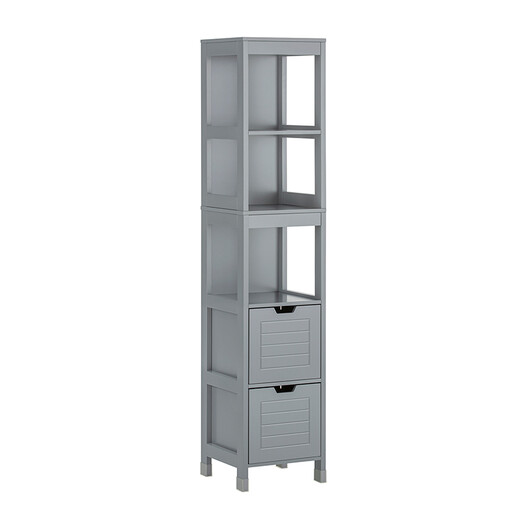
Why This Fits Their Persona: Perfect for those needing to create extra storage in small bathrooms or tight niches. The combination of open and closed compartments is practical for towels and cosmetics.
The material is specified as lacquered MDF, which offers higher moisture resistance than unprotected particleboard—a critical factor in the bathroom. The narrow 30x30 cm footprint is explicitly designed for niches.
Maximises vertical space with its 144 cm height. The mix of three open shelves and two baskets provides flexible storage options for different items.
We have compiled a complete, up-to-date list of products that fully meet these strict selection criteria and safety standards.
The load capacity of a wall shelf depends heavily on the shelf's material, its size, and, most importantly, the type of wall mounting. A small MDF wall shelf can often only support 5-10 kg, while a robust aluminium model, properly anchored in a solid wall, can hold up to 20 kg or more according to manufacturer specifications. Always check the maximum load capacity in the product specifications and use the appropriate wall plugs and screws for your wall.
For use in a humid bathroom environment, water-resistant materials are essential. Shelves made of plastic (like ABS), powder-coated metal, or lacquered MDF are recommended. These materials prevent moisture from penetrating and causing the shelf to swell or rust. Untreated particleboard or simple foil-laminated surfaces are unsuitable for the bathroom and will quickly lead to damage.
The stability of a narrow shelf depends on its height and the construction of its base. A low, narrow shoe rack is generally stable on its own. However, with a tall, narrow freestanding shelf (a high-rack), the risk of tipping is significantly greater. For safety reasons, it is strongly recommended to secure such shelves to the wall with the provided anti-tip kit. This prevents them from falling over if bumped into or pulled on by children.