
Lieferung heute & morgen

Qualitätsgarantie

Willkommens-Angebote freischalten: KOSTENLOSE Lieferung | Bis zu 80 % RABATT | Kostenlose 30-Tage-JoyPlus-Testphase
App herunterladen
A high-quality grill pan brings the signature aroma and appealing grill marks of a barbecue straight to your kitchen—whatever the weather. But the market is flooded with models whose marketing promises often suggest more than the products can deliver in daily use. Many home cooks invest in a pan that loses its performance after just a few months or proves to be impractical.
As your Joybuy Product Recommendation Officer, I have analysed the most common pitfalls to ensure your next grill pan becomes a long-lasting and worthwhile addition to your kitchen. We will focus on the facts and technical features that truly matter.
Before we explore the ideal features, it's crucial to understand the typical problems that often only become apparent after your purchase.
To avoid these pitfalls, you should check three core aspects before buying. These will define your pan's performance and durability.
The material is the most important factor for heat retention and distribution.
The shape and design of the grill ridges are crucial for performance.
Always check the manufacturer's specifications for compatibility.
Here are some recommendations tailored to different user profiles that meet the quality criteria mentioned above.
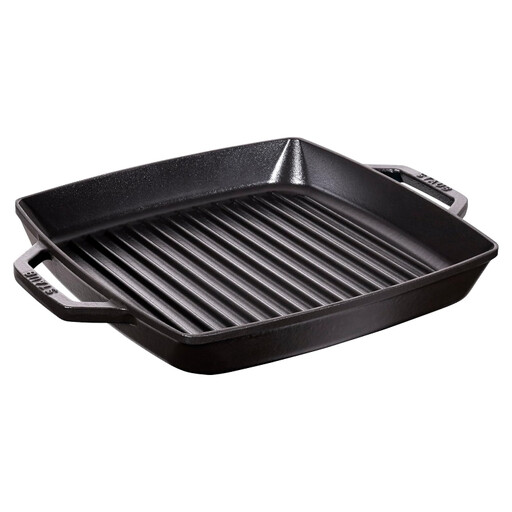
Why This Fits Their Persona: For users who prioritise the perfect sear and long-term durability. The solid cast iron delivers the high, even heat essential for creating an ideal crust on steaks and other grilled foods.
It bypasses the short-lived coating trap by using extremely heat-resistant and robust enameled cast iron, which is designed for the highest temperatures.
Excellent heat retention for even cooking; oven-safe and suitable for all hob types, including induction.
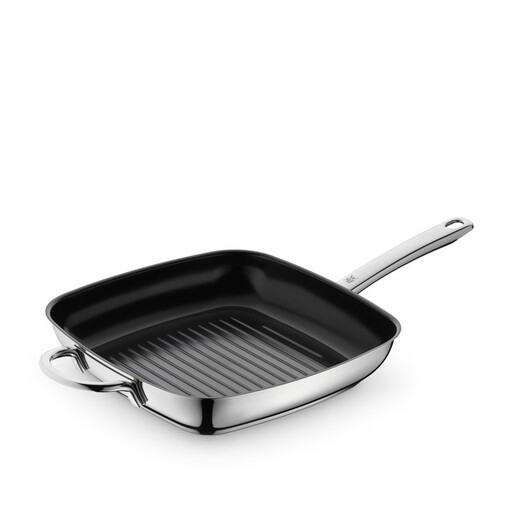
Why This Fits Their Persona: Ideal for home cooks who want a flexible pan for fish, vegetables, and meat, and who appreciate the ability to finish dishes in the oven. A robust all-rounder for daily use.
Avoids the trap of inflexibility. It's oven-safe up to 260°C and suitable for all hob types, making it a highly versatile tool.
Cromargan stainless steel with a ceramic coating for high heat resistance (up to 400°C on the hob) and even heat distribution.
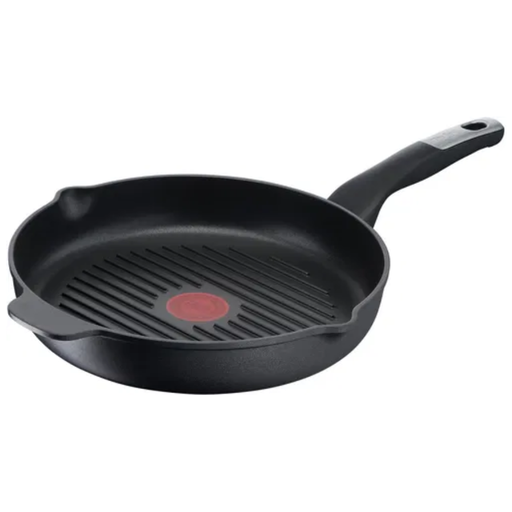
Why This Fits Their Persona: A straightforward and reliable option for anyone looking to try pan-grilling without a major investment. Ease of use and cleaning are the main focus.
Directly addresses the trap of incorrect hob compatibility, as it is designed for all hob types, including induction. This prevents a classic buying mistake.
The proven non-stick coating makes cooking and cleaning easier. The pan is also oven-safe up to 175°C.
We have compiled a complete, up-to-date list of products that fully meet these strict selection criteria and relevant safety standards.
1. How do you properly clean a cast iron grill pan? After use, let the pan cool down, but not completely. Clean it with hot water and a brush, avoiding dish soap to preserve the developing patina (a natural non-stick layer). Dry the pan thoroughly immediately and rub it with a thin layer of cooking oil to prevent rust. Enameled cast iron pans are easier to care for and can typically be cleaned with dish soap.
2. Why is my steak sticking to the grill pan? Sticking usually has two causes: the pan wasn't hot enough, or the meat was turned too soon. Preheat the pan (especially cast iron) for a few minutes over medium-high to high heat. Only then should you add a little high-smoke-point oil and the meat. Wait until a crust has formed—the meat will then release itself from the pan's surface.
3. Does a grill pan for induction hobs require special accessories? No, no special accessories are needed. The only crucial factor is that the base of the pan is ferromagnetic. You can easily test this by holding a magnet to the bottom of the pan. If it sticks, the pan is suitable for induction. All the models recommended here and most modern, high-quality pans meet this requirement.