
Lieferung heute & morgen

Qualitätsgarantie

Willkommens-Angebote freischalten: KOSTENLOSE Lieferung | Bis zu 80 % RABATT | Kostenlose 30-Tage-JoyPlus-Testphase
App herunterladen
A high-quality grill pan brings the authentic flavour and characteristic sear marks of a barbecue right into your kitchen—without the charcoal or unpredictable weather. However, the path to the right pan is often paved with marketing promises and hidden defects. Many buyers invest in a product that becomes unusable after a short time or is incompatible with their own hob. Before you make a decision, you should know the three most common traps that lead to frustration and wasted money.
To avoid these problems, it is crucial to understand the fundamental features of a good grill pan.
Choosing the right grill pan depends on three core factors: the material, compatibility with your cooktop, and the functional design. An informed decision is based on these objective criteria, not on advertising slogans.
The material is the primary determinant of your pan's searing performance, weight, and maintenance requirements.
For owners of an induction cooktop, the construction of the pan's base is the most important criterion. An induction grill pan requires a base made of a ferromagnetic material for the cooktop to transfer energy to the pan at all.
The shape and additional features should match your cooking habits.
Instead of an overwhelming list, we present a few models tailored to specific user profiles.
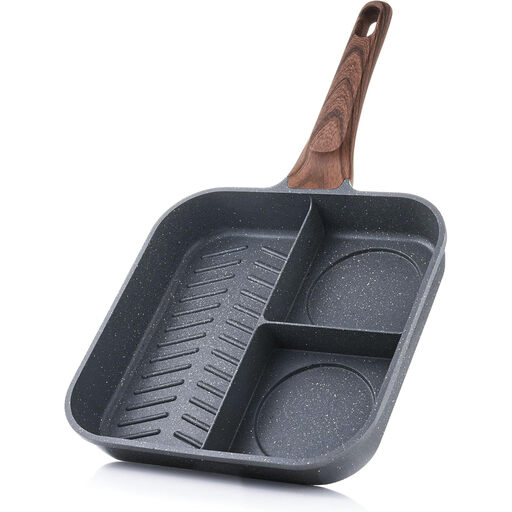
Why This Fits Their Persona: Ideal for home cooks who value efficiency and versatility. The three separate sections allow for the simultaneous preparation of different components of a meal without flavours mixing—perfect for a full breakfast or a quick dinner.
The pan bypasses the coating trap with a Swiss ILAG non-stick coating, which the manufacturer states is free of PFOA and PFOS. The thick cast aluminium base with a stainless steel core ensures induction compatibility and prevents the warping trap.
Multifunctional 3-in-1 Design: Cook meat, vegetables, and eggs simultaneously. Induction-Ready: The magnetic base ensures compatibility with all hob types.
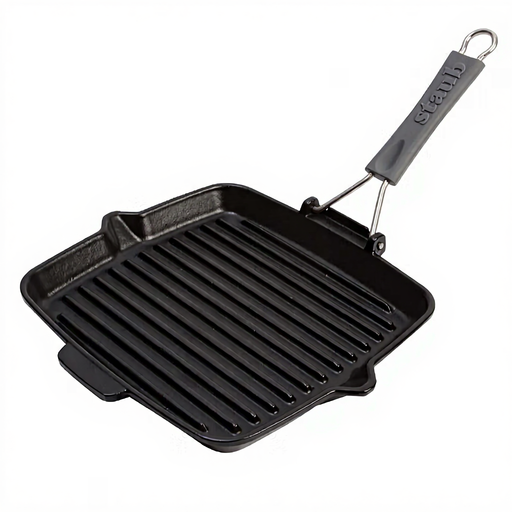
Why This Fits Their Persona: For those who make no compromises when it comes to steak. This pan is designed to reach and maintain the high temperatures necessary for a perfect crust and a juicy interior. An investment in durability and flavour.
As a solid cast-iron pan, it is immune to the warping and coating traps. The enamelled surface is extremely durable and made for high heat. Its construction ensures reliable performance on all hob types, including induction.
Superior Heat Retention: Ensures an even, intense sear and distinctive grill marks. Durability: Enamelled cast iron is robust, scratch-resistant, and virtually indestructible with proper care.
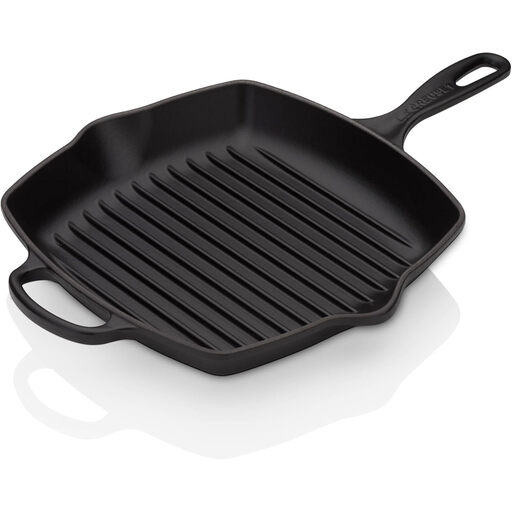
Why This Fits Their Persona: For cooks seeking a reliable, versatile, and oven-safe tool for daily use. This pan masters steaks as confidently as grilled vegetables or chicken, and is suitable for all hob types, including induction, as well as the oven.
The manufacturing quality of Le Creuset ensures the pan is perfectly flat and will not warp. The enamelled cast iron is a proven solution that bypasses the pitfalls of cheap coatings and promises high durability.
Versatility: Suitable for all hob types and the oven. Thoughtful Design: The high ridges and pouring spouts make it easy to drain excess fat for healthier results.
We have compiled a complete, up-to-date list of products that fully meet these strict selection criteria and UK safety regulations.
1. How do you properly clean a cast-iron grill pan? Let the pan cool slightly after use, but clean it while it is still warm. Use hot water and a brush without washing-up liquid to remove any residue. Dry the pan thoroughly immediately and rub the cooking surface with a thin layer of cooking oil to maintain the seasoning and prevent rust. Enamelled cast-iron pans are often dishwasher-safe, but hand washing is recommended to preserve the material.
2. Can I use a heavy grill pan on a glass-ceramic cooktop? Yes, but with caution. Always lift the pan instead of sliding it across the cooktop to avoid scratches. Be sure to set the pan down gently. A cast-iron pan with a smooth, ground base is advantageous here.
3. Why is my steak sticking to the cast-iron pan? Sticking usually has two causes: the pan was not hot enough, or the meat was turned too soon. Preheat the cast-iron pan slowly over medium heat for several minutes until it is properly hot. Then add a little high-smoke-point oil and place the steak in. Only turn it when it releases from the bottom of the pan on its own. By then, a perfect crust will have formed.