
Lieferung heute & morgen

Qualitätsgarantie

Willkommens-Angebote freischalten: KOSTENLOSE Lieferung | Bis zu 80 % RABATT | Kostenlose 30-Tage-JoyPlus-Testphase
App herunterladen
A grill pan gives you those classic grill marks on meat, fish, vegetables or sandwiches, without needing an outdoor barbecue. That’s why it’s a handy addition to many kitchens, whether you’re cooking on the hob or in the oven. However, grill pans differ significantly in weight, heat conduction, coating and cleaning.
If you only look at the distinctive ridged surface or a well-known brand, you can easily miss the finer details. Three common buying mistakes are particularly worth noting:
A cast iron grill pan retains heat for longer. This is helpful when searing steaks or larger pieces of vegetables, because the temperature drops less quickly when you add the food. The downside: cast iron is heavy. Models weighing around 2.9 to 3.1 kg need secure handles and a sufficiently sturdy storage surface.
Enamelled cast iron, unlike untreated cast iron, doesn’t require the traditional seasoning process. Even so, you should still use suitable kitchen utensils and clean it by hand once it has cooled down.
Aluminium conducts heat quickly and is much lighter. A 26 cm grill pan made from aluminium is therefore ideal for everyday use, especially if you need to move or store the pan regularly. However, its heat retention is lower than that of cast iron. Also check whether the model is explicitly suitable for your hob.
A round grill pan often fits better on smaller hobs. A square grill pan with ridges makes efficient use of the surface for longer foods like steaks, asparagus or courgettes. What matters isn’t just the external measurement, but the actual grilling area.
Also pay attention to the height of the side walls. An aluminium grill pan with a depth of around 41 mm can hold splashes better. However, high sides can make flipping food with a spatula a bit trickier.
An induction-compatible grill pan should be explicitly approved for induction hobs in the technical specifications. Cast iron models are often compatible; with aluminium, you need to check separately.
For an oven-safe grill pan, the maximum temperature matters, as does the handle. The Tefal model in this selection is rated for use up to 175 °C. According to the product details, Le Creuset cast iron models are suitable for gas, induction, ceramic, halogen, oven and grill.
Non-stick models make it easier to release food and clean up. Even so, use wooden, plastic or heat-resistant silicone utensils if the manufacturer recommends them. Dishwasher-safe doesn’t automatically mean the surface will stay in perfect condition for years.
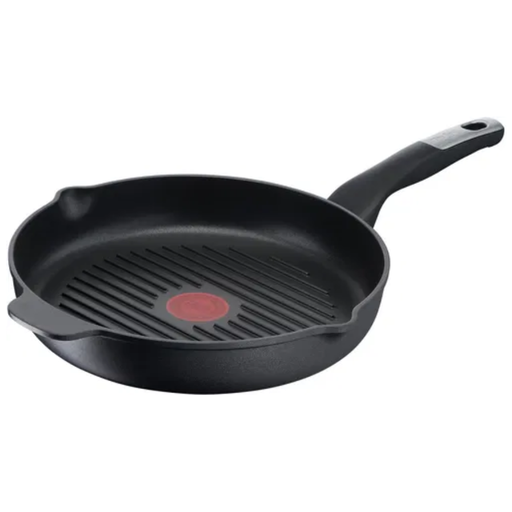
Why this product fits the profile: The 26 cm size and aluminium body make it easy to get started. According to the product details, this model is suitable for electric, gas, ceramic and induction hobs.
The non-stick coating reduces sticking, and the manufacturer states an oven-safe temperature of up to 175 °C. This means you can clearly assess the limits of use before buying.
Aluminium construction, ridged surface, non-stick coating and stated dishwasher suitability.
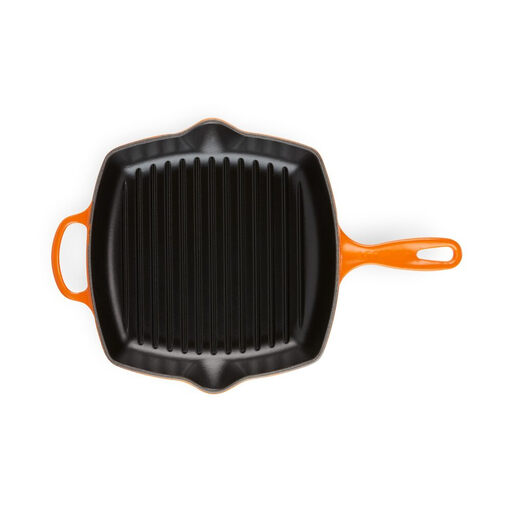
Why this product fits the profile: Enamelled cast iron, raised ridges, pouring spouts, plus a long handle and an additional helper handle – ideal for households that regularly cook steaks and vegetables.
The specifications explicitly list induction and oven as suitable heat sources. The enamelled interior doesn’t require traditional seasoning.
26 cm grilling surface, cast iron with high heat retention, integrated pouring spouts and two handles.
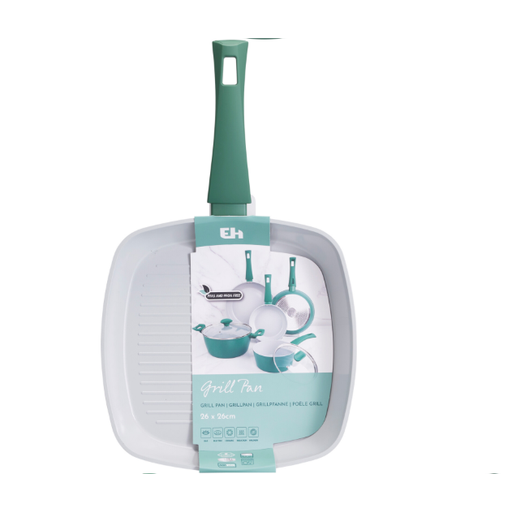
Why this product fits the profile: The aluminium construction with a 260 mm diameter and 41 mm depth is designed for fast heat conduction and larger portions.
The product details note that a suitable induction interface disc is required for induction hobs. This helps you avoid ordering the wrong item.
Fast heat conduction, 41 mm high sides and a ridged surface for meat, vegetables, fish or skewers.
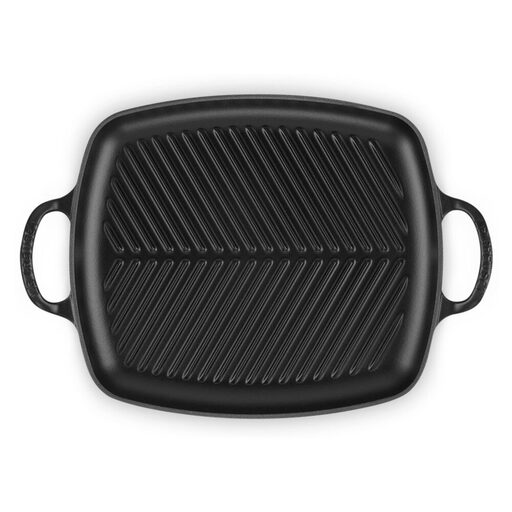
Why this product fits the profile: The 30 cm grilling surface offers more space for multiple ingredients. Two integrated handles make it easier to move the grill plate, which weighs around 3.1 kg.
The technical specifications clearly state the suitable hob types and the oven. The heavy weight is transparently listed and should be taken into account when handling.
30 cm grilling surface, enamelled cast iron, heat source compatibility including induction and oven.
Heat cast iron slowly and don’t turn it up to the maximum setting straight away. Depending on the model, a preheating time of five to ten minutes is recommended. Only add the food once the grilling surface is hot enough. With a non-stick grill pan, make sure you stick to the temperature limit stated by the manufacturer.
Let a heavy grill pan cool down completely before cleaning it. Pouring cold water onto hot cast iron can cause a temperature shock, which may lead to cracks in enamelled surfaces. Use warm water, a mild washing-up liquid and a soft sponge. Avoid steel wool and abrasive cleaners.
Because cast iron retains heat for a long time, the handles and base can get very hot. Use heat-resistant gloves and place the pan on a suitable, heatproof surface. A metal grill pan should never go in the microwave.
We’ve put together a full, regularly updated list of products that fully meet these strict selection criteria and the safety regulations in force in the EU.
Cast iron models are often suitable for induction. With aluminium, the product description must state induction compatibility or a suitable magnetic base. For the “GRILL PAN ALUMINIUM 260x41MM” model, an induction interface disc is specified.
The lifespan depends on the material, coating and care. Cast iron can last a long time if looked after properly. With non-stick models, you should avoid high temperatures, metal utensils and harsh cleaning agents, as these can damage the surface.
Preheat the pan thoroughly, pat the food dry and don’t move it straight away after placing it on the surface. The raised ridges create the marks; the width and intensity also depend on the temperature, the size of the food and the cooking time.