
Lieferung heute & morgen

Qualitätsgarantie

Willkommens-Angebote freischalten: KOSTENLOSE Lieferung | Bis zu 80 % RABATT | Kostenlose 30-Tage-JoyPlus-Testphase
App herunterladen
A high-quality grill pan brings authentic grilled flavour and characteristic sear marks right into your kitchen—without the hassle of an outdoor grill. But the market is flooded with models whose promises often don't hold up in practice. Many buyers invest in a pan that becomes unusable after a short time or simply fails to deliver the desired results. Before you make a decision, it's crucial to understand the common pitfalls that lead to disappointment and wasted money.
As your Joybuy Product Recommendation Officer, I have analysed the most common issues to give you clear guidance.
The 3 hidden flaws that make a grill pan useless:
To avoid a bad purchase, you should focus on three core technical features. These determine the pan's durability, functionality, and cooking performance.
The choice of material is the most fundamental decision. It significantly impacts heat performance, weight, and maintenance.
Compatibility with your hob is non-negotiable.
The shape and ridges are crucial for the grilling result.
Based on these objective criteria, we have identified models that offer a fitting solution for specific user profiles.
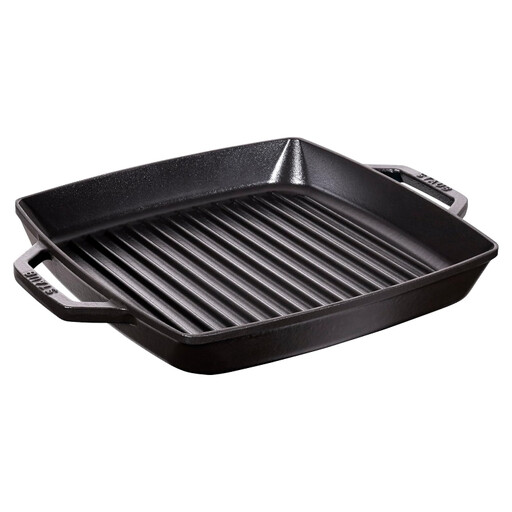
Why This Fits Their Persona: Ideal for those who make no compromises when searing steaks. The solid cast-iron construction retains extreme heat, while the large, square surface provides space for multiple pieces or large cuts. The dual handles allow for secure handling of the heavy pan.
The enamelled cast iron is designed for the highest temperatures and is extremely durable. The heavy, flat base ensures perfect contact with the hob and even heat distribution without hotspots.
Excellent heat retention for professional searing results. The ridge structure creates distinct grill marks and drains fat. Suitable for all hob types, including induction, and oven-safe.
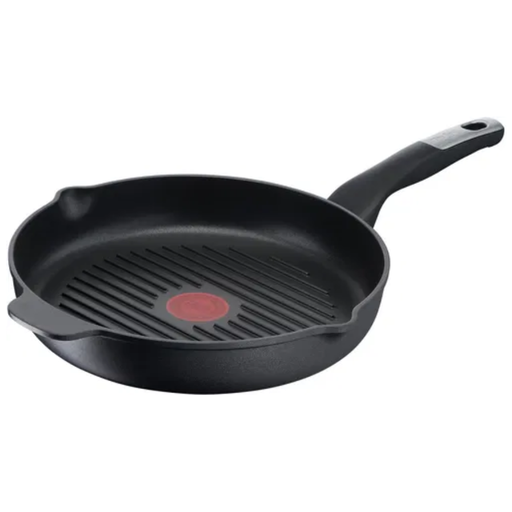
Why This Fits Their Persona: For cooks looking for a straightforward solution for daily use. This pan combines good grilling results with the convenience of a non-stick coating for easy cleaning and is suitable for all hob types.
According to the manufacturer, the non-stick coating is especially durable. The thick aluminium body with a Thermo-Fusion base ensures better heat distribution than simple, thin pans.
Combines non-stick convenience with induction compatibility. Cleaning is straightforward, and handling is easy due to its lower weight. Oven-safe up to 175°C for added flexibility.
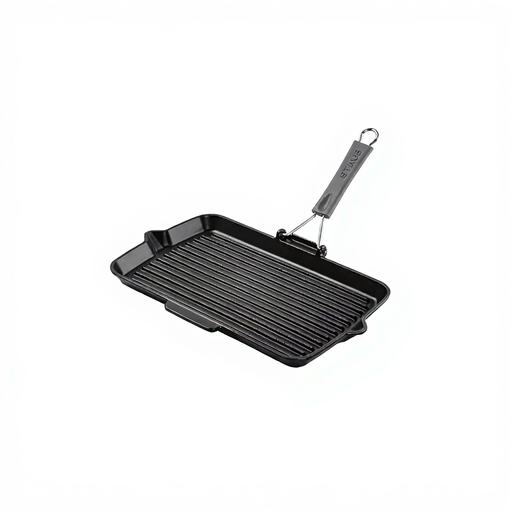
Why This Fits Their Persona: Perfect for kitchens with limited storage. This model offers the superior performance of cast iron but can be stored in an extremely space-saving way thanks to its folding silicone handle.
Despite its clever design, this is a full-fledged, heavy cast-iron pan that avoids the typical weaknesses of lightweight materials. The handle is sturdy and heat-resistant.
Combines the searing properties of cast iron with a space-saving storage solution. The pouring spouts make it easy to remove excess fat. Suitable for all hob types and oven-safe.
We have compiled a complete, up-to-date list of products that fully meet these strict selection criteria and rigorous safety standards.
After use, let the pan cool slightly, but clean it while it's still warm. Use hot water and a brush to remove food residue. Avoid harsh dish soap on non-enamelled pans to preserve the built-up seasoning (natural non-stick layer). Dry the cast-iron pan immediately and thoroughly, then rub it with a thin layer of cooking oil to prevent rust. Enamelled models, like those from Staub, are lower-maintenance and often dishwasher-safe, although hand-washing is recommended to protect the material.
Yes, it is absolutely essential. For a pan to work on an induction hob, its base must be made of a ferromagnetic material. Cast iron is naturally magnetic. For aluminium or stainless steel pans, a special magnetic base must be incorporated. Always look for the induction symbol (a stylised coil) or the manufacturer's explicit statement in the product description.
A square grill pan makes more efficient use of space on the hob and in the cupboard. It offers a larger continuous cooking surface, which is particularly advantageous for longer foods like whole fish fillets, asparagus spears, or multiple sausages. A round pan conforms better to the shape of most cooking zones, which can lead to very even heat distribution from the centre to the edge. The choice ultimately depends on what you plan to cook most often.