Who’s baking potato bread together?

A group baking several loaves

If you’re baking several loaves in one session, the size of your tins, usable shelf positions and number of batches matter – not just the oven’s capacity. NEFF lists a capacity of 71 l for the B54CR71N0; Rommelsbacher gives a capacity of 42 l for the BG 1805/E and says it can accommodate tins up to 31.5 cm in diameter. The NDR notes that fan-assisted cooking can be important when baking on several levels.

Bread bakers planning to use steam

If you want to control moisture during baking, check the exact function and whether it can be combined with your chosen heating method. Bosch lists a steam burst for the HRG532BB3; NEFF describes a bread baking setting for the B54CR71N0, but no integrated steam technology.

A baking session without space for a built-in oven

If you don’t have a suitable space for a built-in model, you could consider a freestanding oven. Check its footprint, the size of your tins and its temperature range against your recipe. Rommelsbacher lists the BG 1805/E as a freestanding mini oven with a capacity of 42 l.

What to consider when buying

Buying priority What to check when buying Who it matters to most
Space for loaves and trays Check the diameter of your tins, usable shelf positions and interior space; if you’re using several levels, check the guidance for the relevant heating method. If we’re baking several loaves in one session, we want to know whether the tins and trays will actually fit. For around 36% of consumers, space for loaves and trays is the main priority.
Heat and steam Check the temperature range for your chosen heating method and the type of steam function against your recipe. If I want to use steam precisely when baking bread, I check how it’s introduced and which heating method it works with. For around 29% of consumers, controlling heat and steam is the main priority.
Space and appliance type Check the external and niche dimensions, installation guidance and connection type for the specific model. If there isn’t a suitable built-in space in the kitchen, I first need to work out where a freestanding appliance can be safely placed. For around 21% of consumers, finding a suitable spot is the main concern.
Electricity and cleaning Compare the energy consumption for each standardised baking cycle and the specific cleaning method. If we use the oven frequently, we want to consider energy use and cleaning as well as its baking performance. For around 14% of consumers, these ongoing costs are the main priority.

Avoiding buying and planning pitfalls

  • Assuming the capacity in litres means there’s room for any number of loaves

    The oven’s capacity alone doesn’t tell you which tins will fit side by side or how several loaves will bake on fully loaded shelves.

    Measure your tins and check the interior dimensions, trays and shelf positions for the specific model.

    Depending on your kitchen, installation or changes to the connection may involve extra work; additional batches and cleaning programmes also add to running costs.

Key brands to consider

Bosch

Built-in ovens with a range of steam and heating functions; the HRG532BB3 is one example of a model with a steam burst.

  • Bosch lists a 71-litre capacity, a steam burst and 3D hot air for up to three levels for the HRG532BB3.
  • These details don’t prove that bread will bake evenly on every level, or that other Bosch ovens have the same functions.

NEFF

Built-in ovens with a bread baking setting; the B54CR71N0 is not listed as having integrated steam technology.

  • NEFF lists a capacity of 71 l and a bread baking setting for the B54CR71N0.
  • According to NEFF, the bread baking setting is limited to 180–220 °C. If your recipe calls for a higher initial temperature, check whether another suitable heating method is available.

AEG

According to AEG, the BP3400B combines SteamBake, which adds moisture, with a 71-litre capacity.

  • For this model, AEG describes adding water to a well in the oven floor and lists pyrolytic cleaning.
  • SteamBake isn’t automatically the same as a steam burst; check how it works for your baking plans.

Miele

The H 7660 BP is a specific built-in model with moisture plus, making it useful for comparing functions.

  • Miele lists moisture plus with several heating methods, as well as pyrolytic cleaning, for the H 7660 BP.
  • The benefits for dough and crust described by Miele aren’t an independently measured result specifically for potato bread.

Rommelsbacher

Freestanding mini ovens are one option if you don’t have a suitable space for a built-in model.

  • Rommelsbacher lists a capacity of 42 l, a temperature range of 80–230 °C and space for baking tins up to 31.5 cm in diameter for the BG 1805/E.
  • The smaller oven may limit how much you can bake in one batch if you’re planning a group session with several loaves.

Ovens for your baking session at Joybuy

This selection includes built-in ovens, a freestanding cooker and a mini oven. The key things to consider are the right type of appliance, whether your tins will fit and which functions your recipe actually needs.

Bosch HBA571BB4 Series 2 built-in oven

Bosch HBA571BB4 Series 2 built-in oven

This built-in model could be a good option if you’re looking for a large-capacity oven with fan cooking for a group baking session.

71 l; 3D hot air; pyrolytic self-cleaning; AutoPilot with 10 programmes; LED touch controls; black.

View at Joybuy

Comfee built-in oven, 70 l

Comfee built-in oven, 70 l

This built-in model could suit you if you’re looking for a large-capacity oven with several cooking functions.

70 l; 3 kW; fan cooking, grill and pizza function; AquaClean steam cleaning; LED display with timer; ECO mode; energy rating A. Steam cleaning is a cleaning function, not necessarily a way to add steam while baking bread.

View at Joybuy

Haier H6 ID23T3HTB built-in oven

Haier H6 ID23T3HTB built-in oven

The stated capacity of 78 l could make this a good option for your baking session if you’re looking for a large built-in oven.

78 l; 9 cooking functions; energy rating A+.

View at Joybuy
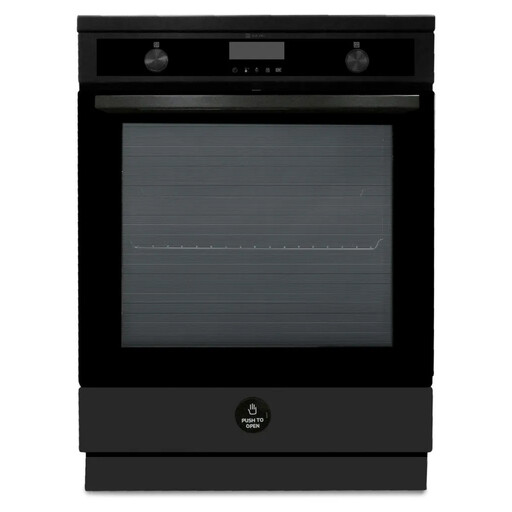
AEG CIB6499APB freestanding induction cooker

AEG CIB6499APB freestanding induction cooker

This type of appliance could suit you if you’re looking for a freestanding cooker with an oven and hob.

73-litre oven with pyrolytic cleaning; four-zone induction hob.

View at Joybuy

WOLTU BF12sz mini oven, 32 l

WOLTU BF12sz mini oven, 32 l

This freestanding mini oven could be an option if you don’t need a built-in model and your planned batch will fit in its smaller cooking space.

32 l; 1,600 W; 100–250 °C; baking and grilling functions; timer and crumb tray. If you’re baking several loaves, the oven’s capacity may limit how many you can bake in one batch.

View at Joybuy

Frequently asked questions

Does an oven for potato bread need an integrated steam function?

No. Conventional top and bottom heat is also suitable, even without integrated steam. If you want to use steam, check the specific function and whether it can be combined with your chosen heating method; a bread baking setting or full steam cooking function doesn’t in itself provide a steam burst during high-temperature bread baking.

Can I always set my recipe’s temperature using the bread baking setting?

Not necessarily. NEFF gives a temperature range of 180–220 °C for the bread baking setting on the B54CR71N0. If your recipe calls for a higher initial temperature, check whether another suitable heating method is available and consult the instructions for the specific model.

How can I check whether several bread tins will fit in the oven?

Measure your tins and compare their dimensions with the usable interior space, trays and shelf positions of the specific model. The capacity in litres alone won’t tell you whether the tins will fit at the same time; suitability for baking on several levels also depends on the oven and heating method.

What should I check before positioning or installing the oven?

Check the niche or space dimensions, the installation and clearance guidance, and the appliance’s connection type. The German Low Voltage Connection Ordinance regulates work on the electrical installation downstream of the service fuse; it shouldn’t be taken to mean that every oven can simply be plugged in.

How can I compare energy use and cleaning requirements?

For ovens with the relevant information, compare the kWh figures for each standardised baking cycle rather than looking only at the energy rating. The Verbraucherzentrale explains that consumption figures are based on standardised operating modes; actual consumption when baking your own potato bread may differ. The NDR notes that pyrolysis uses additional electricity.