
Lieferung heute & morgen

Qualitätsgarantie

Willkommens-Angebote freischalten: KOSTENLOSE Lieferung | Bis zu 80 % RABATT | Kostenlose 30-Tage-JoyPlus-Testphase
App herunterladen
A growing-with-your-child high chair should offer more than a raised seat for your baby’s first meals. It needs to suit your child’s age and height, your dining table and the space available. At the same time, the safety harness, stability and everyday cleaning should all work reliably.
On product pages, terms such as “6-in-1”, “ergonomic” or “from babyhood to adulthood” may sound convincing at first. However, these claims are only useful when the individual usage stages, weight limits and accessories are clearly specified.
A 3-in-1 high chair or 6-in-1 high chair may offer several seating options. What matters, however, is how long your child can actually use the chair in the high-chair position. For example, the Kikka Boo High Chair 6-in-1 Woody has a limit of 15 kg or around 3 years in the high-chair position. According to the product details, the model is intended for use as a junior chair up to 25 kg and around 6 years.
A height-adjustable children's chair can adapt to different table heights. Babies still have different requirements from older children, however. A high chair for babies from 6 months should only be used once your child can sit independently and without support. Your child’s actual age, physical control and the manufacturer’s instructions are therefore more important than general age claims in advertising.
With some wooden models, the safety harness and chair are included, while a tray, seat insert or cushion must be purchased separately. If you need a high chair with tray, check the contents before buying. According to the product description, the matching Alpha Tray for the Hauck Alpha+ is available separately. The product price alone therefore does not always reflect the full cost of purchase.
A correctly adjusted restraint system is essential for babies. A high chair with safety harness should secure the harness to suit your child’s size without it being too loose or digging in. Depending on the model, this may be a 3-point or 5-point harness, a crotch strap and a front bar.
You should also look for:
A tray is not designed for a child to pull themselves up on or stand on. Castors and gliders must also be suitable for the construction: they can make the chair easier to move, but they do not replace supervision.
An ergonomic high chair should not only be height-adjustable. A suitable seat depth and a footrest that allows your child’s feet to rest securely are also important. With an adjustable high chair, the seating position can be adapted more effectively to your child’s height.
A model whose seat and footboard can be adjusted or removed without much effort is particularly practical. This allows the chair to be moved closer to the family table later on. An upright sitting position supports participation in shared meals, but it is not a medical promise and does not replace individual advice.
A wooden high chair often feels durable and can be cleaned with a damp cloth if it has smooth, sealed surfaces. Wood should not be soaked in water. Wipe-clean faux-leather covers are also practical for everyday use, while machine-washable fabric covers can be advantageous when dealing with heavier soiling.
For smaller homes, a folding high chair, low weight or an upright folded position may be important. Check the dimensions when unfolded and the storage space required. A compact chair is not automatically suitable for every table height.
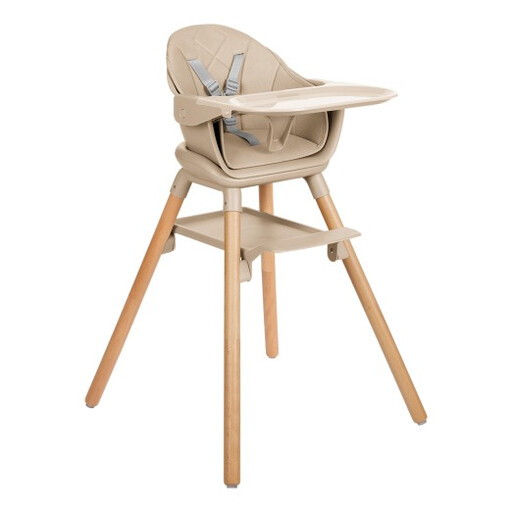
Why this product suits this profile: Six usage options, a removable double tray and a wipe-clean cover meet typical needs around mealtimes and play.
The age and weight limits are specified by usage stage: up to 15 kg as a high chair and up to 25 kg as a junior chair.
5-point safety harness, adjustable footrest, non-slip feet and a net weight of 5.4 kg.
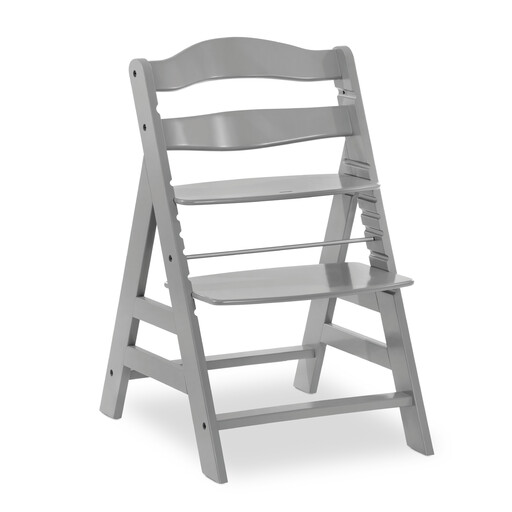
Why this product suits this profile: This height-adjustable children's chair, made from European beechwood, is designed for use from toddlerhood through to adulthood.
The product details specify five seat heights, three footrest positions and a maximum load of 90 kg.
Adjustable seat and foot area, 5-point harness and stated compliance with EN 14988:2017 + A1:2020.
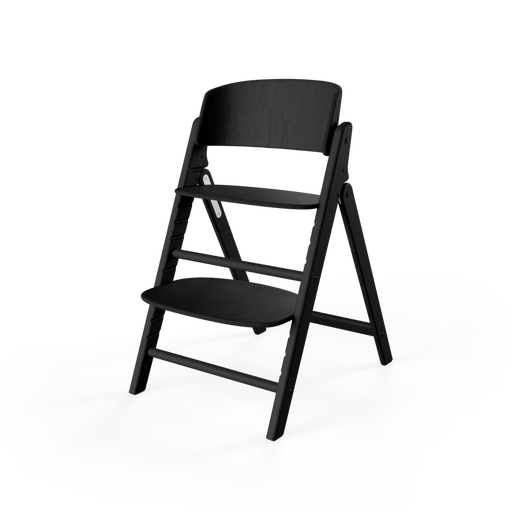
Why this product suits this profile: The folding function is ideal for homes with limited storage space. The seat and foot area can be adapted to different age groups.
The configurations are separated by developmental stage: the baby set is for 6 months to around 3 years, while the independent seat is for children from around 3 years.
Folding frame, height- and depth-adjustable footrest and a stated maximum load of 120 kg.
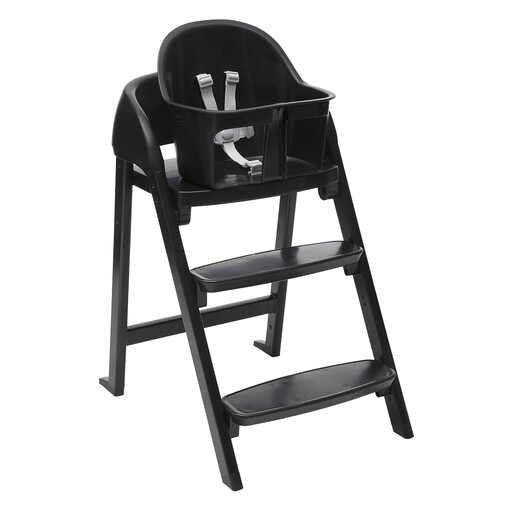
Why this product suits this profile: The model changes from a high-chair position to a children's chair and then to an adult chair configuration, and it can be folded for storage.
The weight limits are specified for each configuration: up to 15 kg as a high chair, up to 40 kg as a children's chair and up to 110 kg as an adult chair.
Two footrest positions, a compact folding function and a stated maximum load of 110 kg.
We have put together a complete, regularly updated list of products that fully meet these strict selection criteria and the safety regulations applicable in the EU.
Place the high chair on a level, stable surface, rather than directly against a wall, worktop or table edge that your child could push away from. For models with castors, use the brakes or gliders as instructed.
When cleaning:
A baby high chair should never be left unattended while in use. Even a stable children's chair cannot prevent a child from climbing, leaning forwards or pulling themselves up on the tray.
Many models are intended for use from around 6 months. However, the decisive factor is that your child can sit independently and without support. The harness, seat width, footrest and the manufacturer’s instructions must also be suitable for your child’s development.
This depends on the construction and weight limits. Compact baby high chairs are often designed for children up to around 15 kg. Models with adjustable seats and footboards can be used for longer; specifications such as high chair for children up to 90 kg generally refer to the later chair configuration, not the baby position.
Wooden surfaces require careful, dry handling and should not be soaked. On sealed surfaces, a damp cloth with mild cleaning solution is usually sufficient. Plastic trays and wipe-clean covers are also practical for frequent mealtimes. The material itself is less important than the specific contents of the package and the care instructions.