
Lieferung heute & morgen

Qualitätsgarantie

Willkommens-Angebote freischalten: KOSTENLOSE Lieferung | Bis zu 80 % RABATT | Kostenlose 30-Tage-JoyPlus-Testphase
App herunterladen
There is a wide range of growing-up milk and follow-on milk available: follow-on milk from 6 months, follow-on milk from 10 months, growing-up milk from 1 year or growing-up milk from 2 years. Packaging may feature terms such as DHA, Omega-3, organic, HMO, GOS/FOS and palm-oil-free. These details can help you find your way around the options, but they do not replace checking the recommended age, ingredients list and preparation instructions.
As a Joybuy Product Recommendation Officer, I filter out the most important criteria for parents and parents-to-be. This makes it easier to assess which formula milk for babies or toddler milk is best suited to your family’s daily routine and your child’s age.
Follow-on milk from 6 months is not automatically intended for a child aged 10 or 12 months. Conversely, growing-up milk from 1 year is not suitable for younger babies. The age recommendation on the packaging should therefore be your first decision-making criterion.
Examples:
The manufacturer’s specific recommendation is decisive. If you are changing milk or have questions about your child’s diet, consulting a paediatrician may be helpful.
DHA, Omega-3, HMO and natural lactic acid cultures are objectively describable ingredients. However, they do not automatically mean that a product will be better tolerated or necessary for every child. Organic growing-up milk and palm-oil-free growing-up milk are also selection criteria, but they are not a blanket indication of personal suitability.
With growing-up milk containing DHA and Omega-3, parents should check whether DHA or ALA is actually listed in the nutritional information table. It is also important to check for potential allergens such as milk, soya and fish oil.
Opened packs must be stored in a dry place, tightly sealed and used according to the manufacturer’s instructions. Depending on the product, the recommended period for use after opening is three or four weeks. Each serving should be prepared fresh. Leftovers should not be put back into the pack or offered again.
Follow-on milk is offered as a supplement to weaning foods and a varied diet. Growing-up milk is intended for toddlers and is often drunk from a cup or trainer cup. Therefore, check the following:
The ingredients list shows which milk components, oils, carbohydrates and added ingredients are included. Allergy sufferers should pay particular attention to the labelling of products containing fish oil or soya lecithin. For example, palm-oil-free growing-up milk uses other vegetable oils, while some products specify palm oil or palm oil sourced more sustainably.
Always compare the information on the same basis: per 100 ml of prepared product. Relevant values include energy, protein, carbohydrates, calcium, iron, vitamin D and DHA or ALA. Nutritional values alone do not indicate how well a child will accept or tolerate a product.
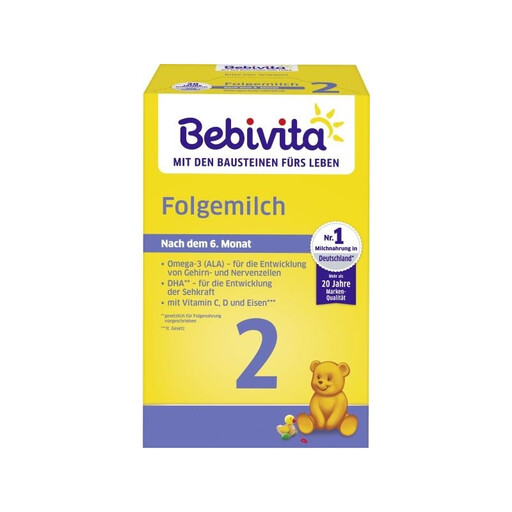
Why this product suits this profile: The 500 g pack is ideal for families introducing follow-on milk from 6 months into their weaning routine and who do not need a large supply.
The clear Stage 2 labelling reduces the risk of choosing an unsuitable age stage. The product description also lists ALA, iron and vitamin C.
500 g contents, powder format, gluten-free and with ALA (Omega-3), according to the product information.
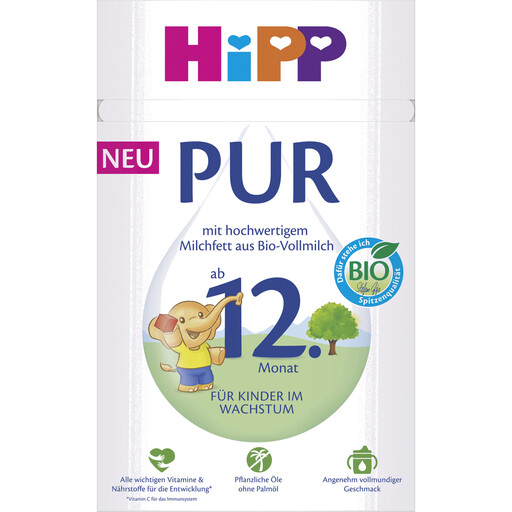
Why this product suits this profile: The recipe is intended for children from 12 months and is aimed at families who want to consider certified organic ingredients and detailed nutritional labelling.
The product information clearly states the minimum age, certified organic ingredients and allergens such as milk, soya and fish oil.
19% organic whole milk powder, DHA and ALA, plus calcium, iron, iodine and vitamins per 100 ml.
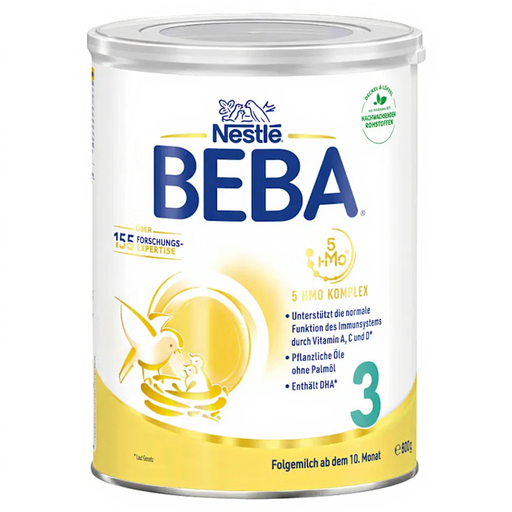
Why this product suits this profile: The 800 g tin is designed for regular use and is intended for babies from 10 months as part of a varied weaning diet.
The age stage is clearly stated as “from 10 months”. The recipe is also described as palm-oil-free and containing DHA from algae oil.
800 g contents, palm-oil-free oil blend, 2’-FL-HMO and DHA-Omega-3, according to the product description.
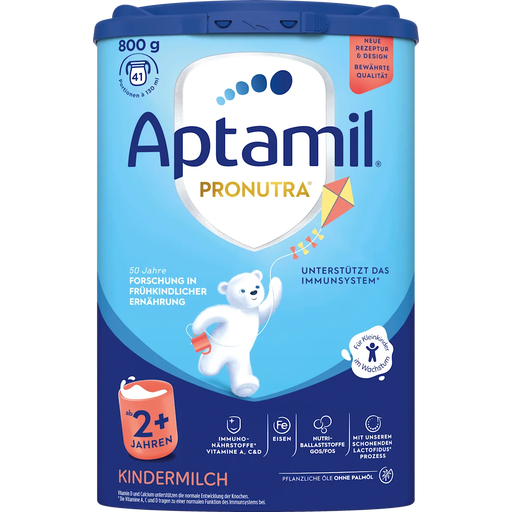
Why this product suits this profile: This milk drink is intended for children from 2 years and can be served warm or cold from a cup or mug.
The “2+” labelling prevents confusion with growing-up milk from 1 year. The ingredients list also indicates fish and soya components.
800 g pack size, palm-oil-free according to the product description, with calcium, iron and vitamins A, C and D.
We have put together a complete, regularly updated list of products that fully meet these strict selection criteria and the safety regulations applicable in the EU.
Always follow the instructions on the relevant packaging. Typical guidance includes:
Drinks containing carbohydrates should not remain in contact with the teeth for long periods. As soon as your child’s development allows, you can encourage them to drink from a cup.
Follow-on milk can be used from the age stage stated on the packaging as part of a mixed diet. It is not automatically required for every child. Your choice should take account of your child’s weaning foods, their milk to date and their individual circumstances. If you are unsure, advice from a paediatrician or midwife can help.
This depends on the product. The available product information usually specifies three or four weeks. The specific packaging is always decisive. The powder should be stored in a dry place and carefully resealed after every use.
Growing-up milk from 1 year is labelled for children from 12 months. Growing-up milk from 2 years is intended for older toddlers. Differences may include energy content, protein quantity and dosage. Therefore, compare the age recommendation and nutritional information table before buying.