
Lieferung heute & morgen

Qualitätsgarantie

Willkommens-Angebote freischalten: KOSTENLOSE Lieferung | Bis zu 80 % RABATT | Kostenlose 30-Tage-JoyPlus-Testphase
App herunterladen
A growing wooden highchair should accompany your child for several years and adapt to different table heights, body sizes and seating needs. In practice, however, it is often only after purchase that you discover whether the adjustment mechanism, footrest and safety harness are genuinely practical for everyday use.
Many families initially look for an affordable wooden baby highchair. However, price is not the only important factor. Poor purchasing decisions often result from three typical pitfalls:
A height-adjustable highchair should offer more than just an adjustable seat height. The following are also important:
A children’s highchair with a footrest can be useful during family meals because the child’s legs are not left dangling in the air. The specific setting must always be suitable for the child’s size and the relevant instructions for use. Adjustable elements should be correctly locked into place or tightened before every use.
A highchair from 6 months is only suitable if the child can sit independently and the manufacturer expressly approves use from this age. A highchair with a safety harness should have an appropriate restraint system. Depending on the model, this may be a three- or five-point harness or a crotch strap.
The following details are relevant when choosing:
A staircase highchair is often designed for long-term use. Nevertheless, the specification “highchair up to 70 kg” must not be interpreted as unrestricted use at every age. Babies have different safety requirements from older children or adults.
For wooden highchairs, the material should be specified as clearly as possible. Bamboo, beech and other types of wood can differ in terms of surface finish, weight and care requirements. An FSC-certified highchair is of interest to buyers who pay attention to the origin of the wood. The certification should be clearly stated in the product description.
It is also worth checking:
Painted or coated surfaces should be cleaned with a damp cloth and dried afterwards. Abrasive cleaners, prolonged soaking and aggressive cleaning products can damage the surface.
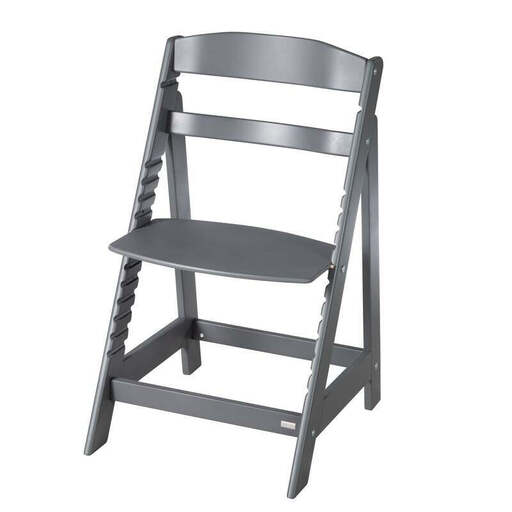
Why this product suits this profile: The chair is designed for use from 6 months and has height-adjustable, removable seat and foot boards. The stated maximum weight is 70 kg.
The product details clearly state the intended starting age, weight limit and harness system. This allows you to check before buying whether the chair is suitable for the period you have in mind.
Adjustable seat and foot boards, a crotch strap and a weight of around 5,18 kg make flexible use around the home easier.

Why this product suits this profile: The product description specifies FSC-certified bamboo, a removable tray, a three-point harness and a maximum load of 70 kg.
The material, safety standard and usage limit are clearly stated in the product details. This reduces the risk of confusing a general sustainability claim with unverified material quality.
The removable tray, wipe-clean surfaces and stated EN-14988 compliance make everyday use easier.
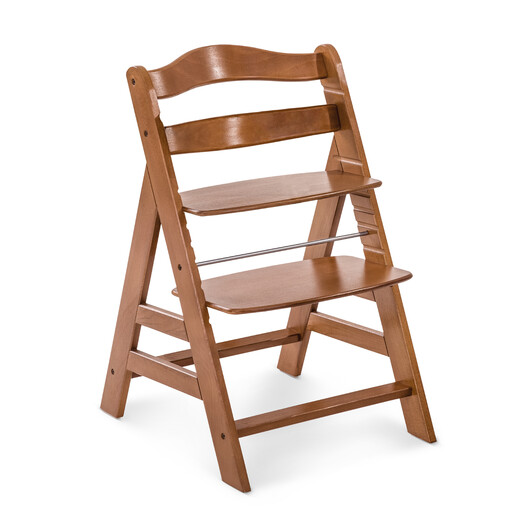
Why this product suits this profile: The adjustable seat and footrest, FSC-certified European beech wood and stated weight limit of 90 kg make it a strong choice for households looking to use the chair for many years.
The adjustability applies to the seat and footrest, rather than just the table height. A compatible tray is available separately, which should be taken into account when planning your budget.
The included five-point harness, adjustable elements and stated weight limit of 90 kg offer a range of possible uses.
We have put together a complete, regularly updated list of products that fully meet these strict selection criteria and the safety regulations applicable in the EU.
A highchair with a removable tray can be practical if your child is initially meant to sit independently from the dining table. Later, the tray can be removed so that the chair can be pushed directly up to the family table. Before buying, check whether the tray is included or available as an accessory.
The dimensions are also important for small German flats. A model approximately 45 to 50 cm wide needs enough space between the table, kitchen units and other seats. Folding models can be useful when storage space is limited. With a folding chair, the locking mechanism and complete unfolding must be checked before every use.
For ongoing care, a slightly damp cloth is sufficient for many wooden surfaces. Spilt liquids should be wiped up promptly. Check the following regularly:
Many models are designed for use from around 6 months. However, the decisive factors are whether the child can sit independently and whether the manufacturer permits use from this age. Direct supervision is still required.
This depends on the construction, adjustment range and maximum load. Specifications such as “up to 70 kg” or “up to 90 kg” describe the relevant weight limit, not automatically every possible form of use. For younger children, the harness, seating position and accessories must be used appropriately.
A tray gives your baby their own space for eating and playing. Without a tray, the chair can be positioned closer to the family table. If you want both options, choose a model with a removable tray or compatible accessories. Before ordering, compare the contents, dimensions and manufacturer compatibility.