
Lieferung heute & morgen

Qualitätsgarantie

Willkommens-Angebote freischalten: KOSTENLOSE Lieferung | Bis zu 80 % RABATT | Kostenlose 30-Tage-JoyPlus-Testphase
App herunterladen
A growing high chair should accommodate several stages of development, remain stable during mealtimes and be easy to clean. In practice, however, certain advertising claims and design details can lead to disappointing purchases. A particularly common mistake is choosing a model that offers plenty of features but is not suitable for the dining table, the child’s height or the available space.
Figures such as “up to 70 kg” or “up to 110 kg” primarily describe the maximum load limit for the relevant configuration. They do not mean that a baby can use the chair from the outset without additional protection. The key factors are the age recommendation, the child’s ability to sit upright independently, and a suitable harness or safety system.
An adjustable-height high chair initially appears flexible. However, complicated mechanisms are of little use if the seat and footrest are difficult to adjust. Before buying, check whether the settings can be changed without tools and whether the child’s feet are adequately supported in every position.
Fabric covers, deep grooves and hard-to-reach gaps increase the cleaning effort. For everyday use in British households, smooth, wipe-clean surfaces are often more practical. With a wooden high chair, it should also be clear how the surface may be cared for. Harsh cleaning products or prolonged soaking can damage the material and finish.
A baby high chair from 6 months is only suitable if the child can sit upright independently in accordance with the manufacturer’s instructions. For younger babies or those who are not yet sitting steadily, a classic high chair must not simply be replaced by a lower setting.
Look out for:
The EN 14988:2017+A1:2020 standard sets out requirements for the safety and testing features of high chairs. For the specific model, buyers should check whether this standard is expressly mentioned in the product information.
A stair-style high chair or growing wooden chair is often adapted using adjustable seat and foot boards. The seat should not be too deep, while the footrest should be positioned so that the child’s legs do not dangle freely. This helps to create a stable seating position, but does not replace supervision.
Models are particularly practical when they offer:
A high chair for toddlers does not necessarily need a separate tray. However, a removable tray can be useful during the weaning stage, while older children can sit directly at the family table.
A wooden high chair can provide long-term use, but screws, joints and surfaces need to be checked regularly. Bamboo, beech, MDF, plastic and metal differ in terms of weight, care requirements and appearance. Without precise product details, it is not appropriate to make a blanket statement about material quality.
Before buying, measure:
A foldable high chair is practical for small homes, but its stability, weight and ease of use may differ from those of a fixed stair-style high chair. For travel, a travel high chair or booster seat is often more compact, but should not be considered equivalent to a fully featured high chair for everyday use.
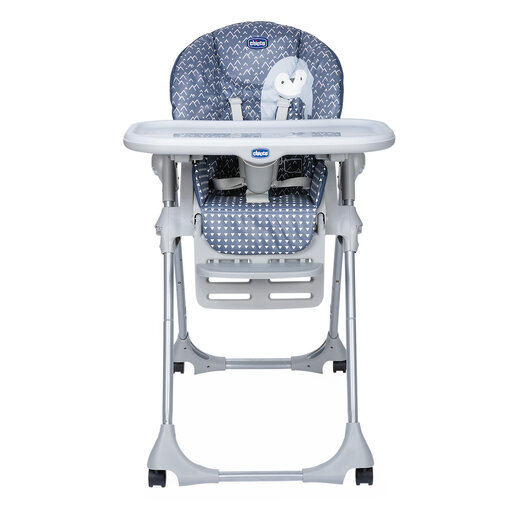
Why this product suits the profile: According to the product information, this model offers seven seat heights, three footrest positions and four wheels for everyday use at home from 6 months.
The age, weight and safety specifications are clearly defined: suitable from 6 months up to 15 kg, with a 5-point harness. It is therefore not a model that promises use through to school age.
Seven heights, three footrest positions, wipe-clean components and a washable cover.
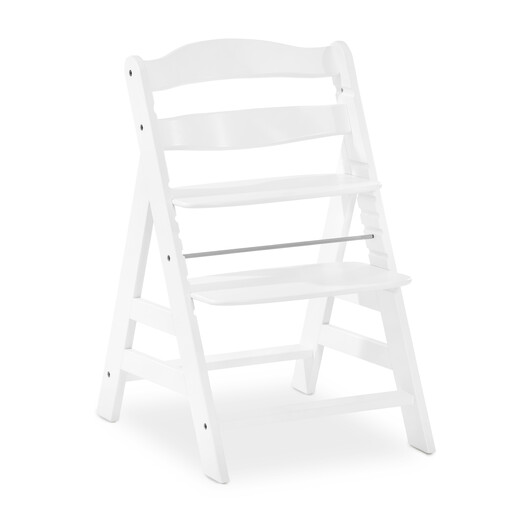
Why this product suits the profile: According to the product information, the high chair is made from FSC-certified European beech wood and is designed for children from 6 months.
The design is not described solely in terms of a high maximum weight: the seat and footrest can be adjusted to several positions. The contents also include a 5-point harness.
Five seat heights, three footrest settings and a stated load capacity of up to 90 kg.
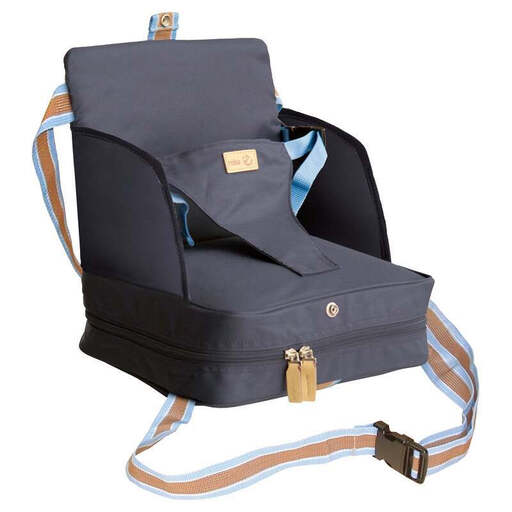
Why this product suits the profile: According to the product information, the inflatable booster seat can be attached to almost any standard chair using adjustable straps and is suitable for use at home, in restaurants or when travelling.
Its use is clearly limited: suitable for children aged 6 to 36 months who can sit without support, and for a maximum weight of 15 kg. This means the booster seat is not confused with a long-lasting high chair.
Low weight of 0.7 kg, an inflatable seat cushion and wipe-clean, water-repellent polyester fabric.
Even a durable high chair needs regular maintenance. Wipe wooden, plastic and coated surfaces with a damp cloth, then dry them. Harnesses should be cleaned according to the manufacturer’s instructions. A quick check before every use is recommended:
A high chair with a safety harness must never be regarded as a substitute for direct adult supervision. Children should not stand on the seat, tray or footrest.
We have put together a complete, regularly updated list of products that fully meet these strict selection criteria and the safety regulations applicable in the EU.
This depends on the manufacturer’s instructions for the individual product. Many models are designed for use from around 6 months. However, the child should be able to sit upright independently and securely. The specifications for age, ability to sit, harness and maximum body weight are always decisive.
The service life depends on the design and permitted load limits. A model with an adjustable seat and footrest, plus a removable tray, can be used beyond the toddler stage. A compact travel high chair or booster seat, on the other hand, is usually intended for a limited age and weight range.
No. A load capacity of up to 70 kg only describes the weight limit specified by the manufacturer and does not automatically cover every type of use. Before using the chair without the harness or tray, parents must check whether the child can safely climb on and off independently and whether the relevant configuration is approved for this purpose.