
Lieferung heute & morgen

Qualitätsgarantie

Willkommens-Angebote freischalten: KOSTENLOSE Lieferung | Bis zu 80 % RABATT | Kostenlose 30-Tage-JoyPlus-Testphase
App herunterladen
For many users, choosing a Grundig portafilter machine marks a transition from fully automated coffee systems to a method that offers greater control over the brewing process. These semi-automatic espresso machines blend traditional portafilter-based espresso preparation with modern controls and varying degrees of automation, particularly for milk frothing. The choice of a model depends on specific technical parameters, such as pump pressure, the type of milk system, and integrated technologies. This article analyses the technical features of selected Grundig models to provide a solid foundation for an informed decision.
The performance and user-friendliness of a portafilter machine are determined by objective technical specifications. The following criteria are relevant for your selection.
Pump pressure is a key factor in the extraction of ground coffee. A pressure of around 9 bar at the brew group is considered the standard for preparing espresso. Machines specified with a pump pressure of 15 bar or 20 bar build up a higher maximum pressure, which acts as a buffer to ensure constant brewing pressure even with very finely ground coffee and a firm tamp.
The preparation of milk-based beverages like cappuccino or latte macchiato is a key differentiating feature.
Modern portafilter machines increasingly rely on digital interfaces. A touch display simplifies beverage selection and the adjustment of parameters like cup size. According to the manufacturer, technologies like BrewSense aim to optimise extraction, while CreamyPro is designed to ensure a uniform milk foam consistency. A portafilter for 2 cups, identifiable by its double spout, allows for the simultaneous preparation of two espressos.
Based on the technical criteria mentioned, we present three models from the Grundig range.
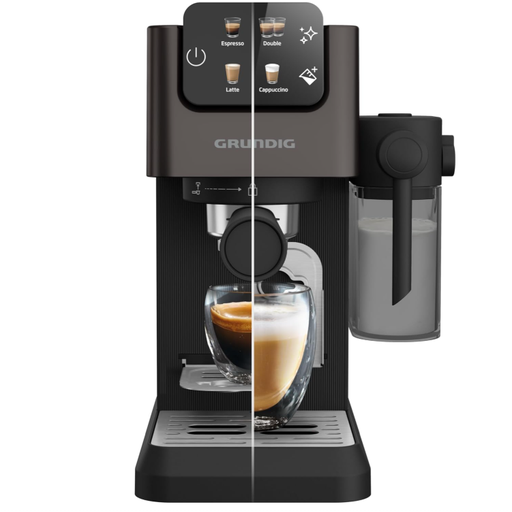
Why we recommend this product: The KSM 5330 model combines a solid 15-bar pump pressure with the convenience of a fully automatic milk system. Its colour touch display and predefined programmes for cappuccino and latte make it an accessible option for users who value ease of use.
Advantages:
Best for: Users who appreciate the taste of portafilter espresso but prefer the convenience and consistency of an automated system for milk-based drinks.
View Product: Grundig KSM 5330
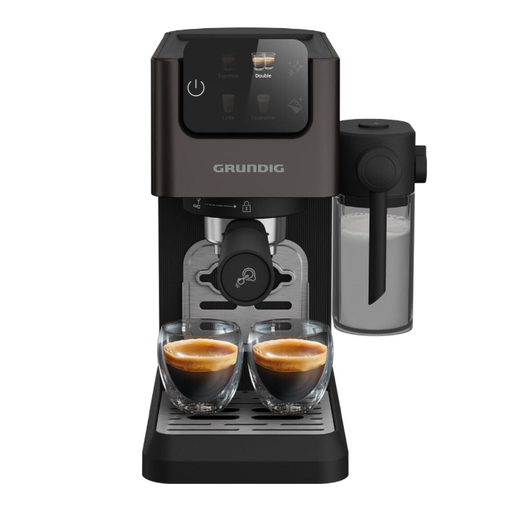
Why we recommend this product: The KSM 6430 stands out with its high pump pressure of up to 20 bar. Combined with the automatic milk system and touch display, it is aimed at users seeking a machine with high technical specifications without sacrificing user-friendliness.
Advantages:
Best for: Coffee enthusiasts looking for a semi-automatic espresso machine with maximum pump pressure and the convenience of an integrated milk container.
View Product: Grundig KSM 6430
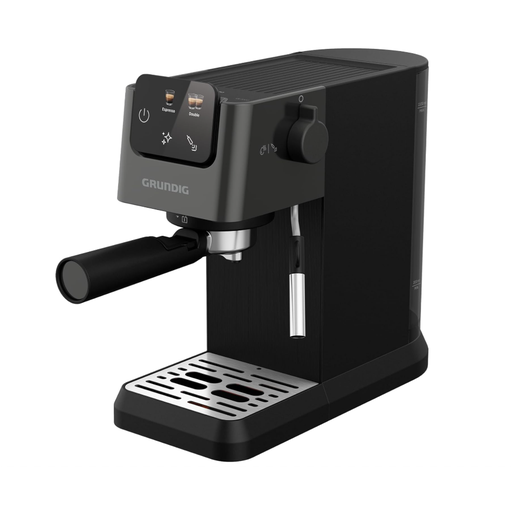
Why we recommend this product: The KSM 4330 is a more classic interpretation of the semi-automatic machine. It features a manual steam wand, giving the user full control over milk texturing. With 15-bar pressure and a memory function for coffee volume, it offers a solid foundation for manual coffee preparation.
Advantages:
Best for: Home users who want to control the milk frothing process themselves and are looking for a compact machine for preparing espresso and milk-based drinks.
View Product: GRUNDIG KSM 4330
If the models presented here do not exactly meet your requirements, or if you would like to explore a wider range of coffee solutions, you can find more appliances and accessories in our Home Appliance Outlet. The assortment includes various machine types to cover different needs and preferences.
1. What is the practical difference between a 15-bar and a 20-bar espresso machine? The relevant pressure for espresso extraction at the brew group is around 9 bar. A higher maximum pump pressure (15 or 20 bar) provides a performance reserve. This can be advantageous for ensuring a constant water flow and thus a uniform extraction, even with very finely ground and heavily compacted coffee powder. For everyday use with standard espresso grinds, the difference is often minimal.
2. How do you clean a Grundig portafilter machine with a milk container? Cleaning is crucial for hygiene and function. The milk container, suction tube, and related parts should be rinsed with warm water after each use. Many models offer an automatic rinsing function for this purpose. The components are usually removable and can be cleaned thoroughly by hand. Please refer to the manufacturer's specific instructions in the user manual.
3. Can you prepare two cups at once with a semi-automatic espresso machine? Yes, most of the models presented here come with a portafilter that has a double spout, as well as filter baskets for one or two servings of ground coffee. This allows for the simultaneous filling of two cups, which speeds up preparation for multiple people.