
Lieferung heute & morgen

Qualitätsgarantie

Willkommens-Angebote freischalten: KOSTENLOSE Lieferung | Bis zu 80 % RABATT | Kostenlose 30-Tage-JoyPlus-Testphase
App herunterladen
Finding a good guest bed is often harder than it seems. Whether for last-minute visitors, a child's first bedroom, or the next camping trip, the requirements are diverse. The market is flooded with options that overpromise and underdeliver. This guide will help you navigate the common pitfalls and make an informed decision based on objective criteria.
Before diving into the details, it's important to know the most common mistakes that often lead to disappointment and unnecessary expense.
To avoid a bad purchase, focus on a few crucial technical specifications. These will help you objectively evaluate a bed's quality and suitability.
The material is a key determinant of durability, stability, and comfort.
The functionality must match your available space and intended use.
Safety is non-negotiable, especially for products intended for children.
Instead of making a one-size-fits-all recommendation, we have selected products that meet specific user profiles and are designed to avoid the pitfalls mentioned above.

Why it's a great fit: Ideal for parents looking for a safe, flexible, and adaptable sleeping solution for the first few months. It functions as a co-sleeper, a bassinet, and later as a bench.
It avoids the pitfall of poor safety, as the manufacturer states it complies with the current safety standard EN 1130:2019 and features a mesh barrier for rollover protection and safety straps for attachment.
The 7-level height adjustment allows for precise alignment with the height of the parents' bed (22.4 - 44.6 cm). The 3-in-1 functionality offers excellent long-term value.
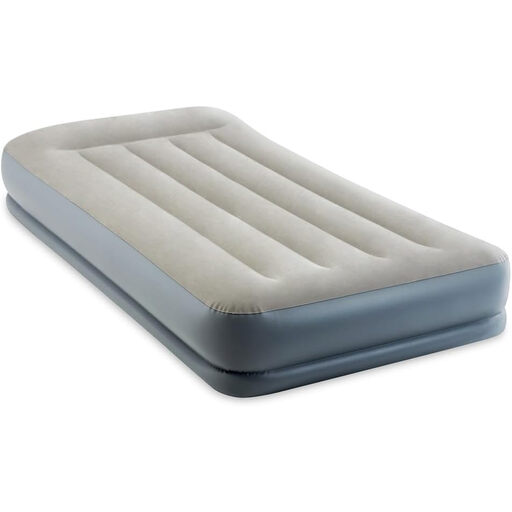
Why it's a great fit: A practical and quick-to-deploy solution for overnight guests that can be stored away compactly after use.
It addresses the problem of unstable air beds. The integrated electric pump allows for rapid inflation to the desired firmness in about 2 minutes, which minimises overnight air loss.
The combination of an integrated 220-240V pump, adjustable firmness, and a comfortable height of 30 cm offers significantly more comfort than a basic air mattress.

Why it's a great fit: An all-in-one solution for kids' and teens' rooms that combines a sleeping area, workspace, and storage in a minimal footprint.
It avoids hidden costs by being designed as a complete furniture combination. The construction of solid wood and MDF, along with safety features like rounded edges and a high weight capacity (bed frame 120 kg), addresses the safety risk.
The maximum space utilisation through the integration of a bed, desk, and two large drawers makes it an extremely efficient solution for smaller rooms.
We have compiled a complete, up-to-date list of products that fully meet these strict selection criteria and UK/EU safety regulations.
The lifespan of an air bed depends heavily on the material quality, frequency of use, and storage. Models made of thick, puncture-resistant PVC with a robust internal structure can last for several years with occasional use. Avoid storing it in direct sunlight or extreme temperatures, and always place the bed on a clean surface free of sharp objects.
In addition to general safety aspects like sturdy materials and rounded edges, the drawer mechanisms are important for a kid's bed with storage. Smooth-running castors and child-friendly handles (e.g., recessed grips instead of protruding knobs) make it easier to use and minimise the risk of injury. Also, check the weight capacity of the drawer bottoms.
Not every co-sleeper fits every parent's bed. The crucial factor is the height adjustment range of the co-sleeper. Measure the height of the top edge of your mattress and compare it with the manufacturer's specifications. For particularly high beds like box-spring beds, there are often special extension kits or models with a wider adjustment range. Always make sure to use the supplied safety straps to create a secure connection.