
Lieferung heute & morgen

Qualitätsgarantie

Willkommens-Angebote freischalten: KOSTENLOSE Lieferung | Bis zu 80 % RABATT | Kostenlose 30-Tage-JoyPlus-Testphase
App herunterladen
Long hours at a desk are a daily reality for many of us. But it's often only when tension or back pain sets in that we realise our chair is doing more harm than good. The office chair market is vast, and the marketing promises are endless. As a Joybuy Product Recommendation Officer, I see customers led astray by marketing hype into making poor purchasing decisions every day.
This guide is designed to help you identify the crucial features and avoid common pitfalls. We'll focus on the facts so you can make an informed decision for your workspace, whether in a corporate office or your home office.
Before we dive into the essential features, let's highlight the most common issues that lead to dissatisfaction and unnecessary expense.
To avoid these traps, you should focus on three indispensable core parameters. These define whether a chair truly represents a long-term investment in your health and comfort.
The lordosis is the natural S-curve of your lower spine. An office chair with lumbar support is designed to support this exact area and promote a healthy posture. The key word here is "adjustable." Good lumbar support must be at least height-adjustable to sit precisely in your lumbar curve. Models with additional depth adjustment offer even more precise customisation. A correctly adjusted support can be instrumental in making an office chair for back pain truly effective.
An ergonomic chair is only as good as its adjustment options.
The longevity of a chair depends directly on the materials used and its construction.
Based on the criteria above, we have identified a few models that are well-suited for different needs and work styles.
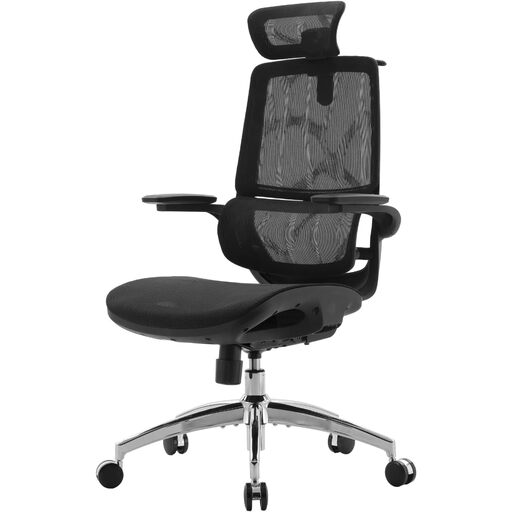
Why This Fits Their Persona: Ideal for individuals who spend many hours at their desk daily and require precise, dynamic support to prevent fatigue and strain.
Avoids the "one-size-fits-all" trap with an adaptive lumbar support and a split backrest that adjusts to your movements. BIFMA and SGS certifications attest to its material quality.
3D adjustable armrests for optimal arm positioning; flip-up armrests (80°) for space-saving storage; high load capacity up to 150 kg.
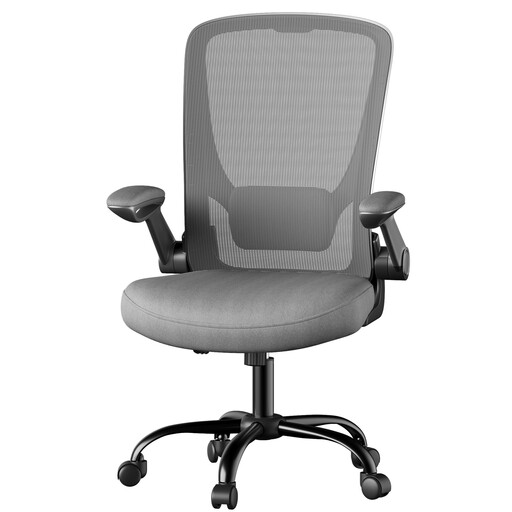
Why This Fits Their Persona: A practical choice for students or home office users looking for a reliable, ergonomic chair with space-saving features at an accessible price point.
Delivers essential ergonomic adjustments (adjustable lumbar support, seat height) and avoids the wobbly construction trap with sturdy, flip-up armrests.
Flip-up armrests allow it to be stored under almost any desk; integrated rocking function for short relaxation breaks.
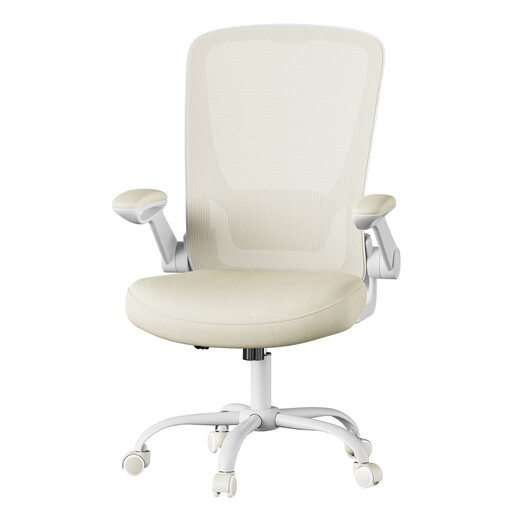
Why This Fits Their Persona: For anyone who wants to create a functional workspace that blends harmoniously into their home decor and doesn't look like a traditional office.
Proves that ergonomics don't have to come at the expense of aesthetics. Offers the necessary adjustment features in a design that stands out from typical, purely functional office chairs.
Modern colour scheme (Oat Beige) that integrates well into living spaces; full basic ergonomic functionality, including flip-up armrests.
We have compiled a complete, up-to-date list of products that fully meet these strict selection criteria and rigorous safety regulations.
1. How long does a good ergonomic office chair last? The lifespan heavily depends on the intensity of use, material quality, and construction. A model with high-quality components and certifications like BIFMA can last 5 to 10 years with normal use. It is recommended to regularly check and tighten all screws and mechanical parts as needed.
2. Is a mesh office chair better than an upholstered one? Both materials have their advantages. A mesh office chair offers excellent breathability, which is particularly beneficial during long sitting periods or in warmer environments. Upholstered chairs can provide a softer seating feel but tend to retain heat. In either case, the quality of the material is crucial—a high-quality mesh fabric is preferable to cheap upholstery, and vice versa.
3. How do I correctly adjust an office chair with lumbar support? The support should fill the natural curve of your lower back without creating uncomfortable pressure. Adjust the height so that the most prominent part of the support is just above your beltline. Sit all the way back in the seat so your back is fully against the backrest. Your feet should be flat on the floor.