
Lieferung heute & morgen

Qualitätsgarantie

Willkommens-Angebote freischalten: KOSTENLOSE Lieferung | Bis zu 80 % RABATT | Kostenlose 30-Tage-JoyPlus-Testphase
App herunterladen
An RGB LED strip can transform a room—turning a simple bedroom into an atmospheric oasis, or a standard desk into professional gaming room decor. But the market is flooded with products whose promises often shine brighter than the LEDs themselves. Many buyers find their excitement fades quickly. To help you make an informed decision, we'll reveal the three most common pitfalls and what you need to look for when making your choice.
Before you dive into the world of colour, it's important to understand the typical problems that arise with low-quality LED light strips. These issues often lead to frustration and unnecessary expense.
A common annoyance is a self-adhesive strip that loses its grip after just a few weeks. The tape can peel away and sag unattractively, especially on slightly rough surfaces, ceilings, or in warmer environments. A high-quality adhesive strip from a reputable brand like 3M is an indicator of better durability and a hassle-free installation.
Many budget RGB strips struggle to display pure colours. A selected "white" often appears bluish or yellowish, and the overall brightness is too low to serve as functional lighting. Pay attention to the quality of the LEDs (e.g., 5050 type) and the brightness rating in lumens, if available. A good dimmable feature is also crucial for adjusting the intensity to match the mood.
A light strip with app control promises convenience, but a poorly programmed app, constant Bluetooth disconnections, or a laggy remote can turn operation into a test of patience. Reliable music sync, where the lights genuinely pulse to the beat, is not a standard feature either. Check if the app is regularly updated and what specific functions (timers, scenes, colour gradients) it offers.
To avoid the problems mentioned above, you should check three core parameters before buying. These will largely determine the functionality and longevity of your new lighting system.
Measure the area you want to illuminate precisely. Standard lengths like 10m, 20m, or 30m are sufficient for most rooms.
The control method defines the user experience.
Based on the quality criteria mentioned, we have compiled a selection of products suitable for different user profiles and use cases.
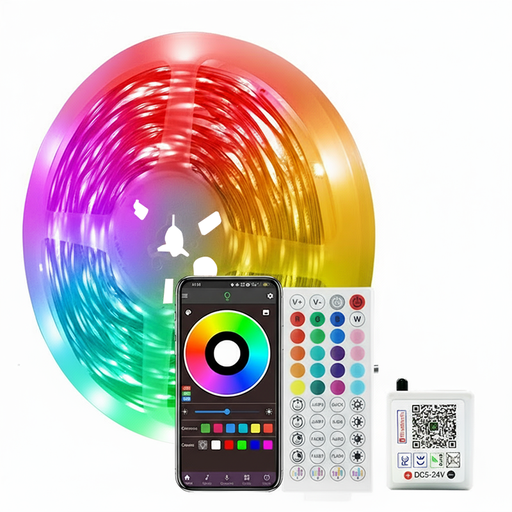
Why This Fits Their Persona: At 10 metres, this kit offers the ideal length for typical beginner projects like accenting a TV or desk, without leaving significant excess. It combines an attractive price with a solid feature set.
It offers dual control via a 40-key remote and a Bluetooth app. This bypasses the pitfall of relying solely on a potentially faulty app and provides a dependable alternative.
Comprehensive starter kit with a power adapter, remote control, and a 10m LED strip. The built-in music sync and timer function offer excellent value in this price range.
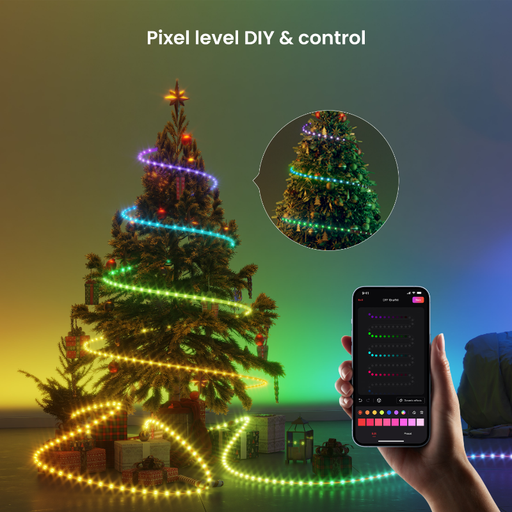
Why This Fits Their Persona: Ideal for tech enthusiasts who value seamless smart home integration, precise colour control, and dynamic lighting effects. The RGBIC technology is perfect for creative and sophisticated lighting concepts.
Thanks to RGBIC technology, colours are controlled precisely and section by section, which solves the problem of inaccurate, uniform colours. The Yeelight app is known for its stability and extensive features.
Supports app and voice control and integrates with popular gaming ecosystems. The system is extendable with 1-metre strips (sold separately) for maximum flexibility.
Why This Fits Their Persona: Perfect for anyone who wants to equip an entire room, a party basement, or very large setups with a continuous LED light strip without the hassle of connecting multiple kits.
The enormous 30m length from a single source prevents the brightness and colour inconsistencies that can occur when connecting multiple separate strips. The included power adapter is designed for the full length.
Excellent price-to-length ratio for large-scale projects. Control via app and remote, as well as music sync, are fully supported even at this length.
We have compiled a complete, up-to-date list of products that fully meet these strict selection criteria and relevant safety standards.
1. Can you cut an RGB LED strip? Yes, most LED strips can be cut with regular scissors at the designated markings (often indicated by a scissor icon). It's crucial to cut only at these points, as doing otherwise will damage the functionality of that segment. The cut-off portion cannot typically be reused without special accessories (connectors).
2. How much power do LED strips consume? Power consumption is very low compared to traditional light sources. It depends on the strip's length, the number of LEDs per metre, and the set brightness and colour. A 10-metre strip at full brightness typically consumes between 24 and 36 watts. When dimmed or displaying colours, consumption is significantly lower.
3. What is the lifespan of an LED strip? The lifespan of quality LEDs is often rated at 25,000 to 50,000 hours. With an average use of four hours per day, this equates to a lifespan of over 15 years. However, the actual durability heavily depends on the quality of the components and environmental conditions like heat and humidity.