
Lieferung heute & morgen

Qualitätsgarantie

Willkommens-Angebote freischalten: KOSTENLOSE Lieferung | Bis zu 80 % RABATT | Kostenlose 30-Tage-JoyPlus-Testphase
App herunterladen
A yellow highlighter might seem like a simple product. But anyone who has ever ruined important documents with smeared ink or thrown out a nearly new pen because it dried out knows that the details are crucial. Many products promise vibrant colours and long-lasting performance, but fail to meet basic requirements in practice.
This guide will help you navigate the common pitfalls. We focus on the objective features that define a reliable marker and show you what to look for before you buy, so you can make an informed decision.
To avoid the problems mentioned above, you should check three core technical aspects. These determine whether a pen is suitable for your intended use.
The ink's composition is the most important factor.
The shape of the tip defines its use case.
Not every pen works on every surface. While most marking pens are optimised for standard paper, other materials require special products. A marker for glass, plastic, or metal needs an ink with high adhesion, like that found in the STAEDTLER Lumocolor series. For rough surfaces like wood or stone, there are special wax crayons or industrial markers.
Here are some recommendations tailored to different user profiles, taking the criteria above into account.
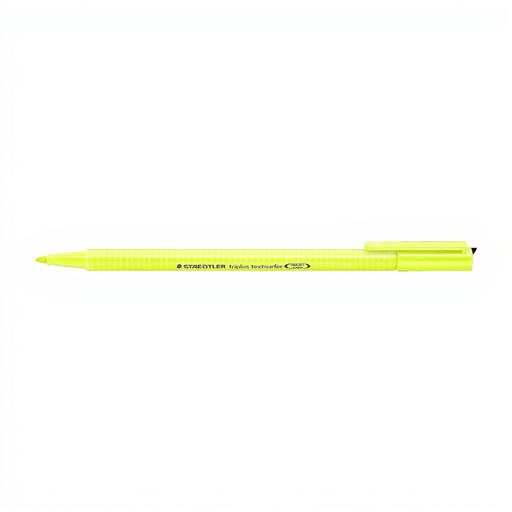
Why This Fits Their Persona: Ideal for long study or work sessions. The ergonomic triangular shape prevents fatigue, while the variable tip allows for highlighting both fine and broad sections of text.
The ink is declared INKJET SAFE, meaning it won't smear inkjet printouts or most handwritten inks. It also doesn't bleed through standard paper.
Variable line width from 1 mm to 4 mm with a soft round tip. The polypropylene barrel and automatic pressure equalisation also make it airplane-safe.
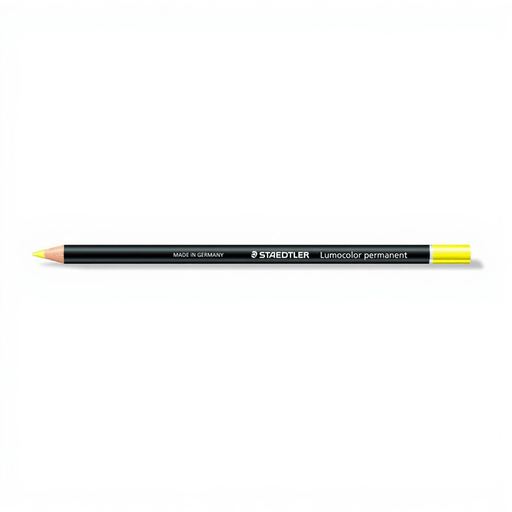
Why This Fits Their Persona: Designed for professional users who need permanent marking on almost any surface, including glass, plastic, metal, wood, and stone.
As a wax-based dry marker, it cannot dry out and does not bleed through on any surface. It provides reliable, permanent marking where liquid ink would fail.
The lead is waterproof and lightfast. The pencil doesn't need a cap and can be re-sharpened with a standard sharpener, extending its lifespan.
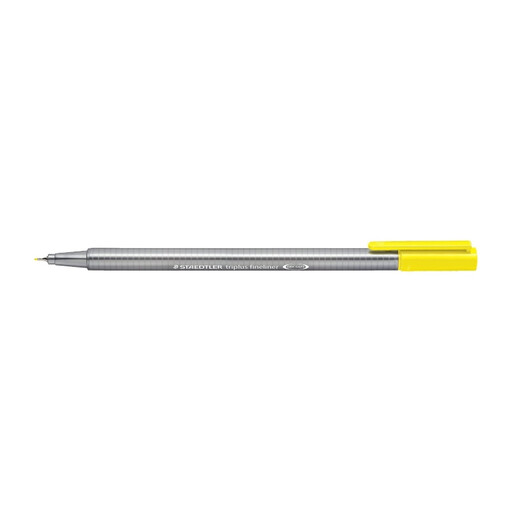
Why This Fits Their Persona: Perfect for bullet journaling, mind mapping, or detailed sketches. The fine tip allows for precise lines and colour accents without being obtrusive.
The metal-clad tip prevents fraying and ensures a consistent, clean line that doesn't bleed through. The DRY SAFE technology, tested according to ISO 554 per the manufacturer, prevents it from drying out even if left uncapped for days.
Very fine line width of approx. 0.3 mm for maximum precision. The water-based ink is washable from most textiles.
We have compiled a complete, up-to-date list of products that fully meet these strict selection criteria.
1. How do I prevent my highlighter from drying out? Look for products with explicit anti-drying technology like "DRY SAFE". According to manufacturers like STAEDTLER, these pens can be left uncapped for several days without drying out. As a general rule, always close the cap tightly and ideally store the pen horizontally to keep the tip evenly supplied with ink.
2. What does "INKJET SAFE" mean on a highlighter? This feature means the marker's ink is specially formulated not to dissolve the pigments or dyes from inkjet printers. This prevents smearing on freshly printed text—a crucial advantage for office or academic work.
3. Can I remove a permanent marker from glass? "Permanent" means the marking is smudge-proof and waterproof. However, on non-porous surfaces like glass or ceramic, the ink from a permanent marker can usually be removed with a suitable solvent, such as isopropyl alcohol. This distinguishes it from a wipe-clean transparency pen, whose ink can be removed with just a damp cloth.