
Lieferung heute & morgen

Qualitätsgarantie

Willkommens-Angebote freischalten: KOSTENLOSE Lieferung | Bis zu 80 % RABATT | Kostenlose 30-Tage-JoyPlus-Testphase
App herunterladen
A foundation that looks flawless from your morning meeting to your evening out is a cornerstone of many makeup routines. However, the market for long-wear foundation is crowded and full of promises that don't always deliver. Before you make a decision, it's crucial to understand the common pitfalls that often lead to disappointment and wasted money.
As your Joybuy Product Recommendation Officer, I'm here to help you separate marketing hype from reality. This guide will show you what to look for to find a product that truly suits you and your needs.
Choosing the wrong foundation can not only make your skin look unflattering but also cause skin problems. Here are three common mistakes to avoid:
To find the right long-wear foundation, you should focus on objective features that are tailored to your individual requirements.
The most important rule is: the formulation must match your skin type.
Coverage determines how well imperfections are concealed.
The finish describes the appearance on the skin: matte (no shine), natural/satin (skin-like), or radiant (glow foundation).
A foundation with SPF (Sun Protection Factor) is a practical addition for daily protection against UV radiation. However, note that the amount applied is often insufficient to provide the full level of protection. Using a separate sunscreen is therefore recommended. A skincare-infused foundation with vitamins or antioxidants can provide additional support for the skin.
Here are some recommendations tailored to specific needs and the criteria mentioned above.
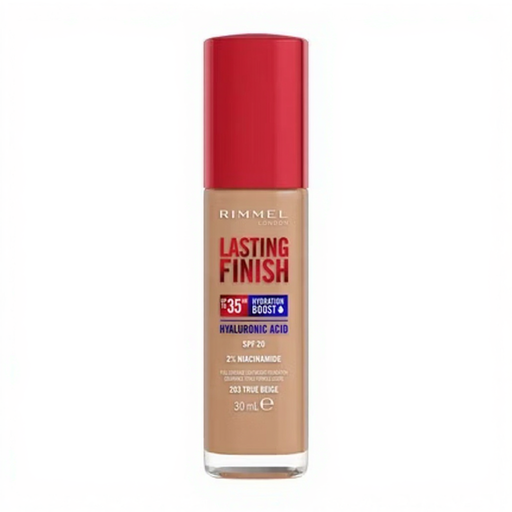
Why It's a Match: Ideal for users seeking a reliable everyday foundation that not only covers but also cares for the skin. The combination of hydration and sun protection makes it a practical all-day companion.
The formula is explicitly described as hydrating and contains hyaluronic acid and 2% niacinamide. This makes it more than just a marketing gimmick and counteracts the drying effect that is a common problem with many long-wear foundations.
Integrated SPF 20 for basic daily protection. According to the manufacturer, the formula is waterproof and offers high coverage with a natural finish.
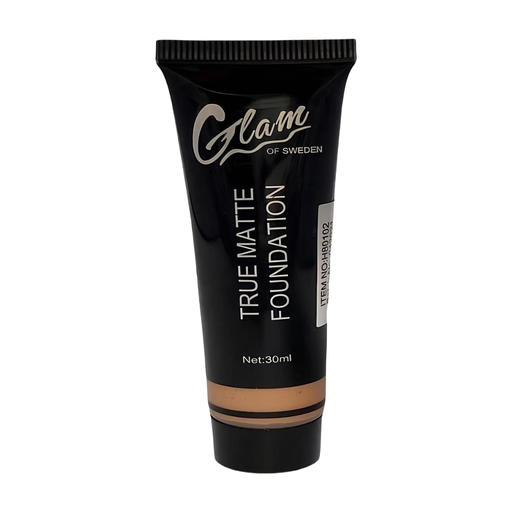
Why It's a Match: Specifically designed for those with oily or blemish-prone skin who want a reliably matte, shine-free result. The formulation directly targets the needs of this skin type.
This product doesn't just promise a matte finish; it combines it with an oil-free and non-comedogenic formulation. It avoids the trap of promoting a finish that is unsuitable for the advertised skin type.
Offers full coverage to visually minimise pores and imperfections. According to the manufacturer, the vegan formula contains saw palmetto extract and aloe vera juice.
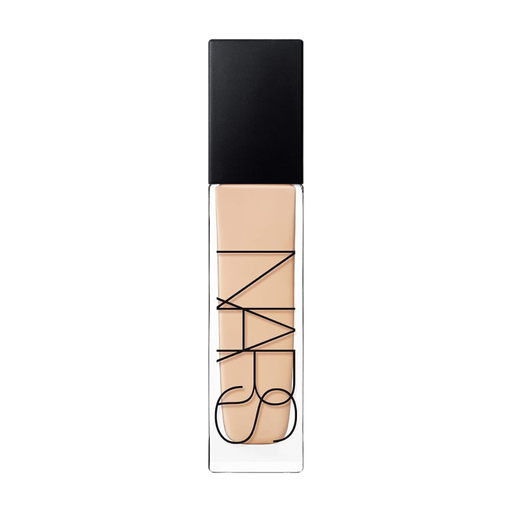
Why It's a Match: For users who want to combine high coverage with a natural, radiant finish. The formulation is designed to avoid a mask-like effect despite its strong pigmentation.
This product resolves the conflict between high coverage and a natural look. It avoids the "cakey" effect by offering a lightweight texture that adapts to the skin and enhances its natural radiance rather than covering it up.
According to the manufacturer, the formula is fragrance-free, alcohol-free, oil-free, and non-comedogenic. It is enriched with fruit extracts and promises up to 16 hours of wear.
We've compiled a complete, up-to-date list of products that fully meet these strict selection criteria and UK regulations.
The key is in the prep and technique. Start with well-moisturised skin. Use a primer that suits your skin type. Apply the foundation in thin layers and blend it well into the skin using a damp sponge, a brush, or your fingers. Focus on areas that need more coverage and leave the rest more natural.
A primer isn't mandatory, but it can significantly improve the longevity and appearance of your foundation. A mattifying primer controls oil, while a hydrating primer smooths dry skin and prevents the foundation from settling into fine lines. It creates a smooth base that helps the foundation adhere better.
Many brands offer digital shade-finder tools on their websites. Another method is to determine your skin's undertone (cool, warm, or neutral). Look at the veins on your wrist: bluish veins suggest a cool undertone, while greenish veins indicate a warm one. If you're unsure, you likely have a neutral undertone. Look for product descriptions that explicitly mention these undertones (e.g., "21N" for Neutral).