Considerate in a shared room
If you listen to the same passage over and over, a close fit and minimal sound leakage matter, so the other person in the room is less likely to be disturbed.


For repeatedly listening to a passage in a shared bedroom, a well-fitting pair of closed-back headphones is a sensible place to start. At your usual listening volume, check whether the other person is still disturbed and whether quiet guitar notes remain clear. If you’re playing electric guitar along with a recording, you’ll also need a suitable signal path for both the guitar and playback. Bluetooth or ANC alone tells you nothing about low-latency guitar monitoring or how much sound escapes into the room.
If you listen to the same passage over and over, a close fit and minimal sound leakage matter, so the other person in the room is less likely to be disturbed.
If you’re playing electric guitar along to a song, both the guitar signal and the recording need to reach your headphones at the same time. The signal routing and any monitoring delay matter too.
When you’re repeatedly listening for individual notes and phrasing, the details should remain clear at a moderate volume. Comfortable ear pads can also make a difference during longer listening sessions.
First, work out whether you’ll only be listening to recordings or also playing along on electric guitar. Then consider how the headphones fit your room and how they’ll connect to your existing amplifier or audio interface.
| Consideration | What to look for | Who it matters most to |
|---|---|---|
| Sound leakage in the room | Check the closed-back design and fit; at the volume you plan to use, listen for how much sound escapes. | If I want to listen to the same passage repeatedly without disturbing the other person unnecessarily, sound leakage is my main concern. Around 26% of consumers put this first. |
| Picking out individual notes | Compare familiar recordings at a moderate volume; a stated frequency range alone doesn’t show that a solo will be easier to pick out. | If I want to pick out individual notes and phrasing, I need the detail to be clear without having to turn up the volume. Around 26% of consumers prioritise hearing tonal detail. |
| Playing along with a recording | Check the headphone output, connector type and playback input on your amplifier or interface. Direct monitoring only works with devices that support it. | If I want to hear my electric guitar and the song at the same time, the signal path needs to combine both, without a distracting delay. Around 21% of consumers prioritise playing along in real time. |
| Fit and listening fatigue | Assess the ear pads and clamping force on your own head; don’t compensate for a poor fit or room noise by turning up the volume. | If I’m repeating a passage for a while, comfortable ear pads and a sensible listening volume matter to me. Around 16% of consumers prioritise fit and listening fatigue during longer practice sessions. |
| Replaceable parts | Check the exact model to see whether the cable and ear pads can be replaced, and which spare parts fit that particular version. | If I want to use my headphones for longer, I check whether wear parts can be replaced and what the ongoing costs might be. Around 11% of consumers put replaceability and ongoing costs first. |
ANC reduces the noise you hear. That doesn’t tell you how clearly someone else in the room will hear your music.
With well-fitting headphones, check how much sound escapes and assess it at the volume you intend to use.
Headphones alone don’t provide a guitar input or mix your guitar with a song recording.
Before buying, check the headphone output on your amplifier or interface, the connector type and how playback will be fed in.
Depending on your existing equipment, you may need a suitable adaptor or a device that sends both the guitar signal and playback to your headphones.
A Bluetooth headphone and a dedicated wireless guitar system are different solutions. Bluetooth music streaming alone tells you nothing about the delay in the guitar signal.
If you want to play along wirelessly, check the signal path and delay of the complete system, rather than just the headphones’ Bluetooth specification.
Models with similar names can differ in impedance and cable type, so a spare part won’t necessarily fit every version.
Make a note of the full model name and check the stated compatibility before replacing the cable or ear pads.
Replacement ear pads or cables may mean extra expense later; check which parts fit your exact model.
Closed-back, wired studio models such as the DT 770 PRO and DT 770 PRO X are worth considering for monitoring. Treat each model version separately.
The ATH-M40x and ATH-M50x are closed-back, wired monitoring headphones for listening and practice.
The closed-back HD 280 PRO is designed for recording and monitoring when a wired connection is important.
The closed-back K371 is a foldable, wired studio option supplied with several connection cables.
WAZA-AIR is aimed at electric guitarists looking for a headphone system with a built-in guitar amplifier and music streamed from a smartphone, rather than a standard monitoring headphone.
This selection includes headphones for listening to recordings and playback over the stated wired or wireless connections. ANC specifications don’t show that sound leakage to other people is low, or that the signal path is suitable for playing along on electric guitar.
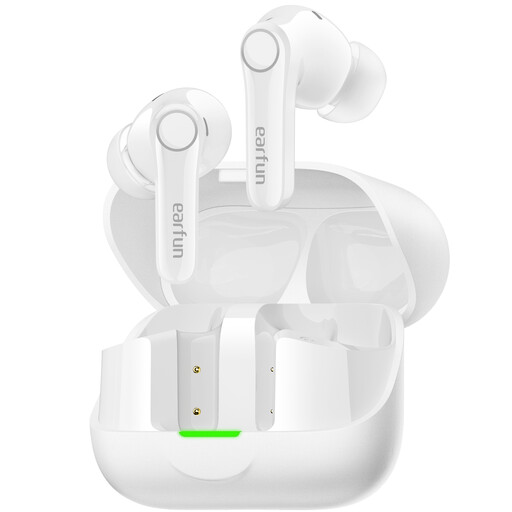 No image available
For listening to guitar passages wirelessly; ANC specifications don’t show how much sound escapes into the room.
Bluetooth 6.0; LDAC and aptX Lossless; adaptive ANC; gaming mode with under 50 ms latency, according to the product description.
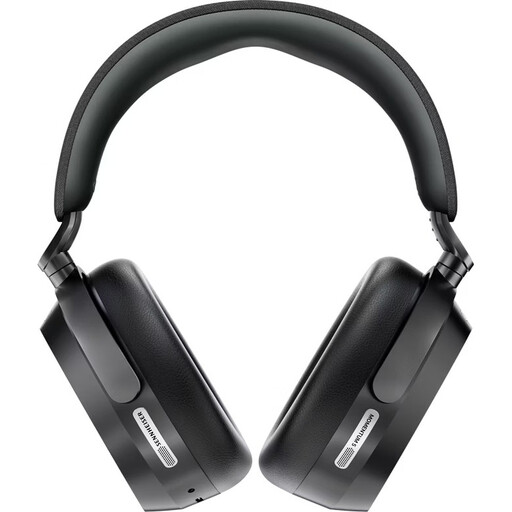 No image available
For listening to recordings wirelessly or over a cable; the ANC specification doesn’t indicate how much sound others in the room will hear.
Closed-back design; Bluetooth 5.4; 3.5 mm audio connection; up to 57 hours of battery life according to the product name; replaceable battery according to the product description.
 No image available
For listening to recordings over Bluetooth or an audio cable; ANC alone doesn’t indicate low sound leakage.
Bluetooth 5.3; multipoint; up to 50 hours of playback with ANC, according to the product description; detachable audio cable included.
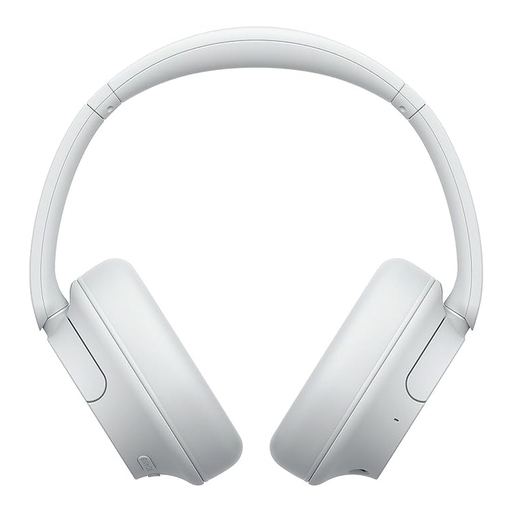 No image available
For listening to recordings over Bluetooth or a 3.5 mm connection; the headphone connection alone doesn’t feed in a guitar signal or mix in playback.
Bluetooth; ANC; 3.5 mm audio connection; 192 g according to the product name; 5-band EQ according to the product description.
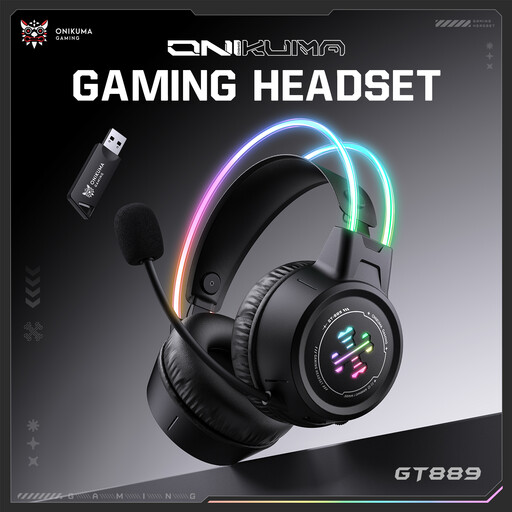 No image available
For listening to recordings over a cable or the stated wireless connections; this doesn’t mean they’re suitable for low-latency guitar monitoring.
Wired mode; Bluetooth 5.4; 2.4 GHz USB receiver; up to 60 hours of playback according to the product description.
Not with every set-up. If you want to play along with a recording, you need a suitable way to send the guitar signal to your headphones and feed in the playback. With a suitably equipped interface, direct monitoring can let you hear the input signal alongside software playback with virtually no delay; check the connections and monitoring features on the specific device.
Start quietly, and don’t turn up the volume just because the ear pads fit poorly. The World Health Organization gives an average of 80 dB for up to 40 hours a week as a guide; at 90 dB, it recommends four hours a week. These figures describe listening exposure and can’t be translated directly into a volume control setting.
Check the spare parts for your exact model version, and clean or replace the ear pads according to the manufacturer’s instructions. For example, Audio-Technica lists a replacement cable for the ATH-M40x and ATH-M50x; the manufacturer says it isn’t compatible with the ATH-M50xBT2 or ATH-M50xBT.
When shopping online in Germany, consumers generally have a 14-day right to cancel from the date they receive the goods; exceptions should be checked on a case-by-case basis. The Verbraucherzentrale distinguishes this right from the seller’s statutory liability for defects and explains that new goods are generally covered by a two-year period. A voluntary manufacturer’s guarantee is separate.
Products covered by relevant harmonised EU legislation must carry the CE marking. It is the manufacturer’s declaration, not an independent performance test. As part of its market surveillance, the Bundesnetzagentur lists checks including the marking, manufacturer information, declaration of conformity and German-language instructions.