Calorie-conscious snackers
You want to compare the declared kcal per 100 g in similar nut products and decide for yourself how much to have as a snack.


Of the four GUT&GÜNSTIG products compared, plain cashew nuts have the lowest declared energy value according to EDEKA, at 603 kcal per 100 g. That doesn’t make them low in calories, though. If you’re keeping an eye on your energy intake, compare the nutritional information for similar products and decide on your portion size. For a budget-friendly shop, also check the unit price per kilogram, and always check the ingredients and allergen information on the pack you’re buying.
You want to compare the declared kcal per 100 g in similar nut products and decide for yourself how much to have as a snack.
You buy nuts regularly and compare different pack sizes by their unit price per kilogram.
You want to tell plain nuts apart from varieties with oil or salt, and check the allergen information on the pack you buy.
Start by comparing only products that suit the snack you’re looking for. Energy value, unit price and ingredients answer different questions, so don’t rely on the pack price or the words “plain” or “natural” alone.
| Criteria | What to check when buying | Who it matters most to |
|---|---|---|
| Energy value | kcal per 100 g for similar products; planned portion size. | When snacking, I want to understand the energy value rather than rely on the words “plain” or “natural”. This is the main consideration for around 39% of consumers. |
| Unit price | Price per kilogram and pack size; compare offers only for the product variant you’re interested in. | If I buy nuts regularly, I don’t want a smaller bag to seem cheaper just because of its total price. The price per kilogram is the main buying criterion for around 38% of consumers. |
| Ingredients and allergens | Ingredients list, salt content, and allergen and may-contain information on the specific pack. | I want to see whether the product contains oil or salt as well as nuts. If I have an allergy, I also need to read the labelling carefully. Around 23% of consumers put this check first. |
According to EDEKA, plain GUT&GÜNSTIG cashew nuts contain 603 kcal per 100 g, while plain almonds contain 609 kcal per 100 g. A short ingredients list doesn’t, by itself, mean a product has a low energy value.
Compare the nutritional information for similar products and choose your portion size regardless of how the product is described.
When pack sizes differ, the total price alone doesn’t tell you which is better value. The unit price lets you compare products per kilogram.
Check the price per kilogram for the variant you want and consider which pack size you’ll be able to use up.
The roasted and salted GUT&GÜNSTIG peanuts described by EDEKA contain sunflower oil and salt. EDEKA lists 685 kcal per 100 g for roasted almonds without salt, compared with 609 kcal per 100 g for the plain almonds in this comparison. This doesn’t establish a general rule for all roasted nuts.
Carefully check the ingredients list, salt content and kcal information for the exact variety you want to buy.
Peanuts and tree nuts are separate allergen groups that must be labelled separately. A may-contain statement doesn’t mean the allergen is definitely present, but it doesn’t rule out its presence either.
If you have an allergy, check the current labelling on the specific pack, including the ingredients and any may-contain statements.
EDEKA’s own brand, with individual nut products including plain almonds and cashew nuts.
Lidl’s own brand, with plain nuts and other nut varieties.
ALDI SÜD’s own brand; product-specific nutritional information is available for one variety of roasted almonds.
A brand with a described variety of roasted almonds, useful for comparing ingredients and preparation methods.
This selection includes peanuts, cashew nuts and pine nuts in a range of pack sizes. To compare prices, check the unit price for the variety you want. Descriptions such as “roasted” or “unsalted” are no substitute for checking the pack information.
 No image available
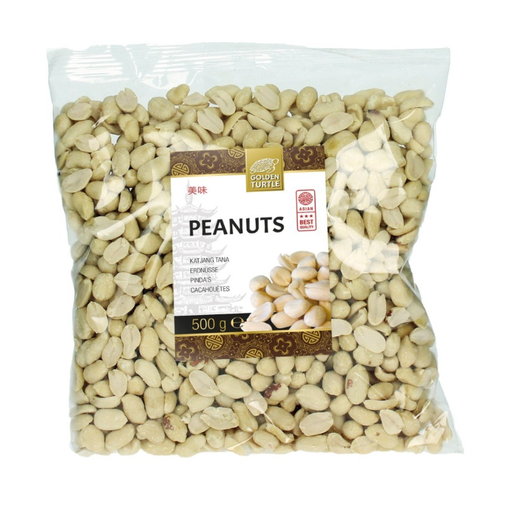
An option if you’re looking for peanuts to snack on. The product name states that the pack contains 500 g; compare the nutritional and allergen information, as well as the unit price, to help you decide.
 No image available
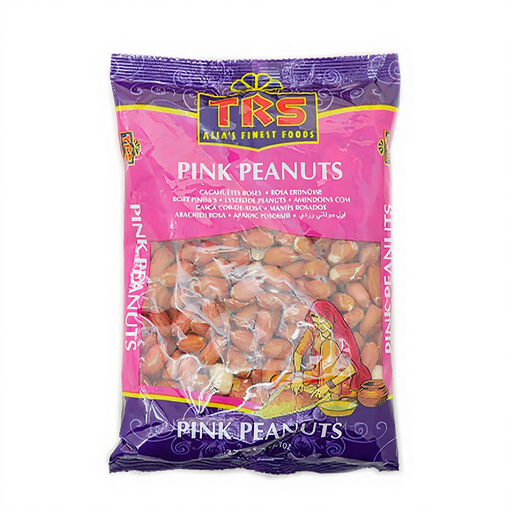
An option if you want to choose peanut kernels for your own use. The product name states that the pack contains 375 g; check the ingredients, nutritional information and unit price before buying.
 No image available
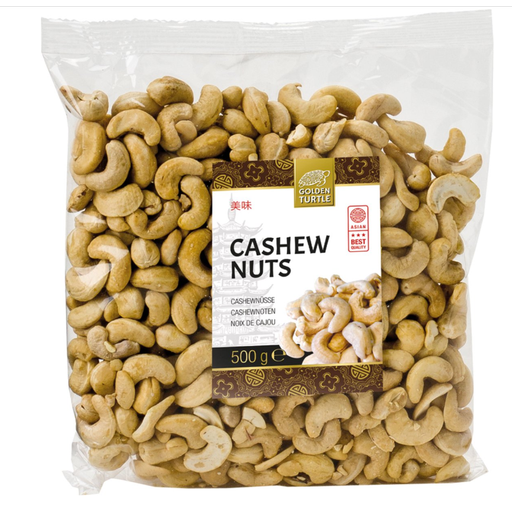
An option if you’re looking for cashew nuts to snack on. The product name states that the pack contains 500 g; check the energy value per 100 g and the labelling on the specific pack rather than assuming it matches other cashew products.
 No image available
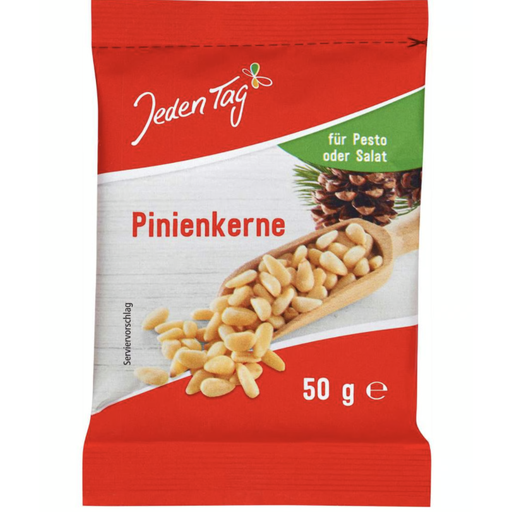
An option if you’d also like to use pine nuts as an ingredient in dishes. The product name states that the pack contains 50 g; for a budget comparison, check the unit price against other pack sizes.
 No image available
An option if you’re looking for roasted, unsalted cashew nuts. The product name states that the pack contains 150 g; compare the energy value and unit price for this variety with the alternatives you’re considering.
Of the four products compared, the plain cashew nuts have the lowest energy value according to EDEKA, at 603 kcal per 100 g. The plain almonds contain 609 kcal, while the roasted and salted peanuts contain 619 kcal per 100 g. This is a comparison of these specific products, not a claim that cashews are low in calories.
According to the Verbraucherzentrale, the Nutri-Score is suitable for comparing products within the same food group or foods intended for the same purpose. For the buying decision here, you can also check the energy value per 100 g, the ingredients list and the unit price of the specific products. A score alone isn’t a personal recommendation.
Compare the unit price per kilogram for products you’re actually considering buying. The Verbraucherzentrale explains that, as a general rule, prepacked products must show the unit price in addition to the total price. When checking offers, also make sure you know which variety and pack size they apply to.
No. Peanuts and tree nuts are separate allergen groups. If you have an allergy, check the ingredients and any may-contain information on the current pack. A may-contain statement doesn’t confirm that the allergen is present, but it doesn’t rule it out either.
For shelled walnuts, the Verbraucherzentrale recommends storing them in an airtight container in the fridge or freezer. Throw away any nuts that look, smell or taste spoiled or mouldy.