People with a set calorie budget for snacks
If you want to keep a small bar in your gym bag as a back-up snack, the energy in the whole bar matters more than a ‘Low Carb’ or protein claim on the front of the pack.


For a calorie-conscious snack in your gym bag, what matters first is the energy in the whole bar, not whether the packaging says ‘Protein’ or ‘Low Carb’. If you’re mainly keeping an eye on protein, compare the amount with the energy in the same serving. If you have allergies or are sensitive to sweeteners, always check the information on the current packaging.
If you want to keep a small bar in your gym bag as a back-up snack, the energy in the whole bar matters more than a ‘Low Carb’ or protein claim on the front of the pack.
If you want to compare protein content while you’re out and about, you should also consider the energy in the same serving. A protein bar is a portable option, but you don’t need one simply because you exercise.
Whether a bar is suitable depends on the individual product if you have allergies or are sensitive to certain sweeteners. Always prioritise the ingredients list, allergen information and ‘may contain’ warnings on the current packaging over general claims about the type of bar.
Start by comparing the nutritional information per 100 g, then use the bar’s weight to work out the figures for the whole bar. You can then assess the protein content and ingredients against your own needs.
| Criteria | What to check | Who it matters to |
|---|---|---|
| Energy per bar | Check the kcal per 100 g and the weight of one bar, then calculate the energy in the portion you’ll eat. | If I’m packing a small snack to fit a set calorie budget, I want to know how much the whole bar contributes. For around 36% of consumers, energy per bar is the top priority when choosing. |
| Protein per bar | Use the bar’s weight to calculate the protein per 100 g for one bar, and consider it alongside the bar’s energy. | After training, I mainly want to estimate the protein in a serving while I’m out and about, and may be happy with a different energy content. Around 29% of consumers give this comparison top priority. |
| Ingredients and suitability | Check the current ingredients list, allergens, ‘may contain’ warnings and information about sweeteners. | If I have an allergy or am sensitive to sweeteners, the specific bar needs to meet my requirements. This is the main concern for around 21% of consumers. |
| Regular availability | Check whether the bar you want is available in your chosen shop and whether the information matches what’s on the pack being sold. | If I want to pack the same snack in my gym bag regularly, I need an option that’s available locally and has suitable information on the packaging. Around 14% of consumers check this first. |
These claims don’t tell you how much energy there is in a whole bar. ALDI SÜD lists 369 kcal per 100 g for its High Protein Nougat Bar.
Compare the kcal per 100 g and the bar’s weight rather than assuming the claim tells you how much energy is in each bar.
The weight of the bar also matters when you’re looking at the portion you’ll actually eat. EDEKA lists 50 g of protein and 353 kcal per 100 g for its 45 g Max Balance Stracciatella bar. That works out at around 22.5 g of protein and 159 kcal per bar.
Compare protein and energy for the same serving size, then decide which figure matters more for your snack.
Protein bars can contain different allergens and sweeteners depending on the recipe. The Consumer Advice Centre notes that sugar substitutes can have a laxative effect when consumed in larger quantities.
If you have allergies or are sensitive to certain ingredients, check the information on the current packaging and follow the product-specific consumption advice.
ALDI SÜD notes that some products may vary due to differences between suppliers. EDEKA points out that a product may not be available in every shop.
Before buying, check the nutritional information and ingredients on the pack being sold, as well as availability in your chosen shop.
The protein bars we looked at show why you should compare energy and protein separately for each variety.
The EDEKA protein bars we looked at have different energy and protein values.
REWE sells PWR protein bars in a 45 g size. When choosing, check the information for the specific variety.
These individually wrapped bars could make handy snacks for your gym bag. If you’re choosing with calories in mind, compare the energy in the whole bar using the current nutritional information.
 No image available
An individually portioned option for your gym bag if you want to compare the energy and protein in each bar.
If you’re sensitive to gluten, check the information on the current packaging before choosing this bar.
 No image available
An individually portioned bar for when you’re out and about and want to choose a snack by weight.
If you have allergies, check the ingredients and allergen information on the current packaging.
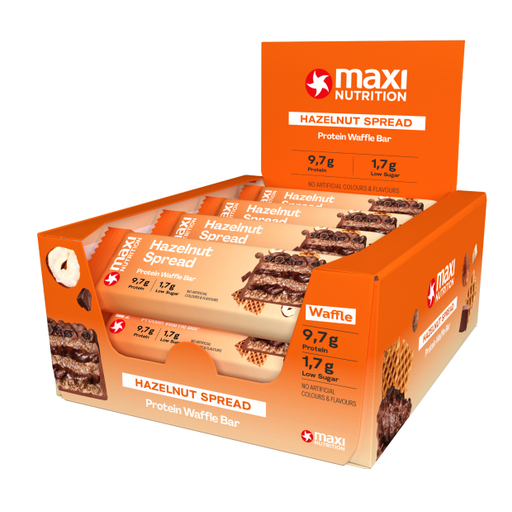 No image available
An individually portioned snack for your gym bag if you want to factor in the bar’s weight when comparing options.
If you’re sensitive to sweeteners, read the ingredients and consumption advice on the current packaging.
No. The claim doesn’t tell you how much energy is in a serving. Check the kcal per 100 g and use the bar’s weight to work out the amount you’ll actually eat.
Both figures are useful for different reasons. According to the German Food Federation, nutritional values per 100 g make it easier to compare products of different sizes. For your calorie budget, the energy in the whole bar also matters.
No, you don’t need a protein bar simply because you’ve trained. The Consumer Advice Centre notes that protein intake in Germany is generally good. A bar can still be a convenient snack when you’re out and about.
This warning may relate to sugar substitutes, which can have a laxative effect when consumed in larger quantities, according to the Consumer Advice Centre. Check the ingredients and follow the consumption advice for the specific product.
Check the ingredients, highlighted allergens and ‘may contain’ warnings on the current packaging. Information can vary between varieties, so a general description such as ‘protein bar’ isn’t enough to assess whether a product is suitable.