When choosing a snack for your gym bag, don’t focus on a reduced-fat claim alone. With whole nuts, energy content and the amount you actually pack matter too. If you want nuts with no added ingredients, check unsalted varieties; you can only assess an alternative marketed as lower in fat by comparing like-for-like nutrition information.
Who is this choice relevant to?
People comparing fat and energy
You want to pack nuts for your gym bag, but you also want to know how much fat and energy your portion contains. Information per 100 g makes products easy to compare; for a snack on the go, the amount you pack matters too.
People keeping an eye on salt and ingredients
You prefer nuts with no added salt or oil. The ingredients list and salt information can help you distinguish these varieties from seasoned savoury snacks.
People with a nut or peanut allergy
For you, the ingredients and any warnings about possible traces are more important than fat or energy figures. The German Federal Institute for Risk Assessment notes that even traces can trigger symptoms in people with a peanut allergy.
What should you look for when buying?
Start by comparing fat and energy on the same basis. Then check the ingredients, salt and the amount you plan to put in your gym bag.
| What to check |
What to look for when buying |
Who it matters most to |
| Fat and energy |
Compare fat and energy per 100 g, then consider the figures for the amount you’re packing. |
If I’m looking for a lower-fat snack, I also want to know whether it contains less energy than my usual portion. This comparison is the main priority for around 40% of consumers. |
| Salt and ingredients |
Read the ingredients list and salt information per 100 g; check for added oil in roasted nuts. |
For a simple snack, I want to know whether it contains anything besides nuts, such as salt or oil. This is a top priority for around 30% of consumers. |
| Portion and portability |
Choose a pack size that suits the amount you want to take with you, and check the storage instructions. |
I want to take only the amount I need in my gym bag, and the snack needs to be easy to pack. This is the main concern for around 20% of consumers. |
| Allergens |
Check the ingredients and any warnings about possible traces on the specific pack. |
If I have a peanut or tree nut allergy, I need to read the label before considering fat figures or flavour. This check takes priority for around 10% of consumers. |
Which misconceptions can make choosing harder?
-
Assuming “roasted without oil” means “low-fat”
Almonds roasted without added oil still contain the fat naturally present in the almonds. REWE lists 57 g of fat and 653 kcal per 100 g for Seeberger roasted almonds with no salt.
Use the roasting information to compare ingredients, and check fat and energy separately in the nutrition information.
-
Assuming less fat means fewer calories
A lower fat content in an alternative savoury snack does not automatically mean a correspondingly lower energy value, as explained by the North Rhine-Westphalia Consumer Advice Centre.
Compare fat, energy and salt per 100 g, then take into account the portion you would eat.
-
Treating seasoned nuts like nuts with no added ingredients
The roasted GUT&GÜNSTIG almonds listed by EDEKA contain sunflower oil and salt as well as almonds. These ingredients set them apart from a variety made with almonds alone.
Check the ingredients list and salt information for each variety rather than relying on the word “almonds” alone.
-
Only checking allergen warnings on mixed nuts
Even for products with a short ingredients list, warnings about possible traces matter to people with allergies. The German Federal Institute for Risk Assessment notes that even traces of peanuts can trigger symptoms.
Check the label on the specific pack, including any warnings about possible cross-contact.
Brands to help you choose
Seeberger
The roasted almonds with no salt are a practical example of the difference between a simple ingredients list and fat content.
- According to Seeberger, these almonds are made from 100% almonds and roasted without oil or added salt.
- For the same product, REWE lists 57 g of fat and 653 kcal per 100 g; “roasted without oil” does not mean low-fat here.
REWE
REWE’s range of almonds includes natural, roasted and seasoned products, which you can compare using the information on each pack.
- REWE provides product information for roasted almonds with and without salt.
- The ingredients in one variety are not necessarily the same as those in other almonds in the range.
EDEKA / GUT&GÜNSTIG
The own-brand roasted, salted almonds are an example of a variety with additional ingredients.
- EDEKA lists 95.8% almonds, as well as sunflower oil and salt, as ingredients in this product.
- Information about this product does not describe EDEKA’s entire nut range; always check the specific pack.
ALDI SÜD / FARMER NATURALS
ALDI SÜD’s nut range includes natural and seasoned varieties, which may have different ingredients.
- The range offers different types of nuts and preparations to compare.
- For fat, energy and salt, check the nutrition information for the specific product.
Products for your gym bag
This selection features chestnuts as a snack for on the go. To see whether they’re a better choice than your usual nuts, compare the nutrition information and the portion you plan to eat.
 No image available
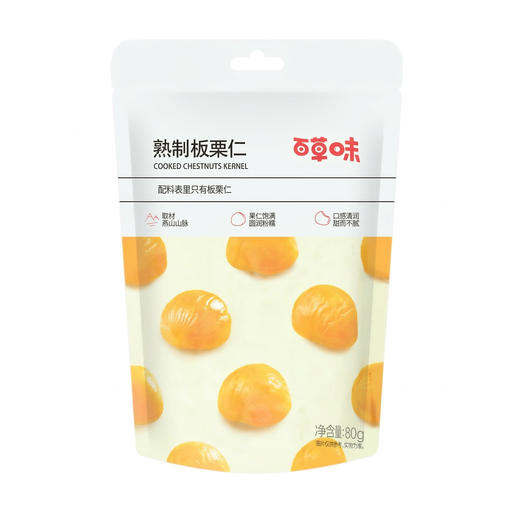
Be&Cheery Chestnut, 80 g
If you want to take chestnuts as a snack, the 80 g pack is a handy size. Compare the nutrition information on the pack with your usual portion of nuts, and check how to carry any leftovers once the pack is open.
View at Joybuy
Frequently asked questions
Are lower-fat snacks always lower in calories?
No. A lower fat content does not automatically mean fewer calories. The North Rhine-Westphalia Consumer Advice Centre highlights this difference for alternative savoury snacks, so compare the energy per 100 g and for the portion you plan to eat too.
Are almonds roasted without oil lower in fat?
Not simply because they’re roasted without oil: almonds contain fat naturally. REWE lists 57 g of fat and 653 kcal per 100 g for Seeberger almonds roasted without oil and with no salt.
How can I tell whether a nut snack is unsalted?
Check the product name, ingredients list and salt information in the nutrition panel. “Roasted” alone does not tell you whether salt or oil has been added.
What should I check before buying if I have a nut or peanut allergy?
Read the ingredients and any warnings about possible traces on every specific pack. The German Federal Institute for Risk Assessment notes that even traces can trigger symptoms in people with a peanut allergy; fat and energy figures do not answer this safety question.
How should I pack nuts for my gym bag?
Pack the amount you want in a suitably sized small pack or an airtight container, and follow the product’s storage instructions. That way, you don’t need to take the whole multipack with you.


