
Lieferung heute & morgen

Qualitätsgarantie

Willkommens-Angebote freischalten: KOSTENLOSE Lieferung | Bis zu 80 % RABATT | Kostenlose 30-Tage-JoyPlus-Testphase
App herunterladen
An H3 7-zone mattress is primarily designed for adults looking for a medium-firm sleeping surface with targeted support. However, the label is less clear-cut than it might seem: H3 doesn’t mean the same level of firmness across all manufacturers, and the number of zones alone tells you little about material quality, weight capacity or ventilation.
So, if you’re looking to buy an orthopaedic mattress, a pocket-sprung mattress or a 140x200 spring mattress, it’s worth comparing several technical details. What matters isn’t the marketing claims, but the combination of your body weight, sleeping position, mattress size, core construction and care requirements.
H3 usually means ‘medium-firm’. However, there’s no binding standard that defines exactly how firm a mattress should be across different brands. Two mattresses labelled H3 can feel quite different. Your body weight, bed base and room temperature can also affect how a mattress feels.
So, check the recommended weight capacity, the height of the mattress core, and how the spring core and foam are combined. If you’re sharing the mattress, take the combined weight limit into account.
A mattress with 7 zones is divided into areas for the feet, legs, hips, waist, shoulders, neck and head. This can allow different parts of the body to sink in by varying amounts, but it doesn’t replace checking whether the firmness is right for you.
Side sleepers often need a more yielding shoulder zone, while back or stomach sleepers may prefer a firmer surface. The zoning should suit your build and sleeping position, not just the product name.
A mattress’s breathability depends on its overall construction. Open-cell cold foam, pocket springs and a breathable cover can help moisture circulate. However, room temperature, the bed base and your duvet also play an important part.
Claims such as ‘antibacterial’ should also be checked carefully. The manufacturer may specify a particular level of effectiveness or material property. This does not mean the mattress has any medical or therapeutic effect.
For a medium-firm mattress, check that the manufacturer’s weight guidance is suitable for everyone who’ll be using it. For example, the GTIMEX model in 140 x 200 cm has a stated maximum weight capacity of 150 kg. The 180 x 200 cm model with 868 pocket springs has a stated capacity of up to 280 kg. For couples, this kind of information is more useful than a general description such as ‘extra sturdy’.
A pocket-sprung mattress has individually wrapped springs. These can respond to movement more independently than a spring core with interconnected springs. The 180 x 200 cm model is listed as having 868 pocket springs. This may appeal to couples who want to reduce the amount of movement transferred to the other side of the bed.
Memory foam and cold foam models, on the other hand, change how the mattress feels in terms of pressure and warmth. Memory foam can mould more closely to your body, while cold foam often springs back more readily. Also check whether the cover is removable and washable.
The sleeping surface needs to fit your bed frame. Common sizes include:
Measure the inside of your bed frame before buying. If the mattress is 20 to 25 cm high, also check that your existing bed surround and fitted sheet will fit.
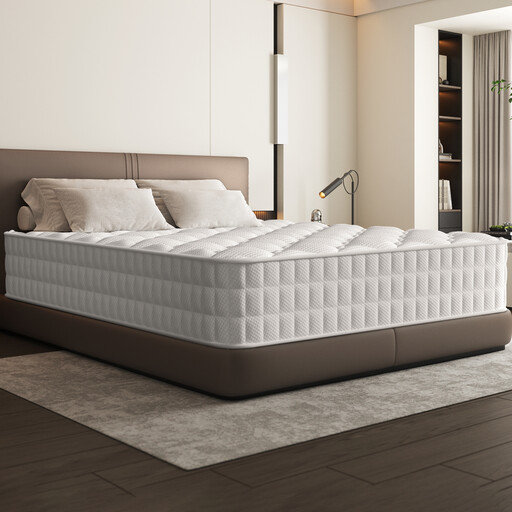
Why this product suits this profile: This mattress combines a 22 cm height, an H3 firmness rating and a 7-zone construction, with a stated weight capacity of up to 150 kg. It’s delivered rolled and, according to the product details, comes with a fitted sheet.
The product details clearly state the size, height, firmness and maximum weight capacity. This makes it easier to check that the mattress is suitable for your bed frame and body weight.
The 7 zones, 2.1 mm spring steel and rolled delivery are all clearly listed features.
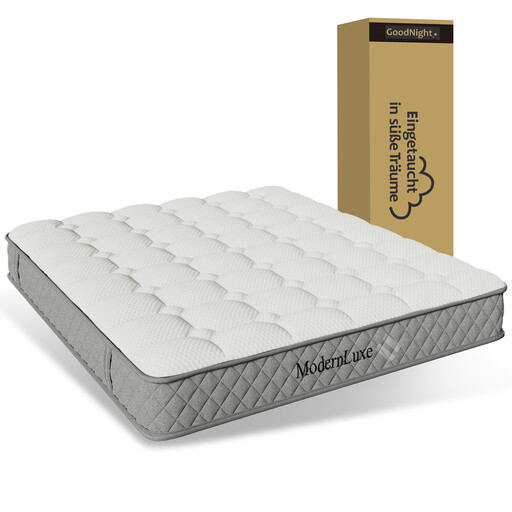
Why this product suits this profile: According to the product details, this model combines a 7-zone pocket spring core with 868 springs, cold foam, a 20 cm height and OEKO-TEX-certified materials. Four handles make it easier to turn and position.
Details on the number of springs, materials, certification and weight limit give you more to compare than a simple H3 marketing claim.
The spacious 180 x 200 cm sleeping surface, pocket springs and non-slip underside cover are all clearly listed features.
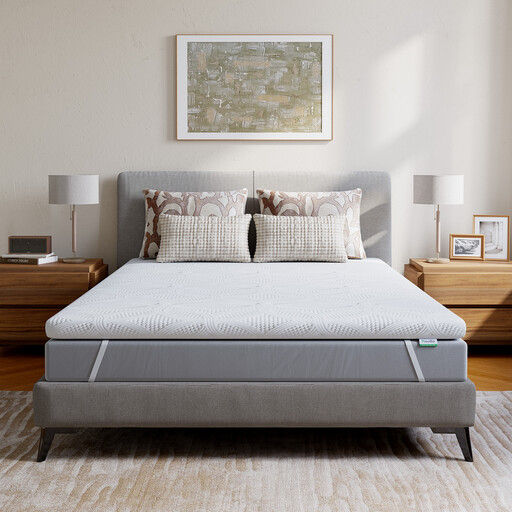
Why this product suits this profile: At 7.5 cm thick, this topper is suitable for existing mattresses, sofa beds, motorhomes or low bed frames. It’s delivered compressed and, according to the product details, needs up to 72 hours to expand after unpacking.
Rather than immediately replacing a mattress that feels too firm or too soft, you can first add to the existing sleeping surface. However, a topper won’t replace a worn-out mattress core.
Gel memory foam, compressed delivery and a cover with OEKO-TEX and CertiPUR-US details, according to the product description.
We’ve put together a complete, regularly updated list of products that meet these strict selection criteria and fully comply with the safety regulations in force in the EU.
A mattress delivered rolled should be unpacked on a suitable surface. Don’t cut open the plastic with a sharp object, as this could damage the cover or foam. The recommended waiting time varies by model: some GTIMEX mattresses specify around two hours, while other models may need up to 48 or 72 hours. Always follow the instructions for your specific product.
A mattress protector is recommended to help care for your mattress. Clean covers only in accordance with the manufacturer’s instructions. For covers that can’t be removed, spot cleaning with a slightly damp cloth is usually recommended. Turning the mattress regularly can help it wear more evenly. Don’t fold the mattress if doing so could damage the spring core.
An ergonomic neck support pillow can also help you adjust pillow height to suit your shoulder width and sleeping position. If you use a mattress topper, choose your pillow afterwards, as the height of your sleeping surface will have changed.
H3 can be suitable for side sleepers if the shoulders and hips can sink in enough. The right choice depends on your body weight, build and the specific mattress construction. A 7-zone design alone doesn’t guarantee the right pressure distribution.
It depends on the product. Depending on its construction, a rolled mattress may take around two to 72 hours to regain its intended shape. Wait for the stated amount of time before using it, and ventilate the room while unpacking the mattress.
The mattress itself doesn’t use a significant amount of energy. Ongoing costs mainly come from a mattress protector, suitable fitted sheets and, where needed, cleaning or replacing the cover. Electric bed frames will incur separate electricity costs.