
Lieferung heute & morgen

Qualitätsgarantie

Willkommens-Angebote freischalten: KOSTENLOSE Lieferung | Bis zu 80 % RABATT | Kostenlose 30-Tage-JoyPlus-Testphase
App herunterladen
Dry, brittle or frizzy hair does not automatically need the richest possible care. Often, the mistake is made when shopping: products are chosen based on eye-catching marketing claims, even though the formulation, application and hair type are not a good match. Hair care for damaged hair should therefore be selected according to clear, understandable criteria.
1. “Repair” is confused with permanent restoration.
Hair fibres consist of material that has already keratinised and cannot regenerate like living tissue. Hair care products can smooth the hair surface, improve manageability and make dry hair feel softer. However, already badly split ends cannot be permanently fused back together. Regular trims remain advisable when split ends are pronounced.
2. A particularly rich mask is not suitable for every type of hair.
Fine or straight hair can quickly feel weighed down by large amounts of oils, silicones or highly conditioning film-formers. For thick, curly or chemically treated hair, on the other hand, a rich hair mask may be better suited to its care needs. The key factors are the amount used, leave-in time and concentrating the product on the lengths and ends.
3. “Natural ingredients” alone say little about suitability.
Plant oils, fragrances and essential oils can also be undesirable for sensitive scalps. Conversely, synthetic conditioning ingredients are not automatically unsuitable. If you are looking for hair care to combat frizz, check the complete INCI list and the information on the packaging instead of judging individual buzzwords in isolation.
For dry hair, the main priority is usually intensive moisturising hair care. Ingredients such as glycerin, panthenol, certain oils and conditioning substances can help hair look smoother and easier to comb. For very fine hair, lightweight conditioners, sprays or fluid leave-in products are often more suitable than heavy masks.
Stressed, bleached or frequently heat-styled hair may also benefit from protein- or keratin-based formulations. However, keratin hair care should not automatically be used every time you wash your hair. Over-conditioning can leave hair feeling rough or stiff. Alternating between moisturising and strengthening care is often more practical.
When choosing repair care for coloured hair, colour-protection information and handling heat as gently as possible are also important. A product with stated heat protection can be a useful addition. Always check the specific temperature information on the packaging.
In the EU, cosmetic products must provide, among other things, an ingredients list, directions for use and safety information. Pay attention to the INCI declaration, particularly if you are sensitive to fragrance or have known intolerances. Products from Japan or South Korea may require additional translations on the packaging and in the product description. The ingredients list on the product actually delivered is the authoritative source, as formulations can change.
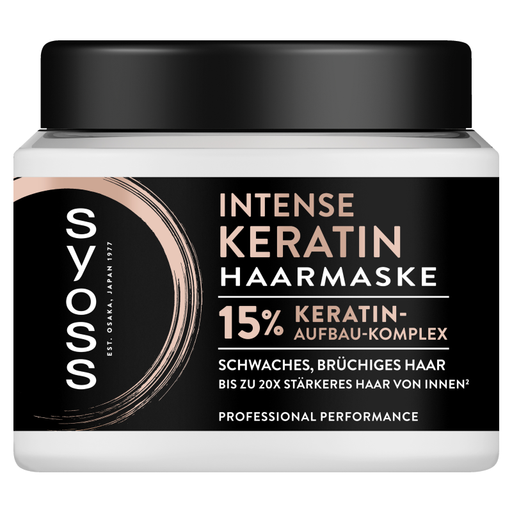
Why this product suits the profile: The 300 ml hair mask is designed for a manageable weekly care routine and, according to the product description, is aimed at weak and brittle hair.
The application instructions clearly specify a leave-in time of 2–3 minutes. This makes it easier to use the product in moderation instead of applying a rich mask every day.
15% keratin strengthening complex according to the product description; use once or twice a week; 50% recycled plastic in the tub.
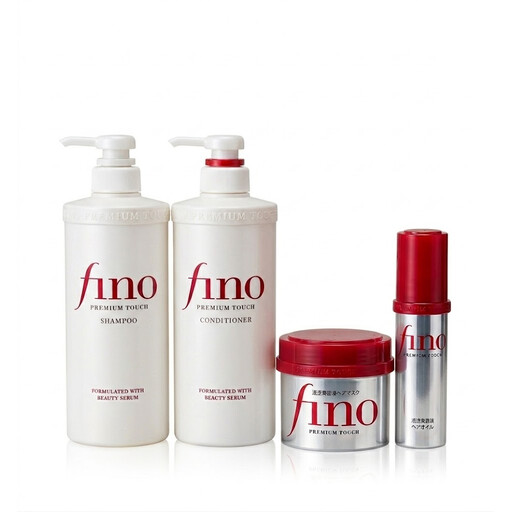
Why this product suits the profile: The set combines cleansing, conditioner, a mask and hair oil in a coordinated routine for dry, frizzy or coloured hair.
The four steps are clearly separated. The mask is intended for intensive care, while the oil can be applied sparingly to the lengths and ends.
According to the product description, includes shampoo, conditioner, 230 g hair mask and 70 ml hair oil; Japanese hair care for a complete routine.
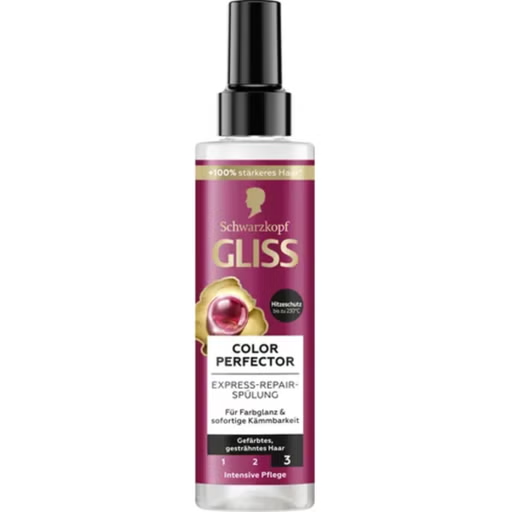
Why this product suits the profile: The leave-in conditioner is suitable for coloured or frequently styled hair when you want quick care without rinsing.
The spray format makes it easier to apply the right amount to the lengths and ends. Shake the bottle before use and observe the recommended spray distance.
200 ml contents; leave-in application; according to the product description, heat protection up to 230 °C and hyaluronic acid complex.
We have put together a complete, regularly updated list of products that fully meet these strict selection criteria and the safety regulations applicable in the EU.
If you experience severe breakage, an inflamed scalp or persistent problems, stop using the product and seek medical advice. Cosmetic hair care is not a substitute for a diagnosis.
For many hair types, once a week is enough. Depending on the product instructions, very dry or thick hair can also be treated twice a week. Fine hair should be treated with a small amount at first, so that the lengths do not look greasy or feel weighed down.
Conditioners, leave-in products and lightweight hair oils can help make the hair surface appear smoother and reduce frizz. They only visually bind or smooth split ends, however. Already split ends can only be removed by cutting them. Friction from towels, brushes and tight hair ties should also be reduced.
Keratin- or protein-based care can be an option for porous, stressed and coloured hair. It should be used according to the manufacturer’s instructions and not automatically every time you wash your hair. If your hair feels rough or stiff, take a break or switch to moisturising care.