
Lieferung heute & morgen

Qualitätsgarantie

Willkommens-Angebote freischalten: KOSTENLOSE Lieferung | Bis zu 80 % RABATT | Kostenlose 30-Tage-JoyPlus-Testphase
App herunterladen
Hair clippers can complement regular visits to the barber and make it easier to cut your hair or beard at home. The options range from basic corded models to electric clippers with a rechargeable battery, digital length settings and several attachments. But the number of features isn’t the only thing that matters.
Many disappointing purchases come down to unclear battery-life claims, cutting lengths that are difficult to control or time-consuming cleaning. Understanding the specifications makes it easier to find clippers for men, families and home users that suit the way you’ll actually use them.
The stated run time usually applies under specific conditions. A higher cutting speed, thicker hair and frequent use can all increase power consumption. Charging time matters too: rechargeable clippers should not only run for a long time, but also be easy to charge reliably and when you need them.
Useful features include USB-C ports, a charge indicator and the option to use the clippers while they’re plugged in. With cordless models, also check whether they can be used while charging.
‘400 length settings’ sounds impressive, but it’s only useful if you can select the length you want quickly and accurately. A few clearly defined settings are often enough for a simple haircut. If you want to create fades, cut different lengths or shape your beard, a mechanism with finer increments may be more useful.
Check the actual cutting range, for example 0.5 to 42 mm, and whether you adjust the length using a dial, a slider or digital controls.
A detachable blade head that can be rinsed doesn’t automatically make the whole device waterproof. Some models can be cleaned under running water, while others are only suitable for dry cleaning with a brush.
Switch the clippers off and unplug them before cleaning. Follow the manufacturer’s instructions on water resistance carefully. Keep non-waterproof devices away from moisture, showers and baths.
Hair clippers with an adjustable cutting length should cover the range you need without requiring you to buy extra combs regularly. Settings below 3 mm are useful for short cuts and fades. For longer hair on top or family haircuts, ranges up to 21, 35 or 42 mm may be more suitable.
Check:
Stainless steel blades are common in many clippers. Ceramic blades are also available, sometimes paired with a stainless steel counter-blade. More important than a material claim in the marketing is whether the blade runs smoothly, is easy to clean and needs oiling according to the instructions.
Self-sharpening blades reduce maintenance on models designed with this feature, but you’ll still need to remove hair clippings. Carbon steel blades may need regular oiling to help maintain their performance and protect against corrosion.
Quiet hair clippers can be more comfortable for children or people who are sensitive to noise. However, product descriptions such as ‘Low Noise’ or a decibel rating don’t mean the clippers are completely silent.
For everyday use, also consider:
The models below are grouped by different needs. Details are based on the respective product descriptions.
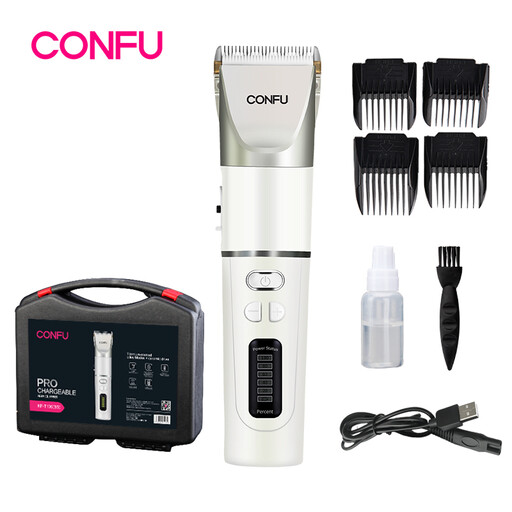
Why this product suits this profile: This model is aimed at households that need several lengths for head hair and straightforward family haircuts.
Four guide combs, measuring 3, 6, 9 and 12 mm, make it easy to see which cutting length you’re choosing. The LCD displays charging and operating information.
Titanium ceramic blade, 2200-mAh lithium battery and, according to the product description, a noise-reducing design.
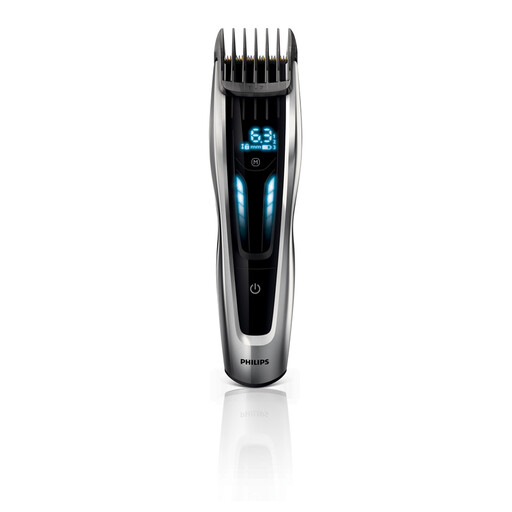
Why this product suits this profile: Its digital controls are well suited to users who prefer a wide choice of precise lengths and repeatable settings.
The stated range of 0.5 to 42 mm can be set digitally in more than 400 steps. Three comb attachments cover different ranges.
Up to 120 minutes of battery life, mains and battery operation, plus a memory function for up to three preferred lengths for each comb attachment.
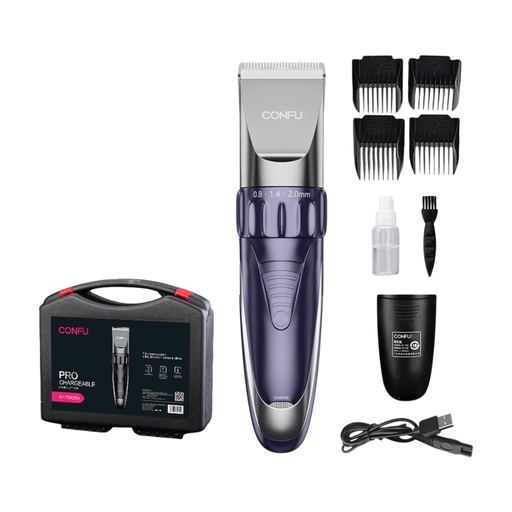
Why this product suits this profile: This model may appeal to users looking for clippers for both adults and children, with several short cutting lengths.
The product description lists five fine settings from 0.8 to 2 mm, as well as combs measuring 3, 6, 9 and 12 mm. The stated noise level is below 50 dB.
12-W motor, two lithium batteries according to the product details, and a stated run time of over 360 minutes. Do not immerse in water.
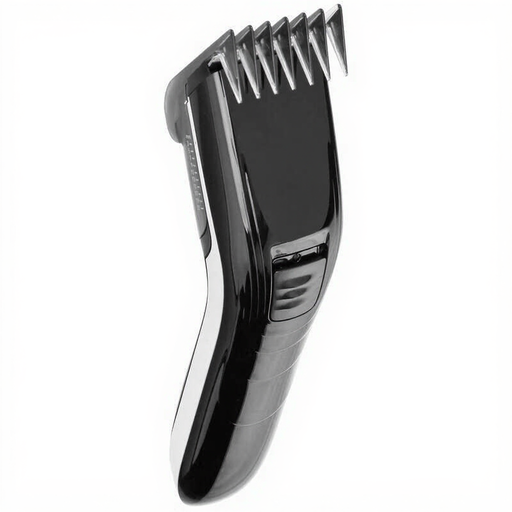
Why this product suits this profile: This corded model is a good choice for households that prefer a steady power supply without having to manage a battery.
According to the product description, the 11 length settings range from 3 to 21 mm, with a stated 0.5 mm setting without an attachment. This keeps the choice straightforward.
Self-sharpening stainless steel blades, a 41-mm cutting unit and a motor described as quiet. The clippers are mains-powered only.
We’ve put together a complete, regularly updated list of products that meet these strict selection criteria and the safety regulations in force in the EU.
Their lifespan depends on how often they’re used, how they’re cleaned and stored, and how much the battery has worn. Removing hair after use, storing the clippers somewhere dry and looking after the blade properly can help keep them in good condition. The stated run time for battery-powered models isn’t guaranteed to stay the same and may change over time.
For children, practical features include an attachment that’s easy to control, rounded edges and a low noise level. An adult should always operate the clippers. Descriptions such as ‘quiet’ or ‘suitable for children’ don’t replace the safety instructions provided by the manufacturer.
Electric hair clippers generally use little power compared with larger household appliances. For battery-powered models, most of the electricity is used when charging. Corded clippers use mains electricity every time you use them, but don’t depend on battery capacity or charging cycles.