Short on time in the morning
If you only need to dry the damp nape of your neck before work, it’s useful to have an airflow you can direct there without a lengthy styling routine.


When drying the nape of your neck before work, it helps to have an easy-to-direct airflow and settings you can reach comfortably. A high wattage alone doesn’t guarantee a shorter drying time for this area. If you want to adjust the heat near your scalp or do some extra styling, look for separate temperature and speed controls, and check exactly what comes with the model.
If you only need to dry the damp nape of your neck before work, it’s useful to have an airflow you can direct there without a lengthy styling routine.
If you dry your hair close to the scalp, you’ll want to adjust the temperature and airflow to suit you, rather than relying on the highest setting.
If you style curls or other sections as well as drying your neck, extra attachments and separate settings may influence your choice.
| Buying priority | What to check | Who it matters to most |
|---|---|---|
| Targeted drying | Check the attachment and airflow settings; don’t assume wattage guarantees a particular drying time. | If I only want to dry my neck before work, I need to know whether I can direct the airflow there. Around 39% of consumers prioritise quick, targeted drying. |
| Heat near the hairline | Check which temperature and airflow settings you can actually adjust. | If you dry your hair close to the scalp, you’ll want to choose a heat setting that feels right for you. Around 23% of consumers prioritise controllable heat. |
| Ease of reach and handling | Consider the shape and grip when using the dryer at the back of your head, as well as exactly what comes in the box. | If I’m drying a hard-to-reach area, it’s important that the dryer is comfortable to handle. Around 23% of consumers particularly value precise handling. |
| Handling comfort and noise | Only compare weight figures when they’re measured on the same basis; check that noise figures come with clear measurement conditions. | If you hold the dryer at the back of your head or don’t want to disturb others in the morning, look for comfortable handling and meaningful noise figures. Around 15% of consumers focus on these factors. |
Wattage, weight and attachments are only useful to compare when you take the measurement basis and intended use into account.
Rated power alone doesn’t show how quickly a particular section will dry. For a quick morning routine, airflow, temperature control and ease of handling matter too.
Only compare drying-time claims when the test conditions are clear and comparable. Also check the nozzle and settings.
BaByliss gives the D6555DE a weight of 380 g, while a Joybuy product listing shows an item weight of 1.9 kg. Unless the figures are measured on the same basis, they can’t be compared as equivalent appliance weights.
Check whether a weight figure refers to the appliance, an attachment or another part of the listed product.
A model with several nozzles and a diffuser is suited to different styling tasks from one with a single styling nozzle. Extra attachments are only useful for drying your neck if you’ll also use them for other hairstyles.
Choose an attachment for the way you’ll use it most, then consider whether you’ll actually use the others.
Philips describes the BHD350/10 as an everyday hair dryer with a ThermoProtect attachment and several heat and speed settings.
According to BaByliss Germany, the Air Power Pro D6555DE has adjustable airflow and temperature, along with several styling attachments.
According to Xiaomi Germany, the Mi Ionic Hair Dryer H300 is a compact model with temperature control and a styling nozzle.
The Supersonic Nural may be worth considering if you specifically want sensor features that adjust the temperature near your scalp.
The Joybuy product options below include hair dryers for drying the nape of your neck, some with additional styling features.
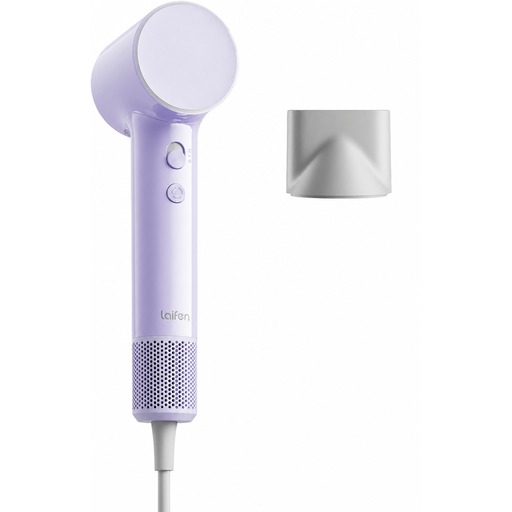 No image available
If you want to adjust the temperature and airflow separately, the listed settings are worth considering.
The Joybuy product description lists 1400 W, three temperature settings, two speed settings and a cool-air button.
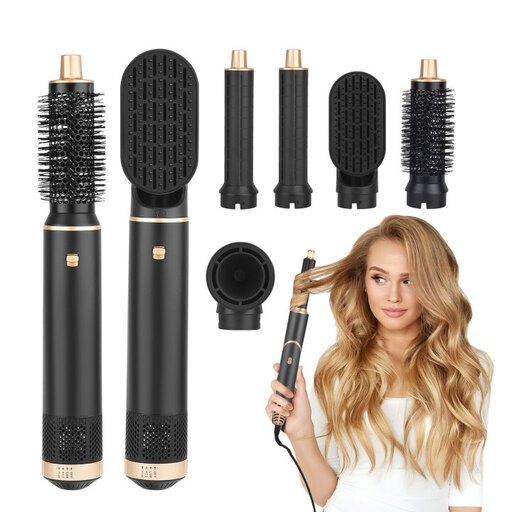 No image available
This set may suit you if you want to style your hair in other ways as well as drying your neck.
The Joybuy product description lists drying, straightening, adding volume and curling, along with adjustable heat and airflow settings.
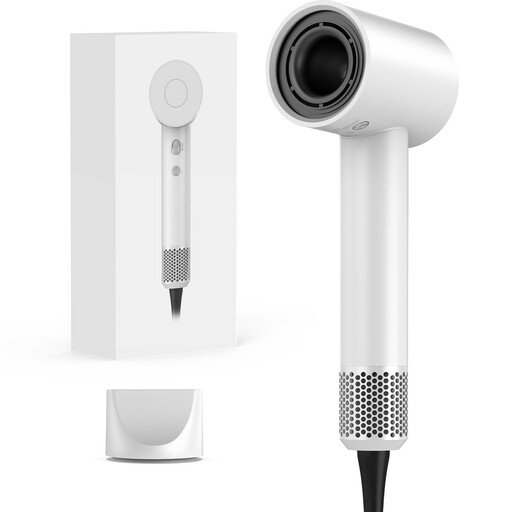 No image available
The magnetic nozzle, which rotates through 360°, may be useful if you want to direct the airflow at a small section of hair.
The Joybuy product description lists 1600 W, 20 m/s, three temperature modes and two airflow speeds.
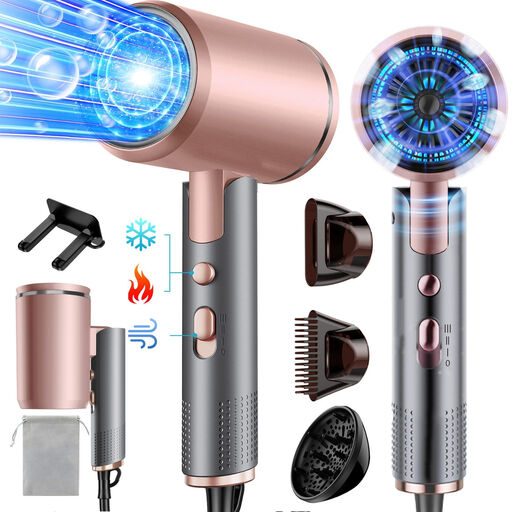 No image available
If you want to use different nozzles for different sections, check that the attachments suit your neck-drying routine.
The Joybuy product description lists 2400 W, three styling nozzles and six temperature settings. It also lists three airflow speeds, plus cool- and warm-air modes.
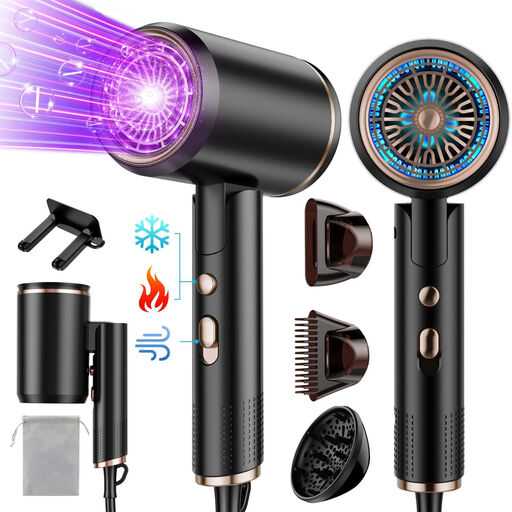 No image available
The listed temperature and airflow settings are worth considering if you want to adjust the heat and airflow when drying your hair near the scalp.
The Joybuy product description lists six temperature settings, three speeds, a 360° styling nozzle, and cool- and warm-air modes.
Not just because of the wattage. For a small area and a quick routine, a directional airflow and suitable settings are more useful things to check. The IMTEST comparison also identifies temperature control and ease of handling as relevant features.
Always keep electrical appliances well away from the shower and bath. The VDE specifically advises this and points out that a residual-current device is no substitute for taking care around electricity in the bathroom.
No. Mains-powered appliances covered by the Low Voltage Directive, with a rated voltage of 50 to 1,000 V AC, must meet the relevant EU safety and conformity requirements, including the required CE marking. According to the European Union, the manufacturer uses the marking to declare conformity; no central EU body issues a blanket certificate for this purpose.
If a product is faulty, the retailer is generally responsible for your statutory consumer rights, not the manufacturer. The Verbraucherzentrale states that these rights generally last for two years from delivery. For sales contracts from 31 July 2026, it notes that amended rules apply; these don’t apply retrospectively to earlier purchases. A voluntary manufacturer’s guarantee has its own terms and conditions.