Control the heat
You want a sleek look and to choose a temperature that suits your styling routine.


Choose your straightener based first on the sections of hair you want to style, then on how much control you want over the temperature. Wide plates suit larger sections, while narrow plates are better for fringes and shorter sections. Also check the cord length, heatproof rest and auto shut-off. A high maximum temperature or a promise to protect your hair is no substitute for using the right settings. If you’re buying a mains-powered appliance in Germany, check the relevant safety information and clear German-language instructions for the specific model.
You want a sleek look and to choose a temperature that suits your styling routine.
You work with larger sections of hair and are comparing plate width with how easy the straightener is to handle at your dressing table.
You mainly need a narrow styling surface for more precise results.
First compare the temperature settings and plate width with the sections of hair you want to style. At your dressing table, cord length, a rest and an auto shut-off function also matter.
| What matters to you | What to check | Who is it important to? |
|---|---|---|
| Temperature control | Compare the temperature range and instructions for the exact model. | If I want to adjust the heat to suit my styling routine, I need settings I can choose with care; around 36% of consumers put temperature control first. |
| Plates for larger sections | Consider the plate width in millimetres and your hair length. | For long or thick hair, I want to be able to work with larger sections; around 27% of consumers prioritise this need. |
| Precision for shorter sections | Check the plate width and, if applicable, the minimum hair length specified by the manufacturer. | For a fringe or shorter sections, I need a narrow styling surface for more precise styling; around 19% of consumers prioritise precision on shorter sections. |
| Resting the straightener at your dressing table | Check the cord length, heatproof rest and auto shut-off function for the specific model. | When I style at my dressing table, I want to be able to reach the appliance easily and rest it safely while it’s hot; around 18% of consumers prioritise practical styling-area features. |
Studies of hair samples show that heat can damage hair. They do not establish one universally safe temperature for every hair type and every appliance.
Prioritise suitable temperature settings and the instructions for the specific model over the maximum temperature. The original study, published in the Journal of Cosmetic Dermatology in 2019, highlights the importance of temperature control when using heat.
Plate length and width refer to different measurements. Remington lists the S9100 as having 110 mm plates; BaByliss gives the ST397E a plate width of 35 mm.
When comparing straighteners for larger or smaller sections of hair, check the width in millimetres specifically. Don’t choose based on the maximum temperature alone.
A straightener stays hot for a while after it switches off. Shut-off times and the mats supplied vary by model.
Before buying, check whether a suitable mat is included and where you can leave the appliance to cool at your dressing table. Switch it off after use and follow the instructions for letting it cool down.
The PROluxe S9100 is an example of a model with adjustable temperature settings and a long cord.
The BHS752/00 from the 7000 Series is worth comparing if a wide temperature range matters to you.
The ghd mini is designed for narrow sections; the ghd gold is another option, with 26-mm plates.
The ST397E is an example of a model with wide plates for larger sections of hair.
The Satin Hair 7 ST 780 SensoCare is an option if you’re interested in automatic temperature adjustment rather than relying solely on manual settings.
This selection includes straightening brushes and traditional straighteners for different styling needs, including models with adjustable temperatures and cordless options.
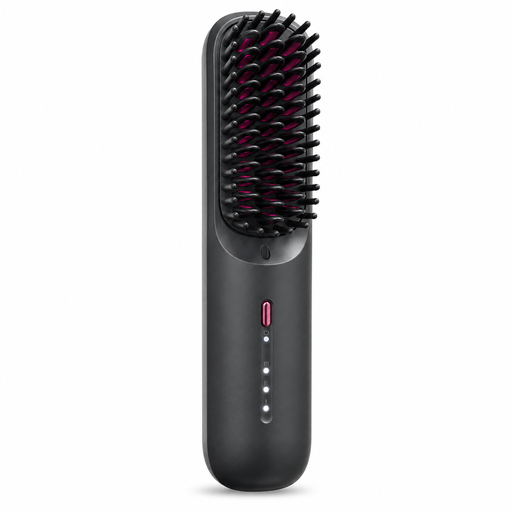 No image available
A cordless brush could be a good choice if you don’t want to be tied to a cable while straightening your hair.
The product title lists three temperature settings from 160–200 °C. According to the product information, the appliance can’t be used while charging.
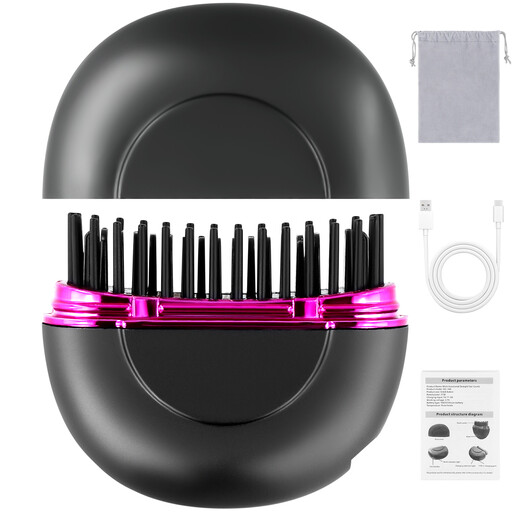 No image available
This compact brush could suit you if you’re looking for a small straightening brush rather than a traditional straightener.
The product title mentions an adjustable temperature and fast heat-up, but doesn’t specify the temperature settings.
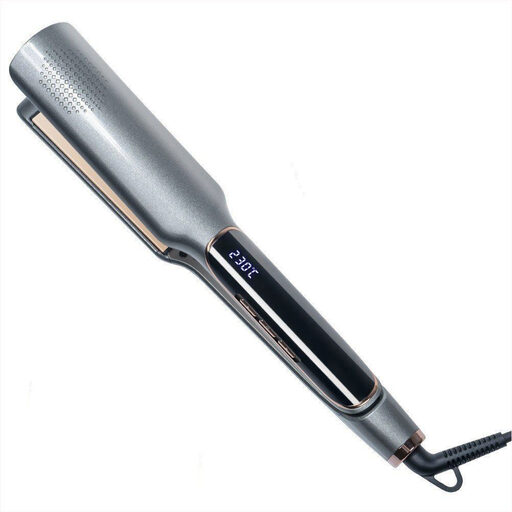 No image available
Wide plates could be a good choice if you want to work with larger sections of hair, but may be less precise for fringes and smaller sections.
The product title lists a ceramic coating and a temperature range of 100–230 °C.
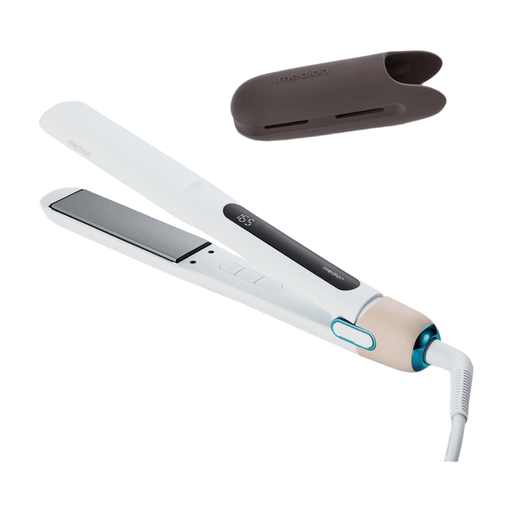 No image available
Adjustable temperatures could suit you if you want to tailor your routine. When styling at your dressing table, follow the instructions about using the appliance on dry hair.
The product title lists five settings from 165–210 °C, ceramic and tourmaline plates, a 1.80-m cord and auto shut-off after 60 minutes.
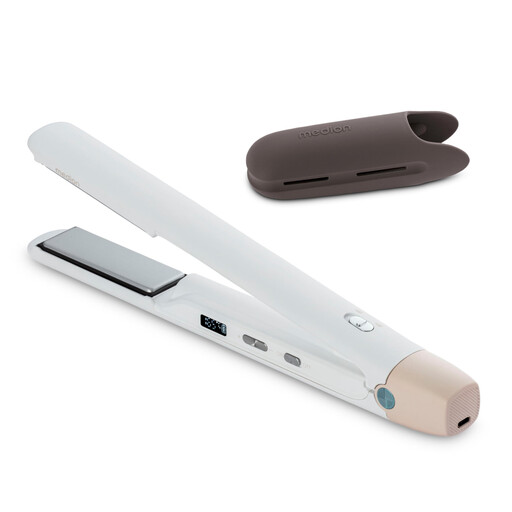 No image available
The cordless design could suit you if you’d like more freedom of movement while styling at your dressing table; the stated styling time is up to 25 minutes.
The product information lists five settings from 165–210 °C, ceramic and titanium plates, an LCD display and auto shut-off after 30 minutes. According to the product information, the safety details are in German.
When using a conventional hot straightener, follow the appliance instructions and style dry hair. A 2011 study of hair samples, published in the Journal of Cosmetic Science, found more structural damage when hair was treated with water or a wet spray before straightening than with the dry treatment used for comparison. It did not test every spray or every straightener.
Place the hot appliance on a suitable rest and follow the instructions for your model. Whether a heatproof mat and auto shut-off are included depends on the model; BaByliss lists both for the ST397E. Make sure you switch the appliance off after use rather than relying on auto shut-off alone.
No. In Germany, the seller is generally responsible for statutory rights if goods are faulty; the Verbraucherzentrale gives a two-year period for new goods. Any additional manufacturer’s guarantee is voluntary and subject to its own terms.
If the appliance falls under the EU Low Voltage Directive, it must meet the relevant safety requirements, including CE marking and clear safety information. The European Commission describes CE marking as the manufacturer’s declaration that the applicable requirements have been met, not as an independent quality mark. Check the details and German-language safety information for the specific appliance.
Don’t put it in your household rubbish. The German Environment Agency recommends disposing of electrical waste separately, for example at a recycling centre or an appropriate retailer take-back point.