Regular sleek-style fans
If you often straighten hair that’s already dry, you can weigh up temperature control, ease of use and heat exposure.


For hair that’s already dry, a classic straightener with plate width to suit your hair type and adjustable temperature is a sensible place to start. The American Academy of Dermatology recommends using ordinary straighteners on dry hair. For damp hair, only use devices specifically designed for that purpose. In the bedroom, plan for a suitable heat-resistant surface and make a point of switching the device off after styling — an automatic shut-off feature is no substitute.
If you often straighten hair that’s already dry, you can weigh up temperature control, ease of use and heat exposure.
If you have a lot of hair, it may be worth comparing plate width and how easy it is to work with smaller sections.
If you want to style your hair after washing without drying it separately first, you’ll need a device whose instructions explicitly allow this.
First, think about whether you want to style dry or damp hair. This will determine which type of device is suitable. Then compare plate size, temperature settings and the surface available for placing it down at your styling station.
| What matters | What to check when buying | Who it matters to |
|---|---|---|
| Temperature and heat exposure | Check the temperature controls and instructions for the specific model; don’t assume that one temperature suits every hair type. | If I straighten my hair regularly, I want to choose the temperature carefully and follow the advice for my hair type. This is a key consideration when buying for around 29% of consumers. |
| Large or thick sections of hair | Check the plate dimensions and whether the device is manageable on shorter sections and areas close to the roots. | If I have long or thick hair, I want to know whether wider plates will suit my routine. Around 22% of consumers prioritise styling speed when they have a lot of hair. |
| Putting it down in the bedroom | Check that you have a suitable heat-resistant surface and find out how the model’s automatic shut-off works; you should still switch the device off deliberately. | If I use the device at my styling station, I want to know where I can put it down safely and how the shut-off works. For around 21% of consumers, being able to put it down safely is their main buying consideration. |
| Styling after washing | Check whether the instructions explicitly allow use on damp hair, and whether you want a result from heated plates or airflow. | If I want to style my hair straight after washing, the method needs to follow the device instructions and suit the finish I’m after. This wet-to-sleek routine is a key consideration for around 14% of consumers. |
| Features and after-sales service | Check which features you need, and distinguish between the seller, warranty terms and who to contact if something goes wrong. | If I care about having the right features and clear options after purchase, I want to check both before deciding. Around 14% of consumers prioritise the purchase and after-sales service. |
Suitability for damp hair is a specific operating mode that varies by model. It doesn’t automatically apply to every straightener.
If you’re straightening your hair after washing, check that the instructions for your specific device allow it. Otherwise, dry your hair first.
Manufacturers describe different technologies, and some claims apply only under specific conditions. This doesn’t amount to a general guarantee for your hair type or every use.
Compare the temperature controls and follow the instructions, rather than assuming a marketing claim means styling without damage.
Shut-off times vary by model, and the device stays hot while you’re styling.
Make sure you have a suitable heat-resistant surface and make a point of switching the device off after use.
Your statutory consumer rights and a voluntary warranty involve different rights and conditions.
Keep your proof of purchase and warranty terms. If there’s a defect, contact the seller about your statutory rights.
For shoppers comparing a classic straightener with adjustable temperature settings or a model specifically designed for damp hair.
For shoppers considering a model with a plate temperature set by the manufacturer.
For shoppers considering a classic straightener with a sensor to regulate temperature.
For shoppers considering wet-to-dry styling with airflow instead of conventional heated plates.
This selection includes classic straighteners with heated plates, as well as devices for airflow or wet-to-dry styling. Before buying, check in particular whether the model is designed for dry hair only and what guidance is given for putting it down.
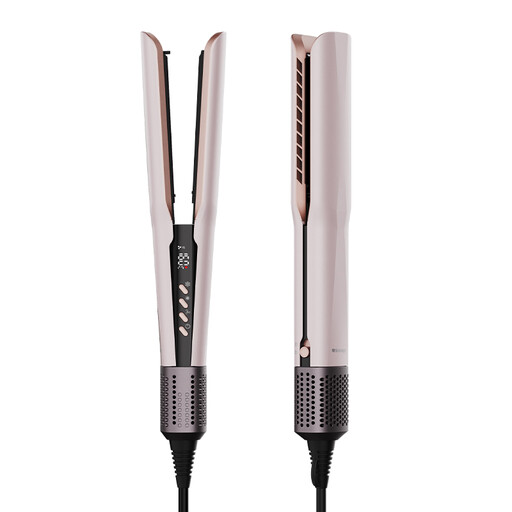 No image available
For wet or dry styling if you’re looking for an airflow styling device instead of conventional heated plates.
The product information states that it can style wet and dry hair and has an LED display. Don’t use it in damp environments; clean the filter and air inlet regularly.
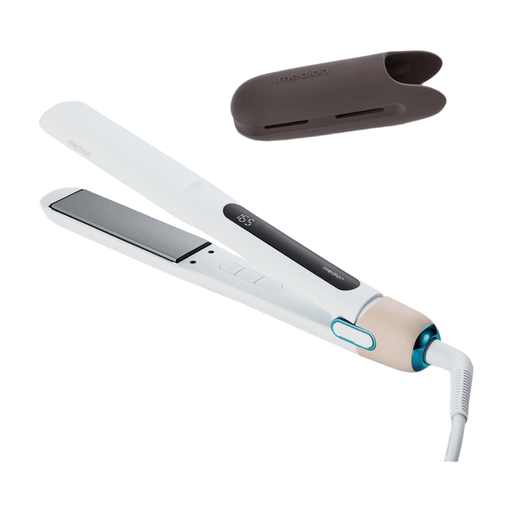 No image available
For dry hair and a styling routine where you’d like to choose from several temperature settings.
Five settings from 165 °C to 210 °C; according to the product information, it heats up in 60 seconds and switches off automatically after 60 minutes. The instructions specify use on dry hair only; a protective cap is included.
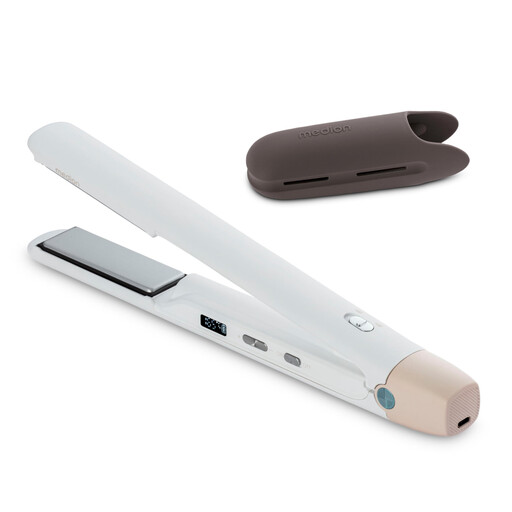 No image available
For dry hair if you don’t want to be tied to a plug socket at your styling station.
Five temperature settings from 165 °C to 210 °C; according to the product information, it offers up to 25 minutes of cordless styling and switches off automatically after 30 minutes. It’s intended for use on dry hair; a protective cap is listed.
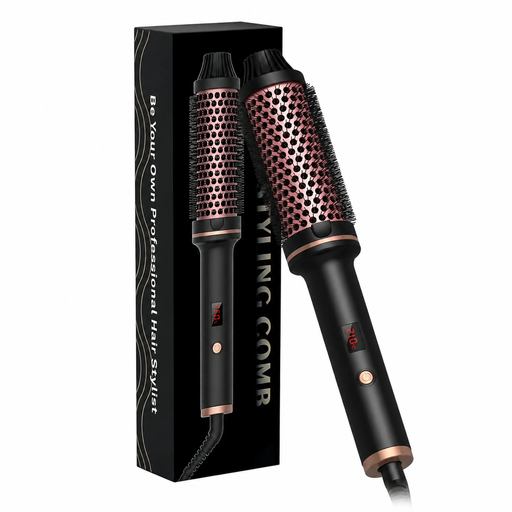 No image available
For dry hair if you’re looking for a straightening brush rather than a classic plate straightener.
The product information lists five temperature settings, an LCD display and heat-protective bristles. It’s designed for use on completely dry hair only; a heat-resistant surface is also specified.
 No image available
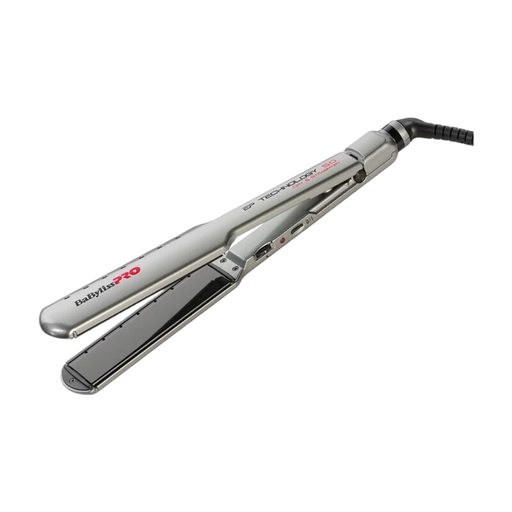
For dry or towel-dried hair if you’re looking for a model with wide plates that’s specifically described as suitable for use on slightly damp hair.
The product information lists 38 × 120 mm plates and five temperature settings from 115 °C to 230 °C. Towel-dry damp hair before use and make sure the ventilation system isn’t blocked; a heat-resistant insulating mat is specified.
No. Don’t use an ordinary straightener on damp hair just because of its name. The American Academy of Dermatology recommends using ordinary straighteners on dry hair, opting for low or medium heat and using them no more than every other day. To use a device on damp hair, its instructions must explicitly allow it.
Check that you have a suitable heat-resistant surface and follow the instructions for your model. Automatic shut-off varies by model: the examples described here specify around ten or 60 minutes. Even so, make a point of switching the device off after styling and let it cool down safely.
Unplug the device before cleaning, let it cool completely and follow the instructions for your specific model. Don’t use any cleaning method or product unless the instructions recommend it for your device.
No. As the Verbraucherzentrale explains, statutory rights for faulty goods are exercised against the seller; a warranty is an additional voluntary promise with its own conditions. If there’s a fault, the first step may be to ask for it to be put right through a repair or replacement.
When looking at a specific product, check that the device is clearly identifiable, carries a CE marking and comes with clear safety information. The EU Low Voltage Directive generally covers electrical equipment with a rated voltage of 50 to 1,000 V AC; the Bundesnetzagentur lists product identification and manufacturer details among the points checked during market surveillance. According to the European Union, the CE mark is not an independent quality-testing seal.