
Lieferung heute & morgen

Qualitätsgarantie

Willkommens-Angebote freischalten: KOSTENLOSE Lieferung | Bis zu 80 % RABATT | Kostenlose 30-Tage-JoyPlus-Testphase
App herunterladen
The technological evolution of hair styling tools has shifted from pure heat generation to intelligent systems designed for hair protection and efficiency. Modern hair stylers combine aerodynamic principles with advanced sensor technology to optimise drying and shaping. Technologies like ionic technology or the Coanda effect are no longer niche features but core components of high-performance devices. This article analyses the technical parameters relevant to selecting a hair styler and presents a selection of models with different technological focuses.
The evaluation of a hair styler should be based on objective, measurable criteria. The following technical aspects are crucial for performance and gentle, hair-safe operation.
The efficiency of a hair dryer is largely determined by its motor. High-speed motors with speeds exceeding 100,000 RPM generate a powerful, focused airflow (often over 20 m/s). Such an airflow enables rapid drying by displacing water, rather than relying primarily on high temperatures. This reduces thermal stress on the hair. A high-speed hair dryer is therefore not necessarily the hottest, but the one with the most powerful airflow.
A consistent and controlled operating temperature is fundamental to preventing heat damage. Modern devices use microprocessors that measure and adjust the air temperature dozens of times per second. This intelligent heat control ensures that a preset maximum temperature is not exceeded, which protects the hair's structure and preserves its natural moisture balance.
Static is a common side effect of blow-drying. Ionic technology counteracts this effect. The device releases negatively charged ions into the airflow, which neutralise the positive static charge on the hair's surface. The result is a smoother hair cuticle and reduced frizz. Plasma systems go a step further by generating both positive and negative ions to achieve an even more balanced result.
The Coanda effect is an aerodynamic phenomenon where a high-velocity jet of air adheres to a curved surface and entrains the surrounding air. In a multi-styler, this effect is used to automatically wrap strands of hair around a curling barrel without requiring extreme heat or manual winding. This allows for gentle styling of curls and waves. Devices with various attachments, such as a hot air brush, a warm air brush, or a classic curling iron attachment, offer maximum flexibility for different hairstyles.
The following products have been selected based on their specific technical features and application focus.
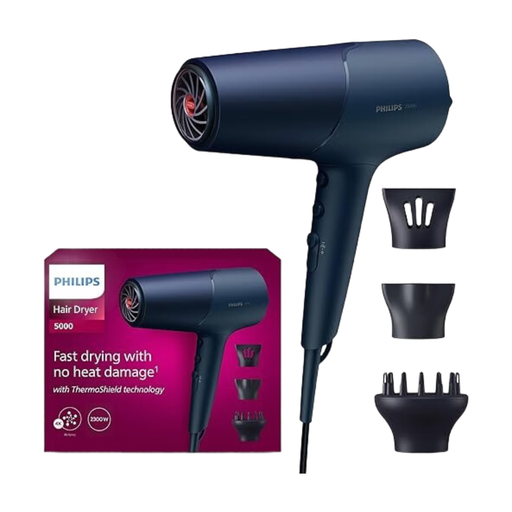
Why We Recommend This Product The Philips BHD510/00 focuses on the core functions of a powerful and hair-protective blow dryer. Its ThermoShield technology provides active temperature control, while the 2300-watt motor ensures a strong airflow. It is a functional device for users who primarily seek efficient drying performance.
Key Features
Who It's For Users who need a reliable and powerful hair dryer for daily use and value proven protective technologies without the complexity of a multi-styler.
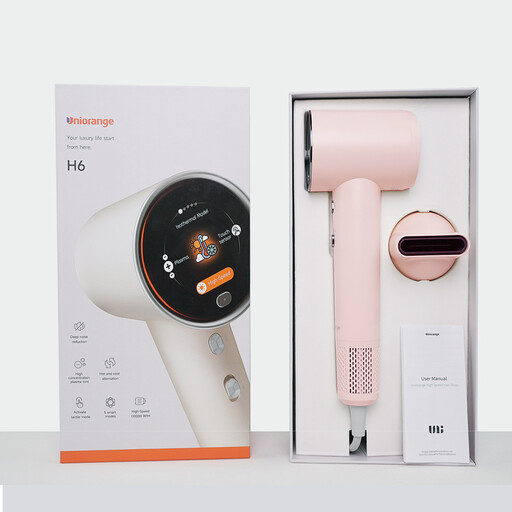
Why We Recommend This Product The Uniorange H6 is an example of a high-speed hair dryer based on state-of-the-art motor and ion technology. The high-speed brushless motor and plasma ion system position this device in the high-tech segment. The HD display and grip sensor are functional additions for intuitive operation.
Key Features
Who It's For Tech-savvy users seeking maximum drying speed and advanced hair care functions like plasma technology. Ideal for those who value smart features and a modern design.
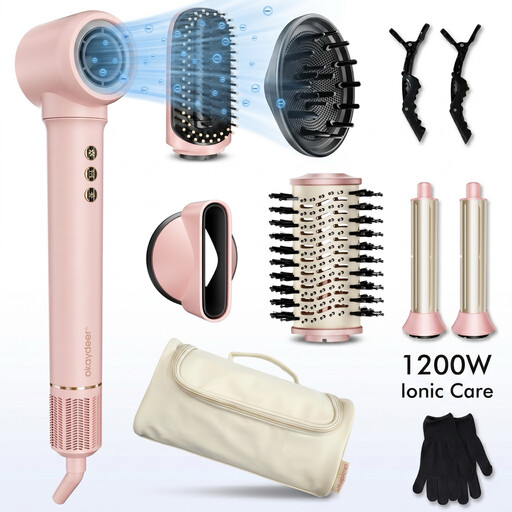
Why We Recommend This Product This multi-styler from Okaydeer uses the Coanda effect for automatic curl styling and combines it with a variety of attachments. It is designed as an all-in-one solution that enables drying, straightening, curling, and volumising with a single device.
Key Features
Who It's For Users who want maximum styling flexibility and wish to create various looks—from straight to curly—with a single, technologically advanced device. Especially interesting for those who want to leverage the Coanda effect for gentle curl styling.
The featured models cover specific use cases, from pure drying performance to versatile multi-styling. If you are looking for more specialised tools or different configurations tailored to various hair types or styling preferences, a broader selection often provides the right solution.
Discover more models in our Blowout Dryers category.
1. What is the difference between ionic technology and plasma ions? Classic ionic technology exclusively generates negative ions to neutralise the hair's positive static charge. Plasma systems generate both positive and negative ions. The theory is that this balance can better seal moisture within the hair and provide a more comprehensive neutralisation of static.
2. Is a hair styler with the Coanda effect less damaging to hair? The Coanda effect itself is an aerodynamic principle and does not generate heat. Devices that use this effect style the hair primarily through a powerful airflow instead of direct contact with extremely hot surfaces, as is the case with traditional curling irons. Combined with intelligent heat control, this can reduce thermal stress on the hair compared to conventional methods.
3. How important is wattage in a hair dryer? Wattage indicates the device's electrical power consumption, but it is not a complete indicator of drying performance on its own. Today, a professional-grade hair dryer is defined less by extremely high wattage and more by a highly efficient motor that produces a powerful and targeted airflow. A 1600-watt device with a high-speed motor can achieve faster drying than an older 2300-watt model with an inefficient motor. The crucial factor is the interplay of the motor, airflow dynamics, and temperature management.