
Lieferung heute & morgen

Qualitätsgarantie

Willkommens-Angebote freischalten: KOSTENLOSE Lieferung | Bis zu 80 % RABATT | Kostenlose 30-Tage-JoyPlus-Testphase
App herunterladen
The search for the right hair styling tool can quickly become overwhelming. Manufacturers advertise ever-newer technologies and product features, but not every innovation is worth the premium. Many promises turn out to be pure marketing hype, leading to poor purchasing decisions and, in the worst cases, hair damage. This guide will help you identify the crucial features and make an informed decision that suits your hair and your needs.
Before diving into the technical details, it's helpful to be aware of the most common marketing traps. These often lead consumers to spend money on features they don't need or that don't deliver the promised results.
To avoid falling into these traps, you should focus on three objective criteria. These will help you realistically assess the performance and quality of a hair styling tool.
The material that comes into direct contact with your hair is crucial for gentle styling.
A fixed temperature setting is unsuitable for most hair types. Fine, coloured, or damaged hair requires significantly lower temperatures (approx. 150–180°C) than thick, coarse hair (up to 230°C). A good straightener or curling iron should therefore offer several precisely adjustable heat settings. For a hair dryer, a cold air button ("Cool Shot") is useful for setting the hairstyle and closing the hair's cuticle layer, which adds extra shine.
For devices with an airflow component, like a hair dryer or a hot air brush, the motor and airflow are critical.
Based on these objective criteria, we have identified some products that are suitable for different user profiles and their specific requirements.
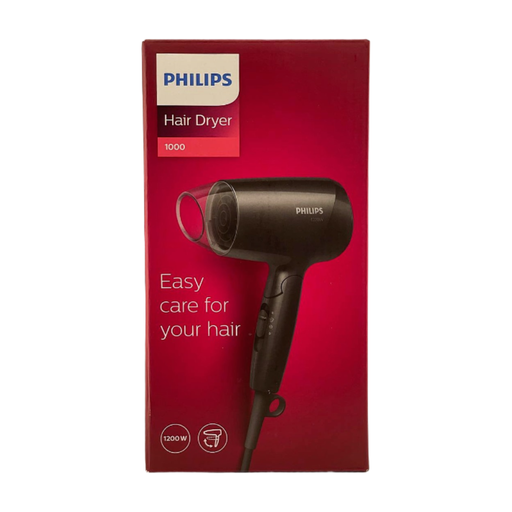
Why This Fits Their Persona: Ideal for users looking for a straightforward, reliable device for daily use or as a travel dryer. The foldable handle makes it extremely compact and easy to store.
This model avoids the wattage myth. At 1200 watts, it's designed for efficiency rather than extreme heat and doesn't promise exaggerated professional results, instead delivering solid, fundamental performance.
Compact Design: The foldable handle makes it an ideal travel dryer. ThermoProtect Setting: Provides a gentle drying temperature.
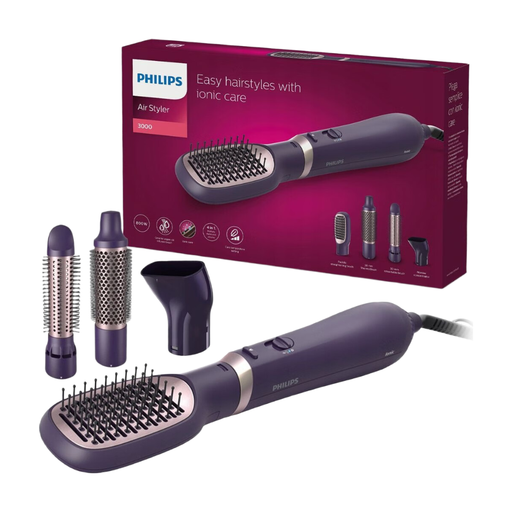
Why This Fits Their Persona: Perfect for users who want to dry and style in a single step. With four different attachments, this hot air brush offers the flexibility to create smooth looks, waves, or defined curls.
Instead of vague material promises, this device offers a ceramic coating that, according to the manufacturer, is infused with argan oil. This is a specific claim that points to a nourishing property.
Multi-functionality: Four attachments for different styles in one device. Ionic Function & Care: Reduces frizz, and the special coating ensures gentle styling.
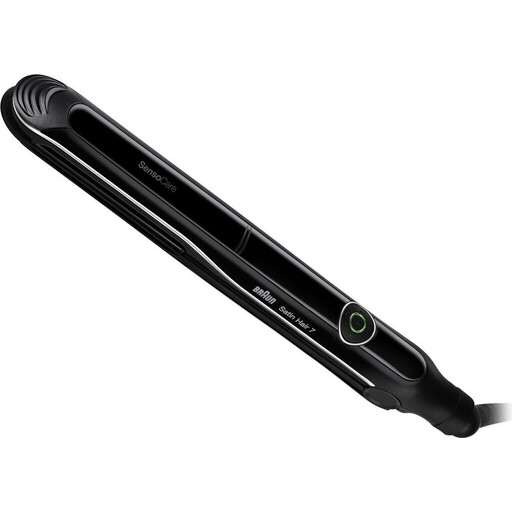
Why This Fits Their Persona: For users who prioritise hair protection above all else. This straightener actively adapts the temperature to the hair's structure to minimise heat damage. Ideal for regular styling.
This device goes beyond a simple ionic function. The SensoCare technology, with sensors that analyse the hair 20 times per second, is a concrete, verifiable feature for hair protection.
Intelligent Temperature Adaptation: Built-in sensors actively protect against heat damage. Personalisation: Stores profiles for up to three users with individual hair needs.
We have compiled a complete, real-time list of products that fully satisfy these strict selection criteria and UK safety regulations.
A general guideline is:
AC motors (Alternating Current) are typically more powerful, more durable, and produce a stronger airflow. They are often used in professional hair salons. DC motors (Direct Current) are lighter and more compact, making them ideal for home use and for travel dryers. Their lifespan tends to be shorter than that of AC motors. For frequent use at home, a hair dryer with an AC motor can be a worthwhile investment.
Regular cleaning is important for performance and safety.