
Lieferung heute & morgen

Qualitätsgarantie

Willkommens-Angebote freischalten: KOSTENLOSE Lieferung | Bis zu 80 % RABATT | Kostenlose 30-Tage-JoyPlus-Testphase
App herunterladen
A hairbrush should not only look good, but also suit your hair length, hair density and intended use. If you choose a brush on impulse based on its colour, brand name or advertising claims, you may only realise later that the bristles pull, the model is too small for the amount of hair you have or the brush is unsuitable for blow-drying.
However, the key buying decisions can be reduced to a few objective criteria. Our selection shows what women and men in Germany should look for when buying – from simple detangling to versatile hair styling.
A hairbrush may be described as suitable for all hair types. This does not automatically mean that it is equally suitable for every hair length, hair density or application. Short, fine hair usually requires a different bristle arrangement from long, thick or curly hair.
The specific task is therefore crucial:
A wide paddle brush spreads its brushing surface across larger sections of hair. This can save time with long or medium-length hair. For short hair, fringes or contours, a compact model is often easier to control.
Size also matters when travelling. A travel hairbrush should fit in a handbag, gym bag or suitcase without damaging the bristles. For example, the ghd The All Rounder Mini Paddle Brush is described as a compact model for use on the go, with a length of 17 cm.
With a hair styler or hot-air brush, details such as power, temperature settings and safety features are more relevant than general claims about a “professional result”. The RAF hot-air brush is offered with 750 watts, a ceramic coating and a 360-degree swivel cord. Another model, the Okaydeer Air Styler, specifies 1,200 watts, three temperature settings and five speed settings.
Important: heated devices should be used in accordance with the operating instructions. If your hair is damp, check whether the device is explicitly designed for use on damp hair. A heat protectant may be sensible depending on your styling routine; however, complete prevention of hair damage should neither be promised nor assumed.
Nylon bristles retain their shape and are often used for detangling. Rounded tips can make contact with the scalp more comfortable. With the Eurostil Skeleton 2 Bristles Small Ball Brush, the bristles are made of nylon and the tips of rubber. These ball tips should be checked regularly: if they are damaged or individual tips are missing, the brush should be replaced.
Natural bristles are often used for controlled smoothing and detailed styling. The ghd The Final Touch Narrow Dressing Brush combines natural bristles with a pointed handle for sectioning the hair.
A skeleton brush has gaps between the bristles. This allows air to pass more easily through the hair while blow-drying. This makes it useful for short sections, loose strands and drying with a hairdryer. A paddle brush, by contrast, has a solid, broad working surface and is more suitable for smoothing larger areas of hair.
A non-slip or ergonomically shaped handle can make a brush more comfortable to use over longer periods. For a travel hairbrush, compact dimensions and a low weight are also important.
Care involves removing hair regularly and cleaning the brush according to the manufacturer’s instructions. Electrical devices must not be immersed in water. Heated attachments should be allowed to cool before changing them, and the air filters on hot-air brushes must – where fitted – be cleared of dust and hair.
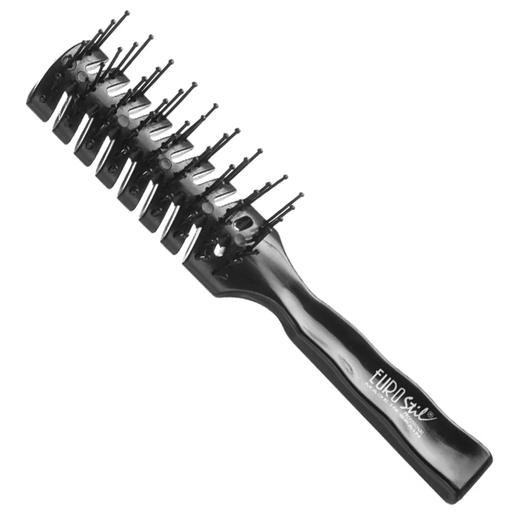
Why this product suits the profile: This compact skeleton brush is designed for short hair, fringes, contours and everyday use. Its open shape can support air circulation while blow-drying.
The small design prevents an oversized brushing surface from becoming unwieldy on short sections. The bristles should be protected from intense heat.
Compact format, open construction and nylon bristles with gentle tips.
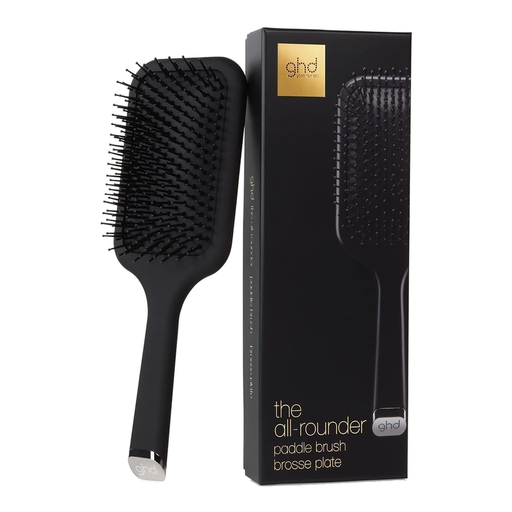
Why this product suits the profile: This rectangular mini paddle brush is designed for detangling and smoothing. Nylon bristles, a thermoplastic elastomer handle and its compact format make it suitable for handbags and luggage.
The product details clearly state its detangling function as well as its length of 17 cm. This makes it easier to assess how it can be used before buying.
Nylon bristles, an ergonomic handle and a mini format designed for travel.
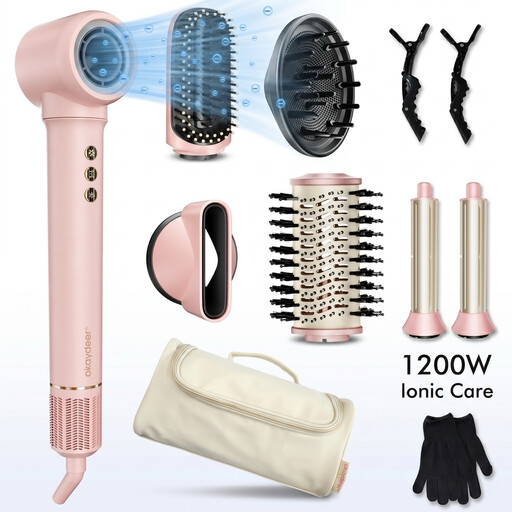
Why this product suits the profile: This hair styler combines several attachments for drying, smoothing, adding volume and creating curls. It includes two automatic curling attachments, a volume brush, a straightening brush, a diffuser and a concentrator nozzle.
Instead of buying several separate devices, you get a range of attachments in one set. The five speed and three temperature settings allow you to adjust it to the application.
7-in-1 concept, 1,200 watts, several temperature and speed settings, plus a travel bag included.
We have put together a complete, regularly updated list of products that fully meet these strict selection criteria and the safety regulations applicable in the EU.
When detangling, start by working on the ends of the section of hair. Then gradually work your way up towards the roots. Using less tension reduces mechanical stress. With a skeleton brush, keep the hairdryer at a distance and keep it moving rather than directing the air at one spot continuously.
A volume brush or backcombing brush should be used selectively and on dry hair where this is specified in the product description. For heated devices, follow the manufacturer’s guidance on moisture, temperature and attachments. Brushes with damaged bristles and devices with damaged cables should no longer be used as part of your daily routine.
A detangling brush with flexible, rounded bristles is often suitable for knots. For long or thick hair, a larger brushing surface may be useful. Always start at the ends and work towards the roots using only light pressure.
Its lifespan depends on the material, how it is used and how well it is cared for. A brush should be replaced if the bristles are bent, the tips are damaged, the cushion is torn or the handle is loose. With electrical devices, you should also check the cable, filter and attachments regularly.
The price depends on the design, materials and additional features. A simple skeleton or detangling brush is usually cheaper than a paddle brush made from high-quality materials or a multifunctional hair styler. The important thing is to choose features that match how you will actually use the product, rather than paying for functions that will go unused in everyday life.