
Lieferung heute & morgen

Qualitätsgarantie

Willkommens-Angebote freischalten: KOSTENLOSE Lieferung | Bis zu 80 % RABATT | Kostenlose 30-Tage-JoyPlus-Testphase
App herunterladen
When it comes to safety-critical fasteners on a vehicle, such as during a tyre change or work on the chassis and engine, precision isn't an option—it's a necessity. A 1/2-inch digital torque wrench is a core tool for professional auto mechanics and ambitious DIYers to adhere to exact manufacturer torque specifications. However, the market is filled with models whose performance claims often don't hold up in practice. A poor choice here not only leads to damaged components but also poses a significant safety risk.
This guide reveals the most common pitfalls when buying a digital torque wrench and explains which technical parameters truly matter for making an informed decision.
Many users invest in an electronic torque wrench only to discover in the workshop that the tool is useless for professional applications. Watch out for these three typical shortcomings:
To avoid these mistakes, you should base your selection on objective technical criteria. The following three points are crucial for a reliable automotive torque tool.
Accuracy is the most important quality benchmark. Professional digital torque wrenches offer a certified accuracy of ±2% or better within their specified measurement range. Ensure the manufacturer includes an individual calibration certificate that proves the specific device's conformity. This high-accuracy torque wrench guarantees that the values shown on the digital display correspond to the actual force being applied.
The 1/2-inch drive is the standard for most work on passenger cars and light commercial vehicles, providing the necessary stability for high torques. For versatile use on cars and motorcycles, the torque range should be broad. A model that covers a range up to 340 Nm is a future-proof investment. It allows for both the precise tightening of cylinder head bolts at lower values and the secure fastening of wheel nuts and chassis components at high torque.
A modern electronic torque wrench should feature a multi-sensory alert system. The combination of an LED light, vibration, and an audible signal ensures that reaching the target torque is clearly perceived under all working conditions—whether in a loud workshop or in poorly lit areas. A highly readable torque wrench with a digital display that can show various units (Nm, ft-lb, in-lb, kg-cm), along with memory slots for preset values, increases efficiency and reduces user error.
Based on the criteria above, we have curated a selection of tools suited for specific user profiles.
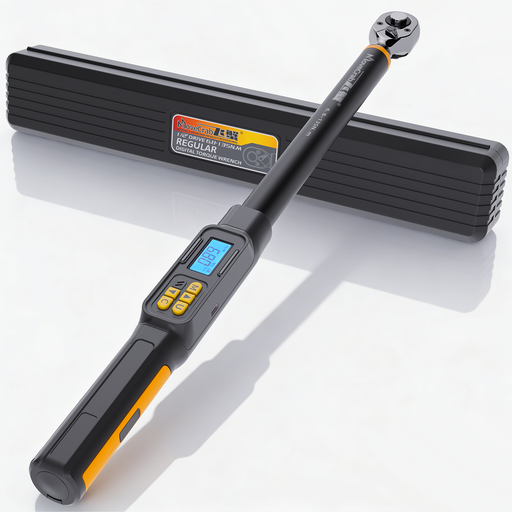
Why This Fits Their Persona: Ideal for use in the home garage. This model offers the precision and modern alert functions of a professional tool for the most common maintenance tasks, like seasonal tyre changes or work on brakes and engine components that fall within the low to mid-torque range.
The triple alert system (vibration, sound, LED) ensures the target torque is never missed, even with background noise. The digital display eliminates reading errors common with mechanical scales.
Offers ±2% accuracy and professional modes (Peak/Track) at an accessible price point. The torque range up to 135 Nm covers most standard passenger car applications.
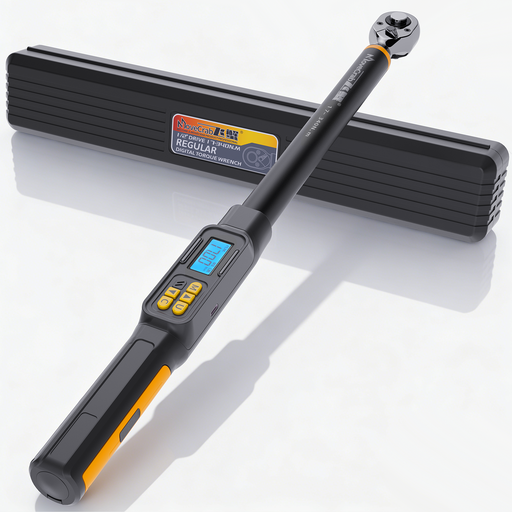
Why This Fits Their Persona: This tool is designed for daily, heavy-duty use in a professional workshop. Its wide torque range makes it a universal tool for almost any job on cars, SUVs, and light commercial vehicles, from wheel nuts to suspension and engine components.
With a range up to 340 Nm, it overcomes the limitations of many other models and reliably covers even very high-torque applications. The certified accuracy provides the necessary safety for professional use.
The very wide torque range (17-340 Nm) and the ability to preset 10 values maximise efficiency in the workshop. The robust construction is designed for longevity.
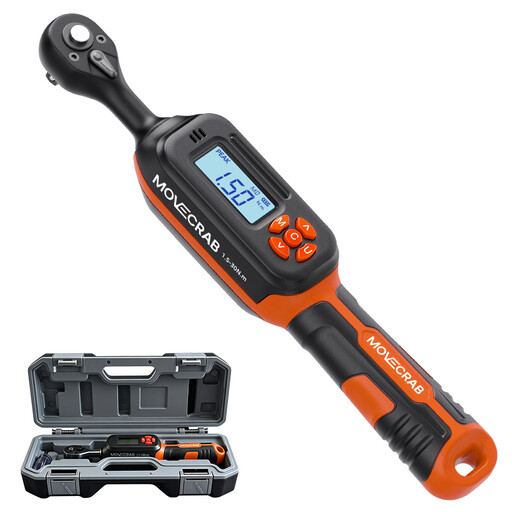
Why This Fits Their Persona: On motorcycles and bicycles, torque specifications are often low, and components (e.g., from carbon or aluminium) are delicate. This 3/8-inch model specialises in low-range precision and is ideal for work on engines, frames, and add-on components where accuracy is more critical than maximum force.
It prevents the over-tightening of sensitive bolts, a common problem when using inaccurate or oversized torque wrenches. The high accuracy of ±2% is crucial, especially at low torque values.
The specialised torque range (4.2-85 Nm) and the more compact 3/8-inch design allow for precise work in tight spaces typical of two-wheeled vehicles.
We've compiled a complete, up-to-date list of products that fully meet these strict selection criteria and safety regulations.
For professional use, annual calibration or a check after approximately 5,000 load cycles is recommended. If the tool has been dropped or subjected to impact, an immediate calibration check should be performed to ensure measurement accuracy.
This is strongly discouraged. Most torque wrenches are designed as measuring instruments for tightening. Using them to loosen seized bolts, especially with jerky movements, can damage the internal strain gauge and permanently affect the calibration. Use a rigid breaker bar or an impact wrench for loosening.
These two modes are standard on high-quality digital torque wrenches.