
Lieferung heute & morgen

Qualitätsgarantie

Willkommens-Angebote freischalten: KOSTENLOSE Lieferung | Bis zu 80 % RABATT | Kostenlose 30-Tage-JoyPlus-Testphase
App herunterladen
A cluttered entryway with shoes blocking the path is a common problem in many households. A well-chosen hallway shoe cabinet not only creates order but can also be a stylish element in your decor. The selection is vast, ranging from slim tip-out cabinets to multifunctional benches.
This article serves as your guide. We'll introduce different types of entryway shoe storage and provide you with objective criteria to help you make an informed decision for your home.
Before you decide on a model, three fundamental aspects should be considered: the available space, the required capacity, and your desired style.
Space in a hallway is often limited. Measure the designated area precisely before making a decision.
The material determines not only the durability but also the aesthetic impact of the furniture piece.
Both options have specific pros and cons. Open racks ensure good ventilation for shoes and quick access. Closed cabinets, on the other hand, make the hallway look tidier and protect shoes from dust. Some models combine both systems, offering a good compromise.
Here is a selection of different models that meet various requirements for functionality and design.
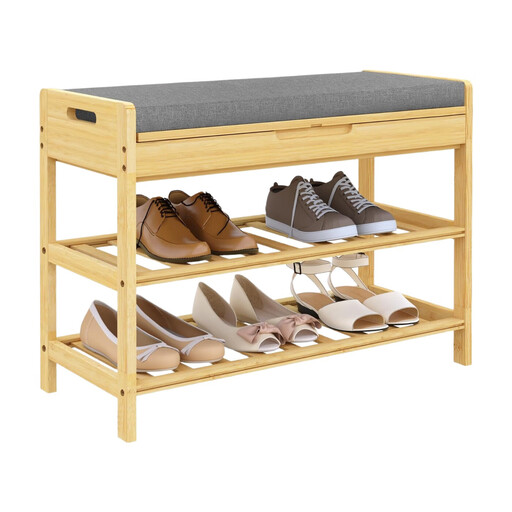
What makes it stand out: This model combines the function of a shoe rack with the comfort of a padded bench. Made from bamboo, it adds a natural touch to your entryway. In addition to the two open shelves for shoes, it offers a hidden compartment under the seat for accessories like shoe polish or umbrellas.
Advantages:
Who it's for: Ideal for individuals or couples looking for a space-saving and functional solution for a smaller entryway who also value a comfortable place to sit.
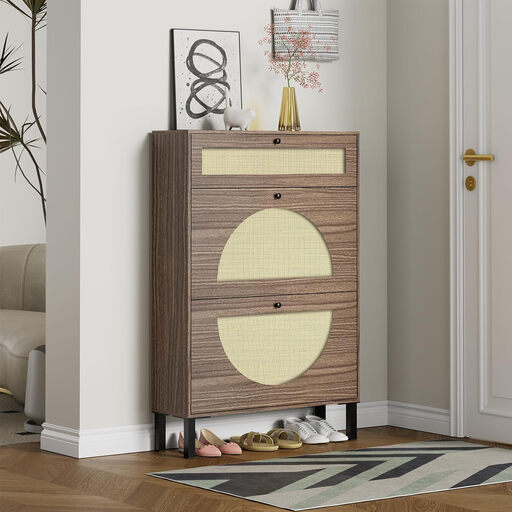
What makes it stand out: At just 24 cm deep, this tip-out shoe cabinet is extremely slim, making it an excellent solution for narrow hallways. The rattan fronts are not just an aesthetic detail; they also promote air circulation, which helps prevent odours. An additional drawer provides space for keys and other small items.
Advantages:
Who it's for: Perfect for those in apartments with narrow entryways who need discreet yet stylish shoe storage for a medium number of shoes.

What makes it stand out: This shoe chest is designed for households with a large shoe collection. Behind two doors, five tiers provide space for up to 25 pairs of shoes. The closed design ensures a tidy appearance and protects shoes from dust. The modern look, combining a brown wood finish and a black metal frame, fits well with many interior styles.
Advantages:
Who it's for: A great choice for families or shoe enthusiasts who need a lot of storage and prefer a closed, tidy solution for their hallway.
The models presented cover common needs, but every hallway and every taste is different. If you're looking for a different size, material, or style, you'll find more alternatives in our collection.
Discover more shoe cabinets for your living room and hallway
The depth depends on the type. Standard shoe cabinets and chests are about 30-40 cm deep. If your hallway is very narrow, tip-out shoe cabinets are a great choice, as they are often only 17-25 cm deep. Measure the available space and make sure that doors and walkways are not blocked.
Both systems have their merits.
The decision depends on your personal priorities: ventilation and quick access versus a clean, orderly look.
The capacity varies greatly depending on the model and size. A slim tip-out cabinet often holds between 8 and 16 pairs of shoes. A larger shoe chest can accommodate 20 to 25 pairs or more. The manufacturer's specifications usually refer to average shoe sizes; for large shoes or boots, the capacity will be reduced accordingly.