
Lieferung heute & morgen

Qualitätsgarantie

Willkommens-Angebote freischalten: KOSTENLOSE Lieferung | Bis zu 80 % RABATT | Kostenlose 30-Tage-JoyPlus-Testphase
App herunterladen
The entryway is the first point of contact in any home, and its organisation significantly influences the overall impression. An entryway cabinet serves the primary function of creating structured storage for the hallway, thereby reducing clutter. Selecting a suitable model depends on the available space, individual storage needs, and functional priorities. This article analyses the technical criteria for selection and presents specific product solutions.
The decision for a hallway cabinet should be based on an analysis of dimensions, material, and functional features.
The correct dimensions are crucial to avoid restricting movement in the hallway.
The material influences the durability and maintenance requirements of the furniture piece.
An entryway cabinet can combine various functions in a single piece of furniture.
The following models have been selected based on their technical specifications and practical utility for typical hallway requirements.
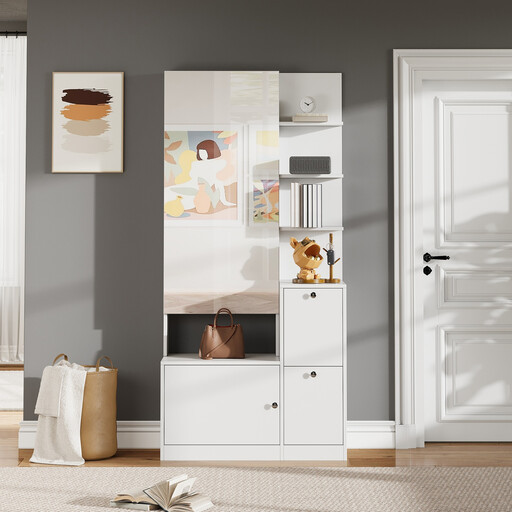
Why We Recommend This Product This model combines the functions of a wardrobe, a shoe cabinet, and a mirror into a single unit. With a height of 180 cm and a depth of 40 cm, it uses vertical space efficiently without significantly narrowing the walkway. The internal division into three separate storage compartments allows for systematic organisation.
Advantages (Pros)
Who It's For This model is suitable for individuals and families in homes with limited entryway space who are looking for a comprehensive all-in-one solution for clothing, shoes, and daily outfit checks.

Why We Recommend This Product This shoe cabinet in white is designed for the efficient storage of a larger shoe collection. According to the manufacturer, its five-tier design provides space for up to 20 pairs of shoes. The open bottom area and top surface enhance its practical utility for daily use.
Advantages (Pros)
Who It's For Ideal for households with a high demand for dedicated shoe storage who prefer a space-saving and visually unobtrusive solution.
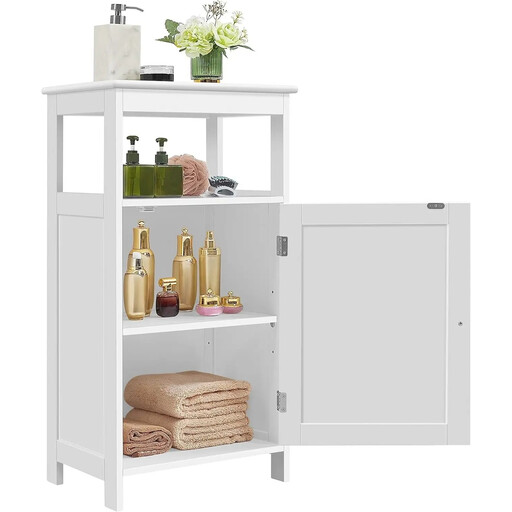
Why We Recommend This Product This compact multipurpose cabinet, with a depth of just 30 cm, is an exceptionally space-saving option. Its flexibility is highlighted by an adjustable shelf that can be positioned at three different heights. According to the manufacturer, the material is FSC-certified MDF.
Advantages (Pros)
Who It's For This product is a great choice for users who need a supplementary storage solution for a very narrow area or are looking for a flexible small cabinet for various purposes around the home.
The products featured cover specific requirement profiles. Should your needs call for different dimensions, designs, or functional combinations, a broader selection offers further possibilities. An overview of various models and configurations can assist in the final decision-making process.
Discover more options in our Hallway Storage Cabinets category.
The ideal depth depends on the width of your hallway. As a general guideline, in narrow walkways, an entryway cabinet should be no deeper than 40 cm to avoid impeding movement. For very tight hallways, there are special models with a depth of 20 to 30 cm, often designed as tip-out shoe cabinets or slim console tables.
A hallway cabinet is used for the organised storage of items needed when leaving or entering the home. This typically includes jackets, coats, shoes, scarves, hats, gloves, bags, and umbrellas. Open compartments or surfaces are often used for keys, mail, or decorative elements.
Surfaces made of melamine-coated engineered wood (MDF, particle board) are particularly low-maintenance. They are resistant to scratches and moisture and can be easily cleaned with a damp cloth. Lacquered surfaces are also easy to clean but can be more susceptible to impacts.