
Lieferung heute & morgen

Qualitätsgarantie

Willkommens-Angebote freischalten: KOSTENLOSE Lieferung | Bis zu 80 % RABATT | Kostenlose 30-Tage-JoyPlus-Testphase
App herunterladen
A cluttered entryway is often the first impression visitors have of your home. Jackets, bags, and shoes can quickly pile up, creating a mess. A well-chosen hallway coat rack can remedy this. However, the market is saturated with models that overpromise and underdeliver. Before you make a decision, it's crucial to understand the most common pitfalls that can lead to buyer's remorse.
Common Problems When Choosing a Hallway Coat Rack:
To find a durable and functional solution for entryway clothes storage, you should carefully examine a few technical specifications.
The choice between a freestanding coat stand and a wall-mounted solution depends on your available space and the type of your walls.
The material determines not only the look but also the sturdiness and ease of maintenance of your coat rack.
A modern coat rack is more than just a row of hooks. Smart additional features help you make the most of the limited space in a hallway.
Here are some recommendations tailored to different needs and living situations.
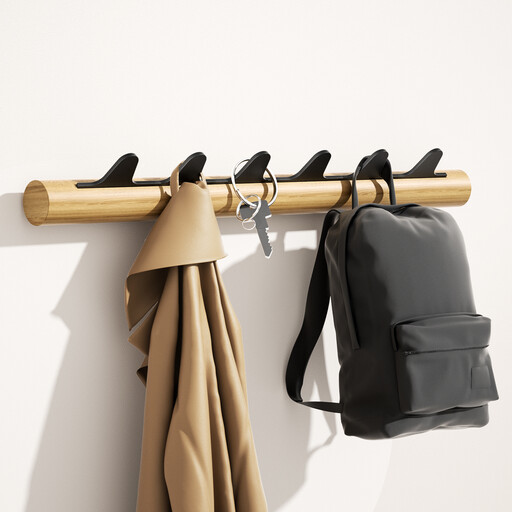
Why This Fits Their Persona: Ideal for narrow hallways or small apartments where every inch counts. The combination of FSC-certified rubberwood and metal hooks blends unobtrusively into modern and classic interiors without overwhelming the space.
The construction of solid rubberwood and high-quality aluminium alloy hooks prevents the problem of instability. With a stated load capacity of up to 30 kg, it is designed for heavy winter coats.
According to the manufacturer, the design was honoured with the Silver Muse Design Award and the French Design Award 2023. The rounded edges of the hooks protect clothing from damage.
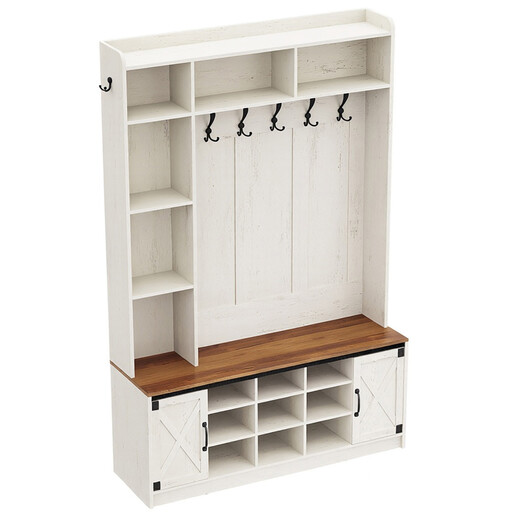
Why This Fits Their Persona: Perfect for families or shared living spaces that need an all-in-one solution. This coat rack panel combines hooks, shelves, cabinet compartments, and a sturdy bench to cover all storage needs in the entryway.
This model solves the problem of lacking functionality by combining six different functions in one piece of furniture. Instead of multiple separate items cluttering the hallway, it offers a structured and comprehensive storage solution.
With 15 open compartments, 7 hooks, and cabinet sections, it offers an enormous amount of storage space. According to the manufacturer, the bench can support up to 150 kg, and the shelves are partially adjustable and removable.
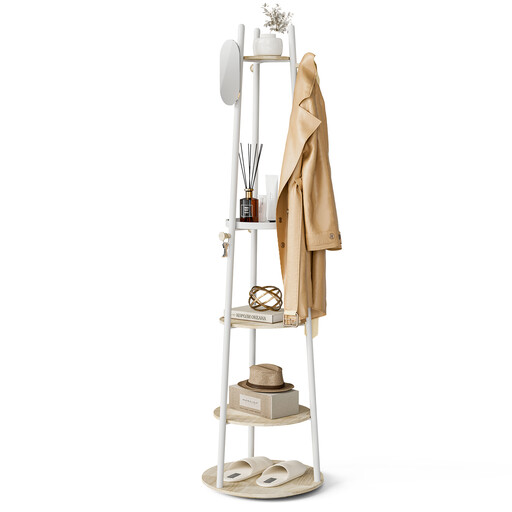
Why This Fits Their Persona: For anyone looking for a functional piece of furniture that is also a design statement. The 360° rotating function and integrated mirror make this coat stand an exceptional object for the hallway or bedroom.
Unlike many stylish but unstable coat stands, this model features a reinforced, rotating base that, according to the manufacturer, ensures wobble-free stability. The material combination of metal and wood is designed for durability.
According to the manufacturer, the design was awarded the New York Product Design Award 2023. It offers versatile storage with 6 hooks and 5 shelves. The integrated mirror is a practical bonus.
We've compiled a complete, up-to-date list of products that fully meet these strict selection criteria and safety regulations.
1. Which coat rack is suitable for a very narrow hallway? For very narrow hallways, wall-mounted solutions like a hook rail, individual hooks, or a slim wall-mounted rack are ideal as they don't take up any floor space. Look for a model with a shallow depth to avoid obstructing the walkway.
2. How high should a coat rack be mounted in the hallway? The mounting height depends on the height of the users. A standard height for the hook rail is between 1.70 m and 1.75 m. If children will also be using the coat rack, it's advisable to install additional hooks at a lower height (approx. 1.10 m to 1.30 m) or choose a model with hooks at different levels.
3. How do I securely fasten a wall-mounted coat rack to drywall? Standard plugs often don't provide enough grip in drywall (plasterboard) for heavy loads. Use special hollow-wall anchors, such as toggle or expansion anchors made of metal. These anchor themselves behind the board and distribute the weight over a larger area. Always check the maximum load capacity specified by the anchor manufacturer.