
Lieferung heute & morgen

Qualitätsgarantie

Willkommens-Angebote freischalten: KOSTENLOSE Lieferung | Bis zu 80 % RABATT | Kostenlose 30-Tage-JoyPlus-Testphase
App herunterladen
A cluttered entryway with shoes blocking the path rarely makes a good first impression. A well-organised hallway, on the other hand, creates a welcoming atmosphere and brings more order to your daily routine. Choosing the right piece of furniture for shoe storage is key.
This guide introduces various models of shoe cabinets designed for different spaces and needs. Our goal is to provide you with a clear overview of functional solutions, helping you make an informed decision for your home.
Before you decide on a model, a few practical considerations can be helpful. Use the following points as a guide.
The most important factor is the space you have available. Carefully measure the intended spot in your hallway—width, depth, and height.
Consider how many pairs of shoes you need to store and what additional features might be useful.
Here is a selection of different shoe cabinets, each suited to various needs due to their specific features.
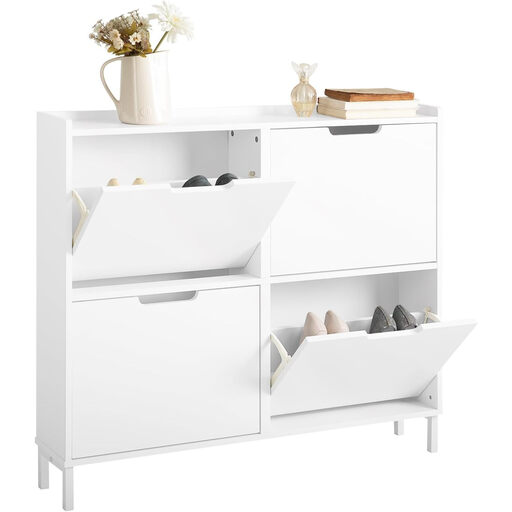
Why this model stands out: With a depth of just 19 cm, this tip-out cabinet is specifically designed for very narrow hallways and entryways where every centimetre counts.
Advantages:
Who is it for?: Ideal for those living in homes or apartments with a very limited or narrow entryway who need a discreet yet efficient storage solution.

Why this model stands out: This modern shoe cabinet combines enclosed storage with an open compartment, offering seven tiers of space for up to 24 pairs of shoes.
Advantages:
Who is it for?: For households that require a large amount of shoe storage and are looking for a piece of furniture that blends functionality with a modern design.
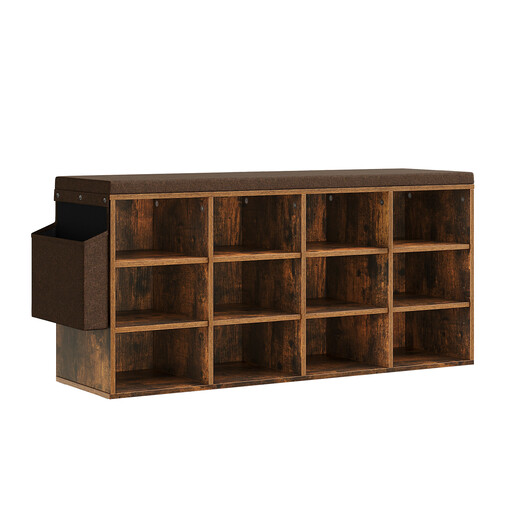
Why this model stands out: This shoe bench with seating combines storage and comfort. The padded seat cushion makes it easy to put on shoes right in the entryway.
Advantages:
Who is it for?: Ideal for families with children or for anyone who appreciates the convenience of a seat in the hallway and wants to keep their shoes neatly organised.
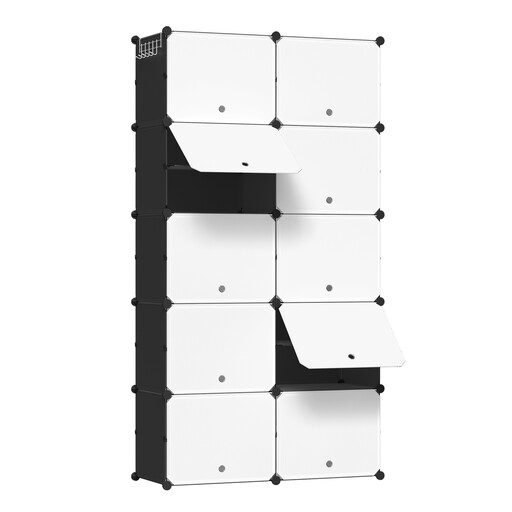
Why this model stands out: This system offers maximum flexibility. Its modular design allows the cabinet to be adapted to individual spaces and needs, such as for alcoves or the area under a staircase.
Advantages:
Who is it for?: For users who need a very large and customisable hallway shoe storage solution or want to make the most of unconventional spaces.
The models featured here already cover a wide range of options. However, if you are looking for other specific styles, such as an enclosed shoe storage bench, you may find the perfect piece for your needs in our broader selection.
The ideal depth depends on the available space. Standard shoe cabinets often have a depth of 30 to 40 cm. For very narrow hallways, tip-out cabinets or special slim shoe cabinets with a depth of under 25 cm are a great choice, as they barely protrude into the room.
A tip-out cabinet features tilting compartments where shoes are stored at a slight angle or vertically. This allows for a very shallow design. In contrast, a classic shoe cabinet uses horizontal shelves, similar to a bookcase. It requires more depth but often offers more flexibility for different shoe sizes, especially for tall boots.
Capacity varies significantly. Compact models for small households often hold 8 to 12 pairs of shoes. Larger shoe chests or modular systems can easily accommodate 24, 40, or more pairs. It is advisable to check the manufacturer's product description to determine the exact capacity.