
Lieferung heute & morgen

Qualitätsgarantie

Willkommens-Angebote freischalten: KOSTENLOSE Lieferung | Bis zu 80 % RABATT | Kostenlose 30-Tage-JoyPlus-Testphase
App herunterladen
A cluttered entryway is a common frustration. Shoes pile up, creating tripping hazards and detracting from your home's first impression. The right shoe rack for your hallway promises a quick fix. However, the selection is vast, and not every solution lives up to its promise. Many models turn out to be impractical or unstable, leading to renewed frustration.
As your Joybuy Product Recommendation Officer, I'm here to help you separate the wheat from the chaff. In this guide, I'll show you the three most common pitfalls when buying shoe storage furniture and what crucial features to look for to find a durable and functional solution for your entryway.
Before you make a decision, it's important to know the typical weaknesses that often only become apparent after a few weeks of use.
To avoid these traps, focus on three objective parameters. These will help you realistically assess a model's quality and suitability for your daily life.
The stability of a shoe rack depends directly on its material and craftsmanship.
Take the time to measure your hallway and your shoes carefully.
The choice of type depends on your priorities: organisation, ventilation, or added utility.
Here are some recommendations tailored to different needs and living situations.
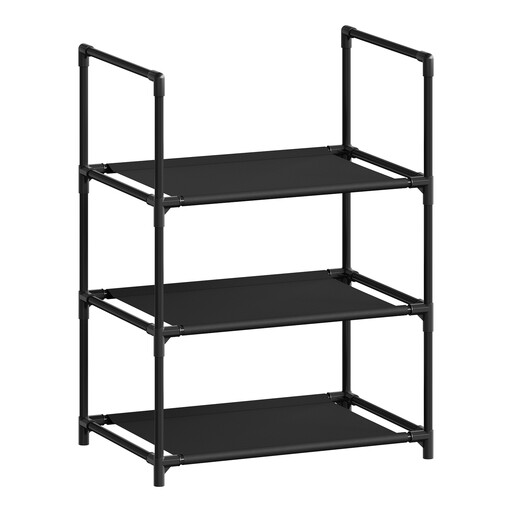
Why This Fits Their Persona: Ideal for a first apartment, students, or as a flexible secondary solution. It quickly creates order in a small space without breaking the budget. The compact design is perfect for narrow hallways or alcoves.
It bypasses the stability trap in its price class with a clearly defined construction of metal tubes and plastic connectors. The manufacturer's specified load capacity of 5 kg per shelf provides a reliable guideline.
Tool-free assembly thanks to a push-fit system; very small footprint; one shelf can be removed to accommodate taller shoes.
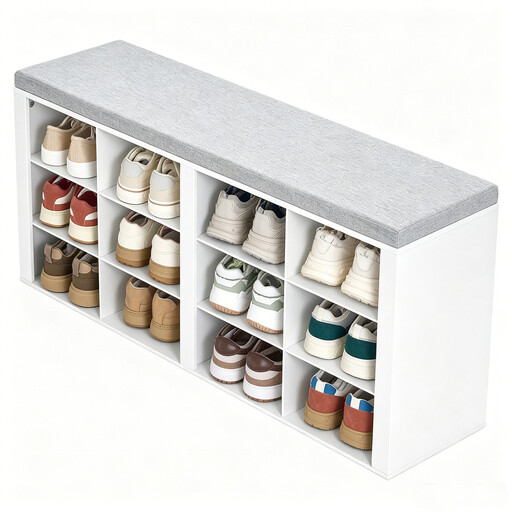
Why This Fits Their Persona: Perfect for families with children or anyone who values comfort when putting on and taking off shoes. The combination of seating and concealed storage makes the hallway both functional and tidy.
Solves the practicality trap through multifunctionality. The height-adjustable shelves allow for storing different types of shoes, thus avoiding the frustration of shelves that are too low. The specified load capacity of 150 kg for the seat indicates a sturdy construction.
Combines a bench and storage; flexible compartment division for boots and sneakers; removable seat cushion for easy cleaning.
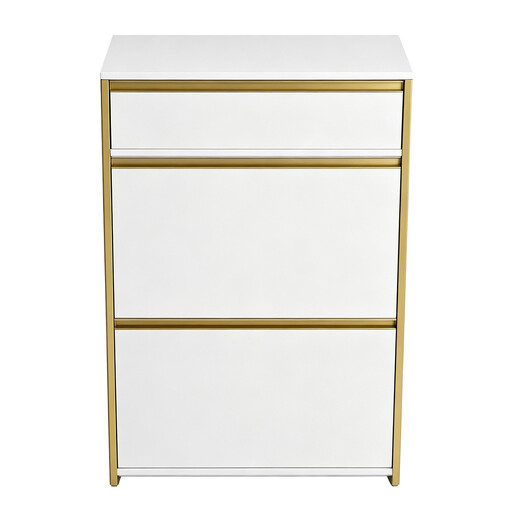
Why This Fits Their Persona: For anyone seeking an aesthetic and space-saving solution. The closed, elegant white-and-gold design fits seamlessly into modern interior styles and makes the hallway appear tidier and more spacious.
This model is the direct answer to the measurement trap in narrow hallways. With a depth of only 24 cm, it doesn't obstruct passageways. The included anti-tip kit also proactively addresses the stability issue common with tall, narrow furniture.
Extremely slim profile (24 cm depth); closed design for a clean look; additional drawer for small items like keys or gloves.
We have compiled a complete, up-to-date list of products that fully meet these strict selection criteria and safety standards.
The ideal depth depends on your shoe size. For shoe sizes up to EU 45 (US 11.5), a usable internal depth of about 30 cm is generally sufficient. For very narrow tip-out shoe cabinets, where shoes are stored at an angle, an external depth of 24 cm can also be enough. It's advisable to check the internal dimensions and compare them with the length of your largest shoes before buying.
Both systems have their pros and cons. Open racks provide better ventilation for shoes and allow for quick access. Closed cabinets and tip-outs protect shoes from dust and create an especially tidy, calm look in the hallway. If you opt for a closed system, look for models with integrated ventilation openings to prevent odour build-up.
For furniture where the height significantly exceeds the depth, stability is a key safety concern. The safest method is to use an anti-tip kit. This is a bracket or strap used to secure the piece of furniture to the wall. It is often included with many high-quality models. Additionally, placing heavier shoes on the lower shelves increases stability.