
Lieferung heute & morgen

Qualitätsgarantie

Willkommens-Angebote freischalten: KOSTENLOSE Lieferung | Bis zu 80 % RABATT | Kostenlose 30-Tage-JoyPlus-Testphase
App herunterladen
A cluttered entryway is a common problem in many homes. The right shoe rack can solve this, but the market is vast, and not every product delivers on its promise. Before you make a decision, it's crucial to understand the most common pitfalls that can lead to buyer's remorse.
Many buyers are swayed by appealing product photos or seemingly high capacity claims, only to find the furniture is impractical or unstable. Pay attention to these three points to make an informed decision.
To make the right choice, you should focus on objective criteria. The following three parameters are decisive for the functionality and longevity of your new entryway shoe storage.
The material is the foundation for both stability and aesthetics.
Measure the available space in your hallway precisely before choosing a model. A narrow shoe cabinet or a space-saving shoe stand can be ideal for tight corridors. Consider not only the width and depth but also the height.
Check the clearance between individual shelves. A distance of 18–20 cm (approx. 7-8 inches) is sufficient for most low-cut shoes and sneakers. However, for ankle boots or taller shoes, you'll need more space or a rack with removable shelves. A small shoe rack can be practical, but only if it actually fits your shoes.
The choice between an open rack and a closed cabinet depends on your priorities.
Here are some product suggestions tailored to different needs and living situations.
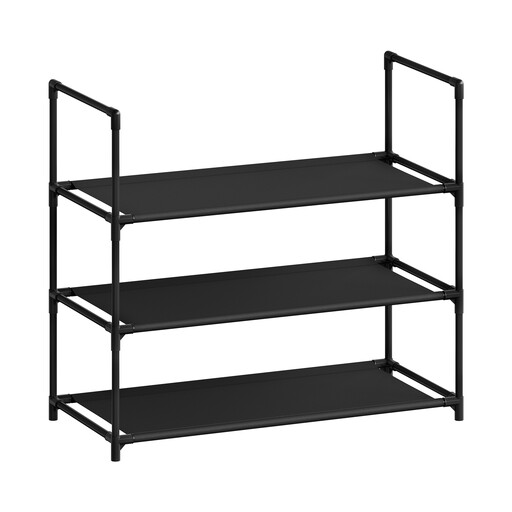
Why it's a great fit: Ideal for students, first apartments, or small hallways where a simple, functional, and cost-effective solution is needed. It provides space for essential everyday shoes within a small footprint.
The construction of thickened metal tubes and plastic connectors offers solid basic stability for its price point. The open design prevents any odour buildup from lack of ventilation.
Tool-free assembly via a simple interlocking system. The non-woven fabric shelves are laminated and easy to clean. One shelf can be removed to accommodate taller shoes.
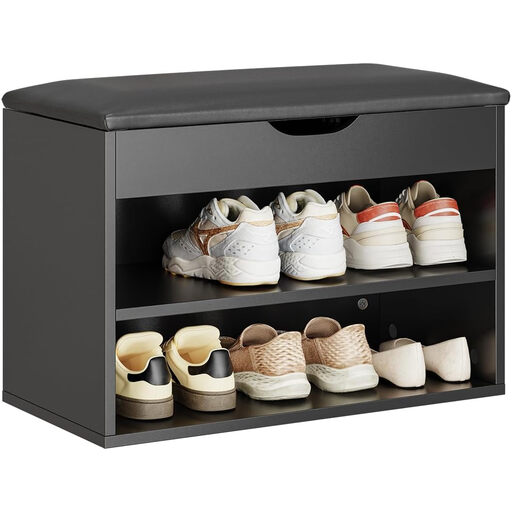
Why it's a great fit: Perfect for families or anyone who appreciates the convenience of a seat in the hallway. This shoe rack with a bench combines three functions in a minimal footprint and is ideal for narrow entryways.
The specified static load capacity of up to 113 kg (250 lbs) addresses stability concerns for a bench. The open compartments ensure good ventilation for the shoes stored there.
Combines a seating area, a hidden storage compartment under the seat, and open shoe shelves. Its compact dimensions (60 x 30 x 43 cm) make it extremely space-efficient.
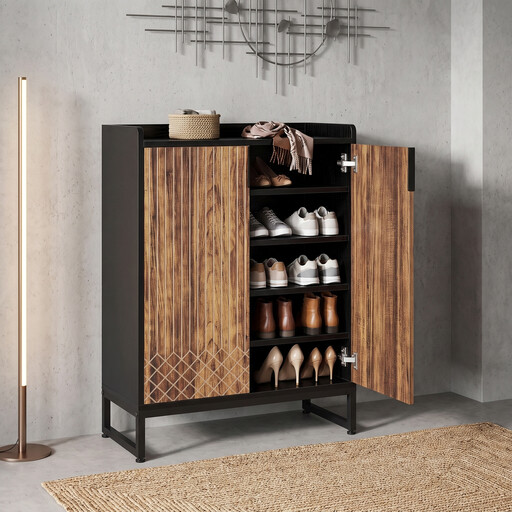
Why it's a great fit: For anyone who prefers a permanently tidy look in their hallway. This closed shoe cabinet conceals shoes behind doors and seamlessly blends into many interior design styles with its modern aesthetic.
The construction of engineered wood and a metal frame ensures high stability. The doors are equipped with soft-close hinges, indicating high-quality, thoughtful construction.
Offers concealed storage for up to 25 pairs of shoes. The minimalist design with its decorative diamond pattern and the adjustable feet are practical, stylish details.
We have compiled a complete, up-to-date list of products that fully meet these strict selection criteria and relevant safety standards.
For flat shoes like sandals or ballet flats, 13–15 cm (5-6 inches) is sufficient. For sneakers and low-cut shoes, 18–20 cm (7-8 inches) is a good benchmark. If you want to store ankle boots or high-tops, you should plan for a clearance of at least 25 cm (10 inches) or choose a model with adjustable or removable shelves.
Always let worn shoes dry and air out completely before placing them in the cabinet. When buying, ensure the cabinet has ventilation openings, often on the back panel. Additionally, cedar blocks or small bags of activated charcoal can help absorb moisture and neutralise odours.
Yes, as long as precautions are taken. Many metal shoe racks come equipped with plastic caps or adjustable feet that protect the floor. If not, you can simply stick small felt pads under the legs. This prevents scratches and also provides a more stable footing on slightly uneven floors.