
Lieferung heute & morgen

Qualitätsgarantie

Willkommens-Angebote freischalten: KOSTENLOSE Lieferung | Bis zu 80 % RABATT | Kostenlose 30-Tage-JoyPlus-Testphase
App herunterladen
A cluttered entryway is a common problem in many homes. Shoes piling up in the hallway not only create a mess but can also become a tripping hazard. However, finding the right shoe storage for your hallway isn't always straightforward. The market offers a plethora of options, but not all of them live up to their promises. As your Joybuy Product Recommendation Officer, I'll help you identify the key criteria and find a suitable solution for your entrance area.
Before you make a decision, it's helpful to know the most common issues that arise with low-quality products. This will help you avoid disappointment and bad investments.
tip-out shoe cabinet that's too shallow for size 11 shoes or for ankle boots misses its purpose. Likewise, a cabinet that's too deep can block the walkway in a narrow hallway and make the space feel smaller.hallway storage bench, offers added utility by providing a place to sit while putting on shoes and hidden space for accessories like scarves or gloves.To make an informed decision, focus on a few objective features. These will help you assess a product's quality and suitability.
The durability of your shoe storage largely depends on the material.
shoe bench with cushion or an entryway bench. A high load capacity is an indicator of a stable construction.Measure your hallway carefully before you start your search.
space-saving hallway furniture with a shallow depth (e.g., under 25 cm) is ideal. A slim shoe cabinet or a tip-out cabinet is often the right solution here.Think about what additional functions would be useful for you.
white shoe rack with an open design makes the room feel more airy, while closed cabinets create a calm and tidy appearance.upholstered hallway bench or a storage ottoman combines storage with a comfortable seat, significantly increasing everyday comfort.Here are some product suggestions tailored to different needs and spatial situations.
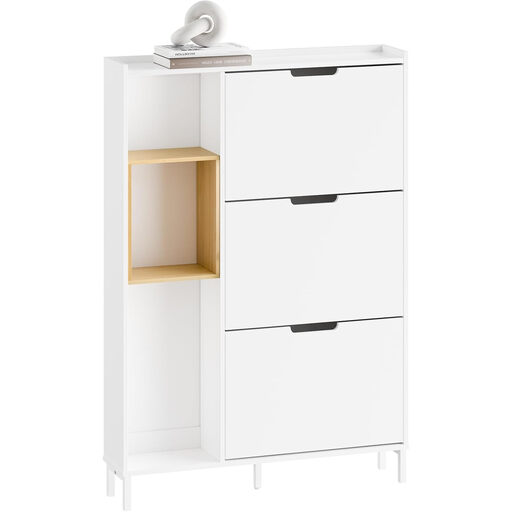
Why This Fits Their Persona: Ideal for city dwellers with narrow hallways who are looking for a stylish, space-saving solution with a Scandinavian design.
With a depth of just 19 cm, this model avoids the impractical dimensions trap and won't protrude into the walkway. The combination of MDF (E1) and bamboo materials ensures the necessary stability.
Combines closed tip-out compartments for up to 9 pairs of shoes with an open side shelf for decor or everyday items. The design is modern and unobtrusive.
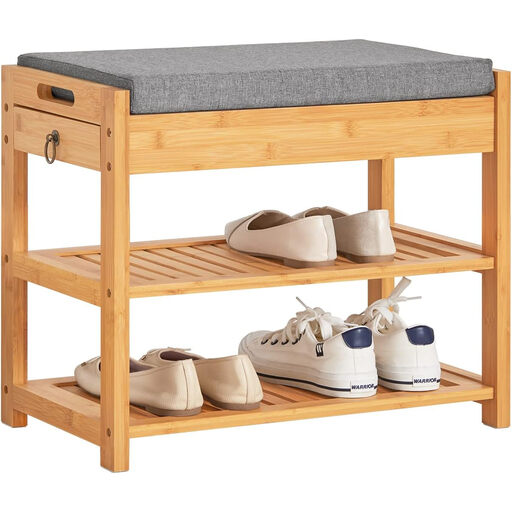
Why This Fits Their Persona: Perfect for individuals and small families who appreciate a practical all-in-one solution. It offers comfortable seating and organised storage in one compact piece of furniture.
This model avoids the trap of lacking versatility. It's more than just a rack—it's an entryway bench. The specified load capacity of up to 150 kg indicates a stable construction.
Made from natural bamboo, which is robust and moisture-resistant. It offers two shelf levels, a side drawer for small items, and a 4 cm thick seat cushion for extra comfort.
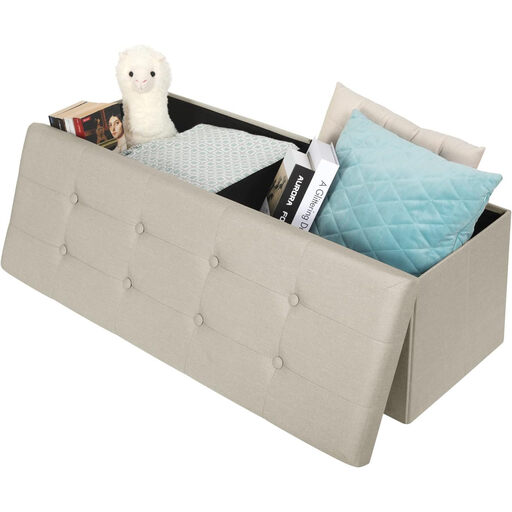
Why This Fits Their Persona: Suitable for anyone looking for a flexible and discreet storage solution with a large volume. Ideal for use as a shoe bench, footstool, or extra seating in the hallway or living room.
The manufacturer's stated static load capacity of 300 kg refutes any concerns about unstable construction. Its foldable design offers a flexibility that rigid furniture lacks.
Offers a very large storage volume of 118 litres, can be folded flat when not in use, and serves as a comfortable bench for several people thanks to its padded lid.
We have compiled a complete, real-time list of products that fully satisfy these strict selection criteria and UK safety regulations.
1. How deep should a hallway shoe cabinet be? For a narrow hallway, a depth of under 25 cm is recommended to avoid obstructing the walkway. Tip-out shoe cabinets are often only 17-20 cm deep, making them a great fit. In wider entryways, cabinets with a standard depth of 30-35 cm can be used, offering more space for larger shoes.
2. What's the difference between a tip-out shoe cabinet and a shoe rack? A shoe rack is an open storage system where shoes are visibly placed next to each other. A tip-out shoe cabinet, on the other hand, has closed flap compartments where shoes are stored vertically or at an angle. Tip-out cabinets are typically much slimmer and provide a tidier look, while open racks allow for quicker access and better shoe ventilation.
3. Can you really sit on a shoe bench? Yes, most furniture designated as a shoe bench or entryway bench is designed for sitting. However, it's crucial to check the maximum weight capacity specified by the manufacturer. A solidly constructed bench should have a load capacity of at least 100-120 kg to safely support an average adult. Models with higher ratings, such as 150 kg or more, offer additional stability.