
Lieferung heute & morgen

Qualitätsgarantie

Willkommens-Angebote freischalten: KOSTENLOSE Lieferung | Bis zu 80 % RABATT | Kostenlose 30-Tage-JoyPlus-Testphase
App herunterladen
By a Joybuy Product Recommendation Officer, August 29, 2026
A cluttered entryway is a common problem in many homes. Shoes piling up in the hallway are not only an eyesore but also a daily tripping hazard. The search for the right hallway shoe storage often leads to an overwhelming selection of products. However, not every solution that seems practical at first glance holds up to the rigours of daily life.
Many buyers invest in furniture that proves to be impractical or unstable after only a short time. To help you avoid such a costly mistake, we'll highlight the crucial criteria and most common weaknesses you should be aware of before making a purchase.
Before you make a decision, it's important to know the typical flaws that often only become apparent after you've bought a budget-friendly or poorly designed model.
To find a durable and functional solution, you should focus on three core aspects. These will help you objectively evaluate a product's quality.
The material is a key determinant of your shoe storage's stability, longevity, and ease of maintenance.
Choosing the right type depends on your available space and your organisational preferences.
Measure your hallway carefully before making a decision. The crucial measurements are not just width and height, but especially the depth. In a narrow passageway, the shoe storage should not be more than 30 cm deep, and ideally under 25 cm, to leave enough room to move. Also, check the interior dimensions of the compartments and whether they are suitable for taller footwear like ankle boots or boots. Adjustable shelves offer the greatest flexibility here.
Based on the criteria mentioned, we have identified a few models that offer a well-thought-out solution for different needs and living situations.
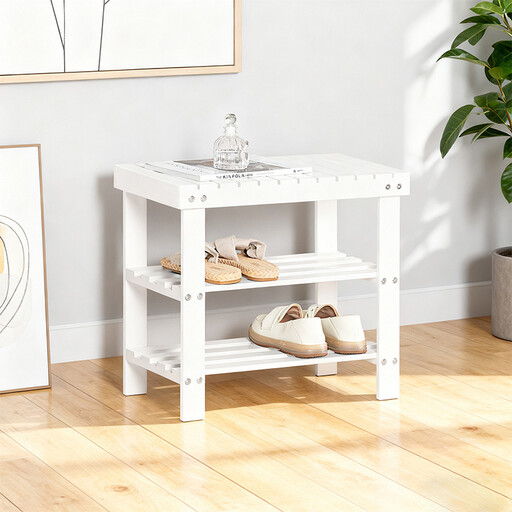
Why it's a match: At just 50 cm wide, this shoe bench is ideal for small nooks or the entryway of one- to two-person households. It combines storage for daily-use shoes with a practical place to sit.
The lacquered bamboo material is more resistant to moisture and more stable than simple particleboard, counteracting the problem of instability. The open design ensures good ventilation.
Combines two functions (seating and storage) in a minimal footprint. According to the manufacturer, the seat's load capacity of up to 90 kg is sufficient for everyday use.
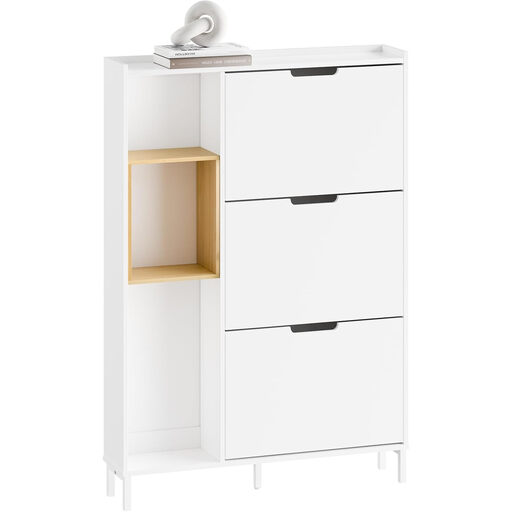
Why it's a match: Designed as a slim tip-out cabinet, this model is ideal for families who need to store many shoes but prefer a tidy hallway. The closed design ensures a clean, uncluttered look.
With a depth of only 19 cm, this cabinet solves the problem of bulky furniture in narrow hallways. The combination of E1-grade MDF and a bamboo frame provides a solid structure that counteracts typical stability issues.
Extremely space-saving design with good capacity (up to 9 pairs of shoes). The open side shelves offer additional space for decor or small items.
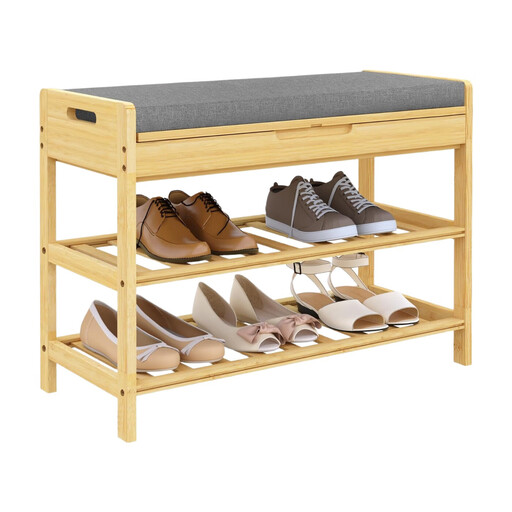
Why it's a match: For anyone who values not just storage space, but also comfort and thoughtful details. This bench offers a padded seat and a hidden compartment for shoe care products or accessories.
The stated maximum load capacity of 150 kg for the seat directly addresses the concern of unstable benches. The bamboo material provides the necessary robustness and durability.
High load capacity and additional, concealed storage space under the seat. The padded cushion significantly increases comfort when putting on and taking off shoes.
We've curated a comprehensive selection of products that meet our criteria for functionality and durability.
For a narrow hallway, models with a depth of under 25 cm are ideal. So-called tip-out shoe cabinets are often the best choice here, as some are only 17 to 20 cm deep yet can still hold several pairs of shoes. Before buying, measure the narrowest part of your hallway and plan to maintain a walkway width of at least 80 cm.
That depends on your priorities. Bamboo or solid wood offer the highest stability and longevity, which is especially important for a shoe bench with a seat. MDF boards with a high-quality finish are an affordable and versatile alternative. Metal is very easy to clean and often allows for particularly sleek, space-saving designs.
Always let your shoes air out completely before placing them in a closed cabinet. When buying, look for models with integrated ventilation slots or a perforated back panel. Regular cleaning of the interior is also important. Additionally, small aids like cedar blocks or sachets filled with activated charcoal can help absorb moisture and odours.