
Lieferung heute & morgen

Qualitätsgarantie

Willkommens-Angebote freischalten: KOSTENLOSE Lieferung | Bis zu 80 % RABATT | Kostenlose 30-Tage-JoyPlus-Testphase
App herunterladen
A cluttered entryway is a common problem, especially in apartments with limited space. Jackets, shoes, and bags pile up, creating a chaotic first impression. A hallway wardrobe with a mirror and shoe cabinet promises an all-in-one solution, but the selection is vast, and not every model delivers on its promise. Before you make a decision, it's crucial to understand the common pitfalls that can lead to a purchase you'll regret.
As your Joybuy Product Recommendation Officer, I'm here to help you separate the wheat from the chaff. We'll focus on the facts and highlight three typical problems with low-quality hallway wardrobes that often only become apparent after a few months:
To avoid these issues, you should focus on three core aspects. These define the longevity and functionality of your new piece of furniture and ensure it fits perfectly into your entryway.
A hallway storage cabinet must withstand daily use. Pay close attention to the material specifications. A particle board with a thickness of at least 15 mm provides good foundational stability. The surface coating is also critical. A melamine resin coating makes the surface scratch-resistant, water-repellent, and easy to clean—an important factor in an often damp and dirty entryway. Sturdy metal hinges and handles are also an indicator of a longer lifespan compared to plastic parts.
For a wardrobe for a small hallway, proper sizing is essential. A slim white hallway cabinet with a depth of under 40 cm is often the best choice to avoid obstructing the walkway. Measure your hallway at its narrowest point before making a decision. A tall cabinet with a mirrored door makes optimal use of the room's vertical height and saves space on a separate standing mirror. Don't just compare the external dimensions; also check the interior layout: Are there adjustable shelves? Is the space for hangers wide enough?
The ideal multi-purpose entryway cabinet adapts to your needs. A hallway cabinet with a tip-out shoe drawer is an elegant and space-saving solution for storing shoes out of sight. Be sure to check the internal height of the compartments. As a rule of thumb, a height of about 10-12 cm is sufficient for flat trainers, but you'll need closer to 15-20 cm for ankle boots. Open shelves offer flexibility for bags, decor, or baskets but can quickly look messy. A combination of closed and open elements, as seen in a modern white wardrobe set, often provides the best compromise between aesthetics and functionality.
Based on these objective criteria, we have compiled options for various needs.
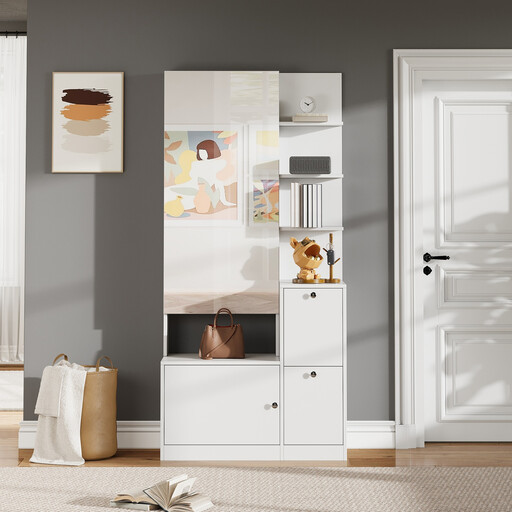
Why This Fits Their Persona: Ideal for individuals living in a city apartment with a narrow hallway who need a single, multifunctional solution. This model combines clothes storage, a shoe cabinet, and a full-length mirror in a compact footprint.
The product description specifies dimensionally stable particle board, which counteracts the problem of instability. The two separate tip-out shoe drawers, each with two levels, address the issue of impractical storage for common shoe types like trainers.
The 40 cm depth is an excellent compromise between storage capacity and a small footprint. The combination of three independent storage compartments, two tip-out shoe drawers, and five open shelves allows for clearly separated organisation.
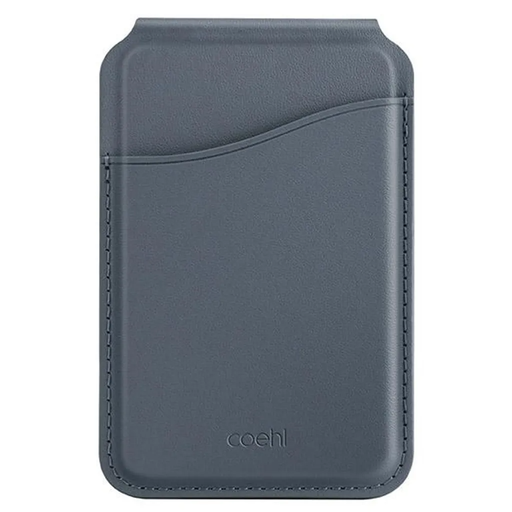
Why This Fits Their Persona: For this user, aesthetics are paramount. They aren't looking for a bulky cabinet, but an elegant, perhaps modular solution that blends seamlessly into a modern living concept.
The pitfall here is overpaying for pure design with poor quality. Look for details like handle-free push-to-open mechanisms, high-quality lacquered finishes (instead of simple foil wrapping), and precise panel gaps as a mark of quality.
The advantage lies in flexibility. Look for individual elements—a slim shoe cabinet, a wall panel, and a separate mirror—that you can combine as you wish to create a custom look.
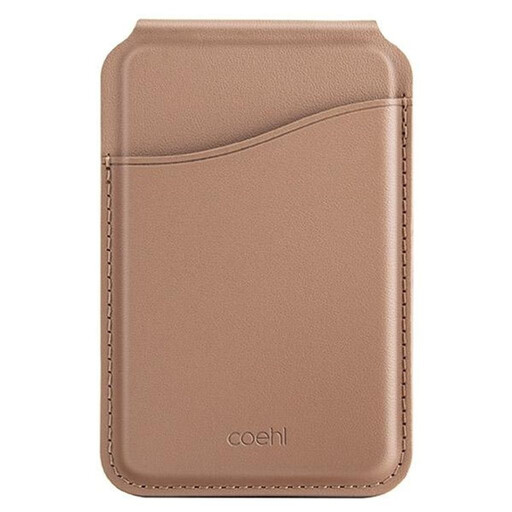
Why This Fits Their Persona: Families need one thing above all: maximum storage space and durability. This is less about delicate design and more about the ability to efficiently organise jackets, shoes, and school bags for multiple people.
The most common mistake is shoe storage that is too small. A single tip-out drawer is rarely enough. Look for wider models with multiple shoe cabinets or deep shelves that can also accommodate wellington boots or several pairs of children's shoes.
Look for an anti-tip kit for wall mounting—an indispensable safety feature in households with children. Easy-to-clean, durable surfaces and adjustable shelves that can "grow" with the family's needs are crucial here.
We've compiled a complete, up-to-date list of products that fully meet these strict selection criteria and EU safety regulations.
For most narrow hallways, a depth of 35 to 40 cm is ideal. This provides sufficient storage space without obstructing the walkway. It is advisable to measure your hallway at its narrowest point before choosing a model, taking into account any open doors or drawers.
A tip-out shoe drawer creates a very tidy look and is extremely space-efficient, making it ideal for a wardrobe for a small hallway. The disadvantage is that tall boots or very large shoe sizes often do not fit. Open shelves offer more flexibility and better ventilation for shoes but can quickly look messy. The choice ultimately depends on your shoe collection and your personal preference for tidiness.
Most tall cabinets come with an anti-tip kit. It is crucial to use this to secure the cabinet to the wall, especially in households with children. Follow the manufacturer's instructions. Typically, a bracket is anchored to the wall and firmly connected to the cabinet body to prevent it from tipping over.