
Lieferung heute & morgen

Qualitätsgarantie

Willkommens-Angebote freischalten: KOSTENLOSE Lieferung | Bis zu 80 % RABATT | Kostenlose 30-Tage-JoyPlus-Testphase
App herunterladen
As a responsible owner, you want to provide your hamster with a healthy and happy life. However, the market for small animal supplies is full of products that, while attractively marketed, often fail to meet the animals' needs. This guide will help you identify the most common pitfalls and make an informed choice for truly species-appropriate hamster care.
Many well-intentioned purchases turn out to be unsuitable or even harmful to the animal. Pay special attention to these three common problems to avoid bad investments:
To avoid these traps, you should base your purchasing decision on objective criteria. Three parameters are non-negotiable for your hamster's well-being.
A large hamster cage is the foundation of species-appropriate care. Adhere to the following dimensions as an absolute minimum:
A natural hamster food is based on the diet the animals would find in their natural habitat. You can recognise a high-quality food mix by these characteristics:
Daily, supervised playtime is essential to satisfy a hamster's need for exercise. An indoor playpen provides a safe environment. Ensure it is high enough and has no gaps through which the animal can escape. Species-appropriate hamster accessories, such as a sufficiently large wheel (at least 25-30 cm in diameter for Syrian hamsters) with a solid running surface, hiding spots made of wood or ceramic, and nesting materials are other vital components of the setup.
Based on the criteria above, we have identified products that are suitable for different needs and priorities.
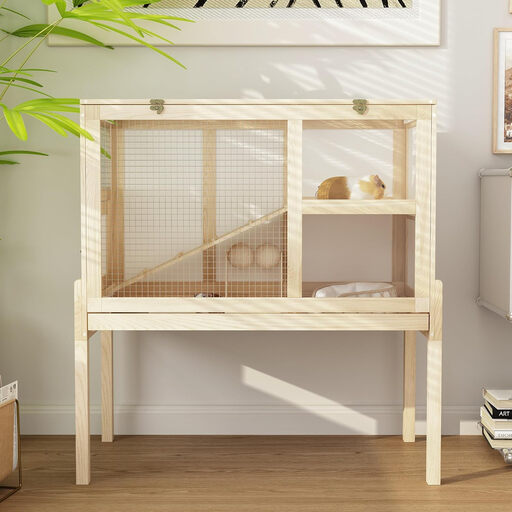
Why This Fits Their Persona: Ideal for owners who want to create a solid and spacious foundation for their pet from the start, without compromising on size. The wood finish also blends well into a living space.
This enclosure avoids the trap of undersized cages with its generous floor space. The lower level allows for deep bedding to accommodate natural digging behaviour, which is not possible in many standard cages.
Sturdy construction of composite wood and metal mesh for good ventilation. The hinged lid makes cleaning and feeding easier.
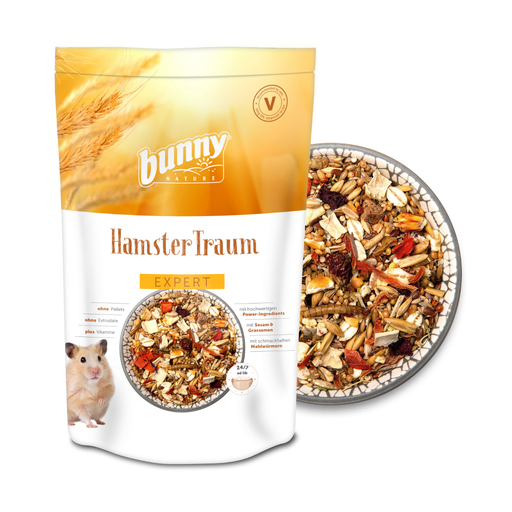
Why This Fits Their Persona: Perfect for owners who want to promote their pet's health through an optimal, natural diet and are willing to invest in a high-quality food mix.
This food avoids the trap of unhealthy, colourful mixes. According to the manufacturer, it contains no pellets, relying instead on a diverse composition of seeds, vegetables, and mealworms.
The composition, with ingredients like quinoa, mung beans, and parsnips, offers a varied diet. The included portion of mealworms covers the need for animal protein.
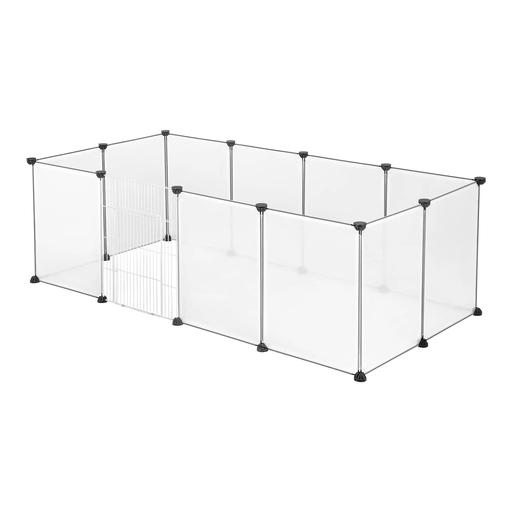
Why This Fits Their Persona: For owners who take their hamster's natural urge to move seriously and want to provide a safe yet flexible environment for exploration outside the main enclosure.
This playpen is a safe alternative to dangerous hamster balls or unsecured free-roaming in the home. It prevents the animal from disappearing behind furniture or chewing on cables.
The modular plug-in system of 12 panels allows for flexible adaptation of the shape and size to the available space. The transparent walls allow for constant observation of the animal.
We have compiled a complete, up-to-date list of products that fully meet these strict selection criteria and safety requirements.
For species-appropriate care, deep bedding is essential to allow the hamster to exhibit its natural digging behaviour. A depth of at least 20 cm, or even better, 30 cm or more, is recommended. Low-dust small animal bedding mixed with hay and straw is suitable for this, as it ensures the stability of the tunnels.
Yes, a wheel is an essential part of the enclosure to meet the animals' enormous need for exercise. It is crucial to ensure the correct size (e.g., at least 28 cm in diameter for Syrian hamsters) and a safe design: the wheel must have a solid running surface and a closed back wall to prevent injuries. Models made of wood or sturdy plastic are preferable to wire wheels.
The main food should be constantly available to the hamster. Only refill the bowl when it is almost empty. This encourages natural hoarding behaviour ("hamstering"). Fresh water must be changed daily. Small amounts of fresh food like cucumber, courgette, or bell pepper can be offered in small portions every 2-3 days, and any uneaten leftovers should be removed the next day.